Counterbalancing Effect: How the EU can deal with the Pashinyan Cabinet
The Armenian government is interested in closer ties to the European Union. Russias presence in the country is still very high. How should the European Union deal with the situation? by Davur Dordzhiev, MA in European Studies
The EU has recently enacted the Autonomous Trade Measures (the ATMs) aiming to support Armenian producers, who were heavily affected by the trade war initiated by Russia. This means Armenian agricultural products, which comprise the vast majority of Armenia’s exports, will have access, although limited, to markets inside the EU. The EU Commission estimates that the ATMs will cover almost 99% of Armenia’s exports of fresh fruit, vegetables and plants to Russia and more than 91% of beverages and spirits. This step emerges as an act of tangible help for the Armenian economy, which is heavily dependent on exports to Russia. Besides, Armenian export basket consists of fruits, vegetables, plants, and jewelry, mostly. In this context, for Vladimir Putin (73) it is an obvious step to weaponise bilateral trade by introducing poorly-motivated non-tariff barriers. As of today, it seems that Russia has no intention to backtrack on the economic sanctions, which were introduced against the backdrop of Armenia’s U-turn to the EU.
Nevertheless, the EU has to take into account the so-called balanced foreign policy of “diversification”, which the Pashinyan Cabinet declares to promote within 5 next years. Whereas the Kremlin continues to overtly threaten Europe, it is likely that Pashinyan’s adherence to the commitments within the Eurasian Economic Union (the EAEU) may emerge as a major impediment in the Armenia-EU rapprochement. Although this policy is overwhelmingly applauded by the civic society figures, who have ties with the Brussels bureaucracy, the EU should not be blinded by these assessments. On its pathway to full-scale membership Armenia will inevitably face major challenges in the field of human rights, institutional reforms, and popular perceptions of the EU inside the country. Since the Civil Contract, led by Nikol Pashinyan (51), has garnered only 49% of votes and has not secured a comfortable majority, the Parliament will be a place for ardent discussions between the ruling party and opposition factions that unequivocally indicate their eurosceptic stances.
Playing Cat and Mouse with Russia Is Not OK
Russia’s presence in the Armenian economy is comprehensive. In the early 2000s, Russian larger state-backed corporations, including Gazprom, Rosatom, Sistema, RZD, and Rusal, started to acquire critical infrastructure in Armenia. This triggered a spillover effect on Armenia’s foreign policy, which resulted in the continuous presence of Armenia in Russia-led international organisations and refusal to establish closer ties with the EU. In 2013, former President Serzh Sargzyan (71) refused to sign the Association Agreement with the European Union and overnight made a decision to co-establish the Customs Union with Russia that eventually was transformed into the full-scale EAEU. At that moment, Sargsyan claimed that Armenia under his leadership promotes an “And–And” foreign policy and does not wish to harm the special relationship with Russia, deeply-rooted in the history of two nations. This sentiment is almost identical to what Prime Minister Pashinyan calls “balanced foreign policy”, despite the fact that the Kremlin nowadays does not mask its open hostility towards Armenia and repeatedly broke security commitments before Yerevan in 2020-2023.
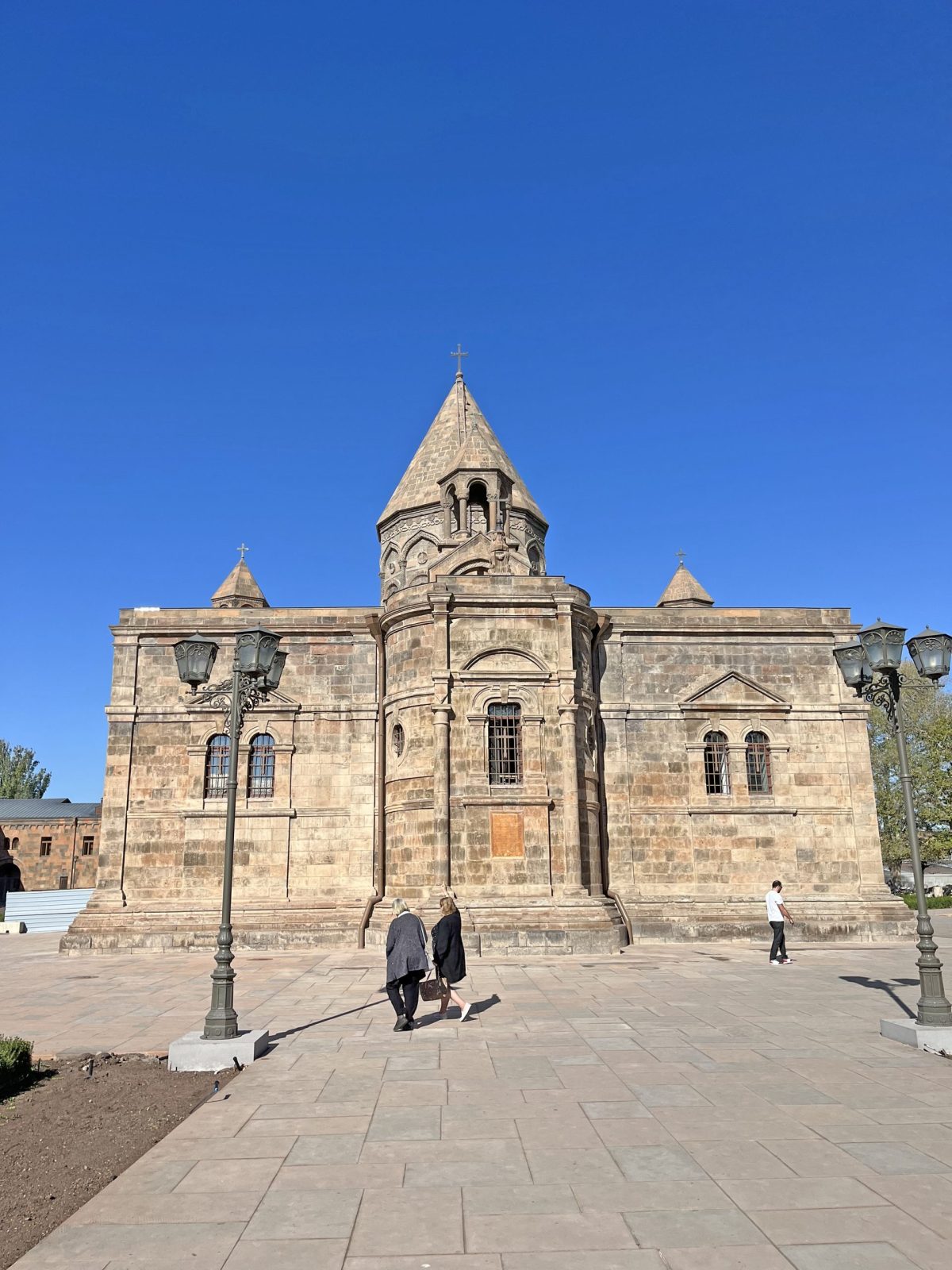
Armenia is the oldest christian state.
After the Constitutional Court has locked in Armenia’s elections outcome, Pashinyan paid his first foreign trip to Russia and met his counterpart Mikhail Mishustin (60) at the Innoprom economic forum in Yekaterinburg. Mishustin stated that he expects the Cabinet, which is to be formed by the Civil Contract, to cooperate with Russia in the spirit of friendship. Just few weeks after the undisguised threats voiced by Russian officials to revise the price on gas imports, which are paramount to Armenian households and businesses, if Armenia takes steps towards the EU, the Rosatom CEO, who was present at the Pashinyan–Mishustin meeting in Yekaterinburg, proposes to build a new nuclear power plant in Armenia and cover its energy needs. From this example it can be deduced that Russia has started playing cat and mouse with Armenia, trying to keep it on a leash of economic dependency as much as possible. A self-proclaimed pragmatic, Pashinyan seems reluctant to reduce Russia’s economic presence in the Armenian economy, including banking, mining, and energy supplies, and positions himself as a moderate politician, when it comes to anti-European policies promoted by Russia. This creates a slippery slope for Armenia, as Pashinyan surrounds himself with loyal opportunists rather than sincere pro-European officials, who are not likely to stand for European integration in the event of negative developments.
The EU could continue to gradually open markets for the Armenian goods without jeopardizing the interests of Europe-based producers. The ATMs have proved their efficiency in relation to Ukraine, Georgia, and Moldova, which were also subjected to Russia’s economic blackmail in the past. Nevertheless, there are credible reports that the Armenian economy may have been used by Russian corporations to bypass sanctions, albeit on a small scale. The most ridiculous, yet sad example thereof is the following: according to the latest data, the export of mobile phones, TV sets, and computers topped the rating of Armenia’s exports to Russia. There is no production of such machinery located in Armenia, which implies that Armenian companies may get involved in the so-called parallel import schemes.
Due to the wide-ranging presence of Russian holdings in key Armenian companies, the latter may use this window of opportunity to start selling their goods to Europe. Larger Armenian corporations, which are owned by Russian oligarchs, including Oleg Deripaska (58) and Roman Trotsenko (55), should be thoroughly vetted before they are authorised to import goods to Europe. The war-profiteering is highly undesirable in the context of the Russian aggression against Ukraine, therefore, the Cabinet can be advised to reduce the Russian war-profiteers’ direct controlling equity and voting power in Armenian larger businesses. Flirting with the Kremlin should not be encouraged.
Say No to the Oligarchy
Nikol Pashinyan has been serving as Armenia’s Prime Minister since 2018, and almost everyone agrees that now the Armenian state is governed in a more effective manner than it used to. Much has been done to fight corruption, which became a true scourge of Armenia’s economic growth. During the pre-electoral campaign the reformed Anti-Corruption Committee has done a tremendous job to uncover the vote buying on a large scale that was allegedly perpetrated by Strong Armenia, Prosperous Armenia and Armenia bloc opposition political forces. Nevertheless, Pashinyan, who starts his third consecutive term as the Armenian leader, has acknowledged that his Cabinet has to “reboot reforms”, as crucial socio-economic reforms have stalled, because Pashinyan has refused to take political responsibility for hard, but necessary decisions.
As of today, the biggest challenge that the Armenian economy faces seems to be the concentration of assets in the hands of the few, or oligarchy. Some of them tend to actively participate in politics, including Gagik Tsarukyan (69), a flamboyant mogul, who was recently charged with the embezzlement of funds on a large scale. By the way, Prosperous Armenia, his political party, almost managed to get into the Parliament, having garnered 3.9% of votes.
Although Pashinyan pledges to dismantle the “criminal oligarchy” in Armenia, the Civil Contract does not shun apparent ties to wealthy individuals, who are reported to make profits from public money. For instance, Khachatur Sukiasyan (64), a multimillionaire and the SIL holding owner, served as the Civil Contract MP in 2021–2025. On July 2, 2026 the Cabinet approved customs exemptions on farming equipment imports by Idjevan Bacon, a corporation, which is owned by Frunze Ghazaryan (56), Nikol Pashinyan’s personal friend. Ghazaryan’s businesses received state budgetary support several times.

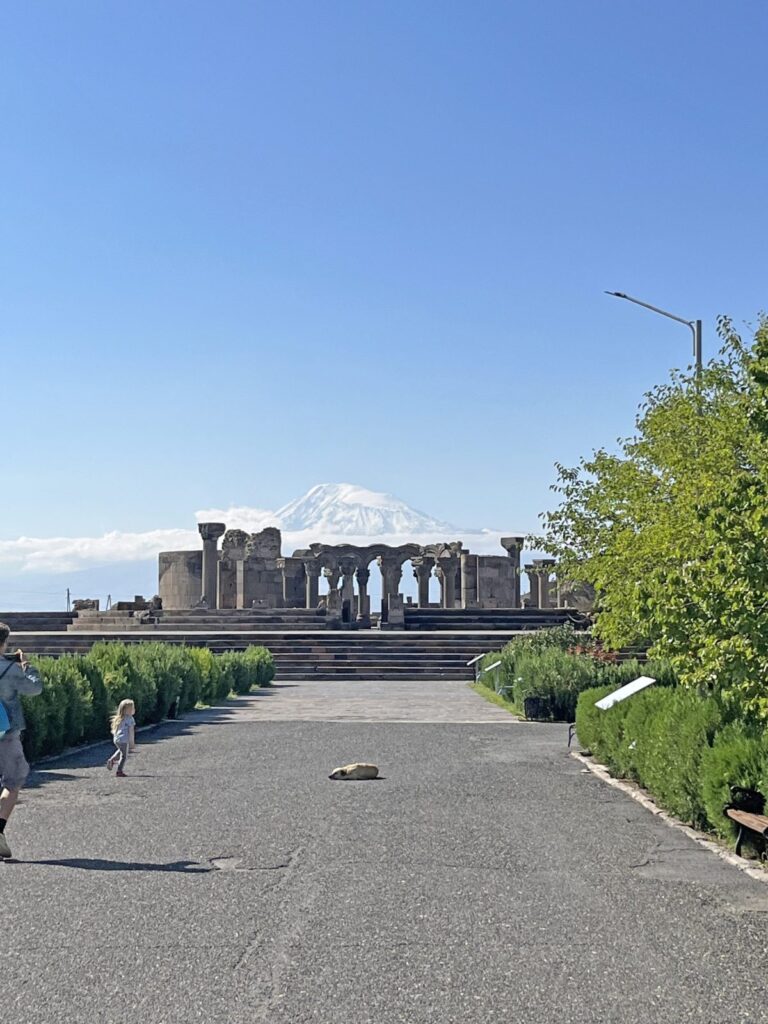
Mount Ararat, a holy and historic mountain for Armenians, but now in Turkey.
It should be noted that these cases reflect the scale of oligarchisation, which is deeply-rooted in Armenia’s economy and may affect political decision-making. As the Copenhagen Criteria clearly indicate that any EU candidate has to foster a functioning market economy, Armenia has an enormous task ahead to eliminate oligarchy as a distortion of market competition. The polarisation in Armenia, which is reported by international observers, has a freezing effect on the reforms agenda, as any governmental decision can be framed as “detrimental to the national interests” by biased media directly controlled by oligarchs. Nevertheless, such steps should be overseen by the EU and civic society, as freedom of speech and of the press can be potentially targeted.
The EU could encourage the Cabinet to tackle the oligarchisation issue, when an association agreement will be negotiated. The key objective of this reform should come down to the separation of politics, media, and larger businesses. The same logic has been applied in Ukraine, where the Deoligarchisation Act was adopted in 2021. However, the most effective measure to make the Armenian economy more transparent and competitive is to invest in industry and agriculture. The foreign direct investments have always been an Achilles‘ heel for Armenia, which impeded economic growth and development. The apparent lack of political will to promote institutional reforms designed to protect property rights and to safeguard equal opportunities for domestic and foreign investors has become a breeding ground for the establishment of the oligarchic system in Armenia. The more European companies invest in such economic sectors as banking, agriculture, and light manufacturing, the faster Armenia will emerge as a reliable economic partner, which aspires to join the EU.
Take Everything With a Grain of Salt
The EU has been actively involved in various formats of interactions with the Armenian civic society figures, who overtly or privately have ties to the Cabinet or Prime Minister himself. In no way do I want to disavow their expertise as experts on EU–Armenian bilateral relations. However, all reports coming from such Armenian internal observers should be viewed with some level of skepticism due to the political polarisation which has been mentioned above. In terms of direct confrontation between Russia-backed political forces and the Civil Contract it is explicable for some Armenians to rally around the flag and support the Cabinet, turning a blind eye on inconvenient questions like human rights, alleged corruption in high offices, and slowdown of reforms.
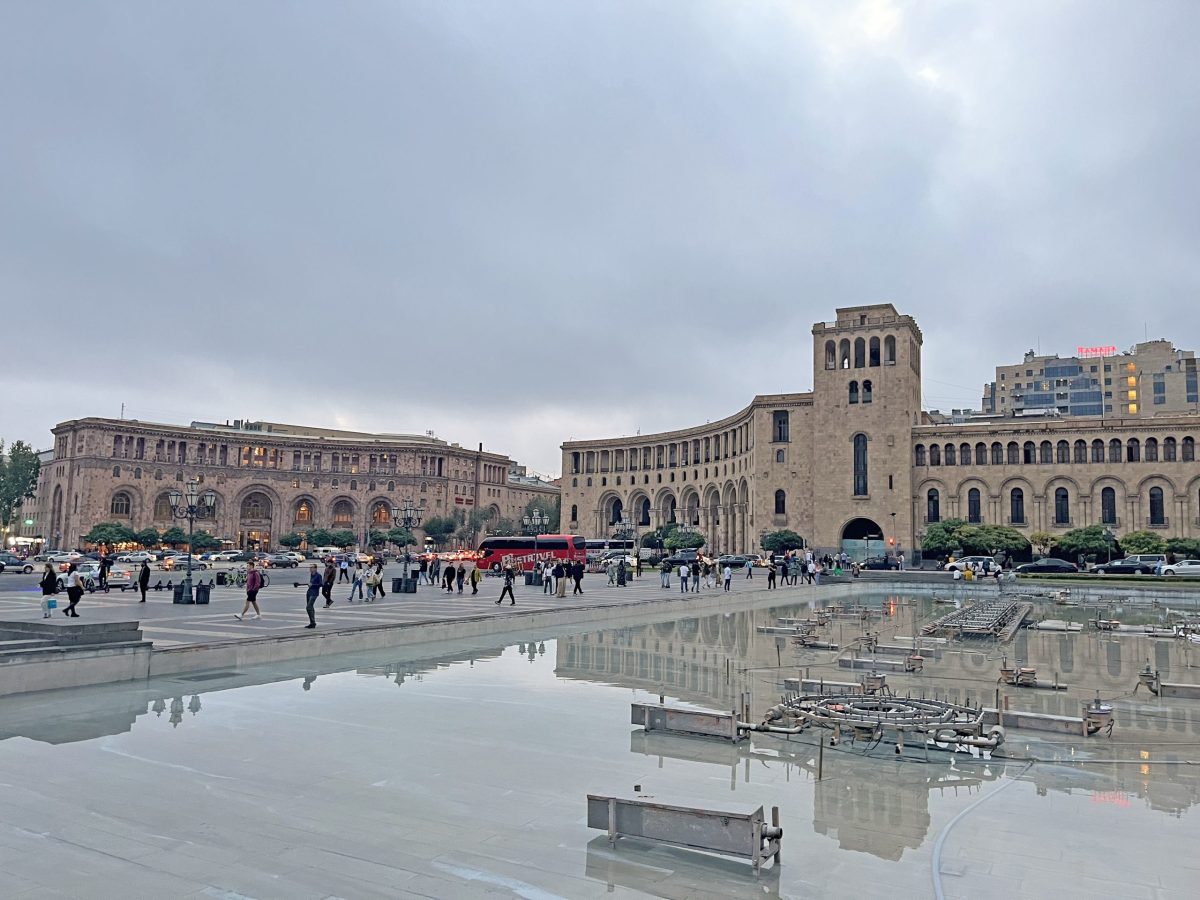
In the center of Yerevan, capital of Armenia.
Nevertheless, it will be a grave mistake to adhere to a false equivalence policy of listening to opposition parliamentary factions that openly attack the very European integration and disseminate fake information about the EU activities in Armenia. The Strong Armenia top dog Samvel Karapetyan (60), who is linked to Vladimir Putin’s most trustworthy apparatchiks, openly expresses his unwillingness to establish closer ties with the European Union, notwithstanding recent visa liberalisation progress and other positive developments. Former President Robert Kocharyan (71), who is a most likely candidate to chair the Armenia bloc parliamentary faction, has repeatedly endorsed the pro-Russian course claiming that this will strengthen Armenia’s national security. As only three political forces have passed the 4-percent threshold and will have the right to establish parliamentary factions, the EU has no other option than to pay attention to extra-parliamentary political parties and independent experts. Nevertheless, I strongly believe that experts should be either helping the Cabinet to implement institutional reforms inside the country or report on their progress or lack hereof to the EU and other international stakeholders. It makes little practical sense to combine those two roles, as distance brings perspective. The integrity of experts who provide the Brussels bureaucracy with the valuable observations should be a top priority, whereas trustworthy and responsible policies may not be based on interpretations voiced by biased figures. The lessons of Ukraine should be learnt, where independent civic society was able to safeguard the anti-corruption bodies from being dismantled by the Office of the President.
The Cabinet has a wide margin of appreciation when it comes to Armenia’s internal affairs, but some red lines have to be established. Pashinyan has recently stated that there are “foreign agents” in Armenia, who act in line with foreign agendas. According to him, there is a list of individuals, who represent foreign interests and aim to “undermine Armenian-Russian friendship”. The mere reference to “foreign agents” has to be condemned, whereas Russia, Hungary and Georgia serve as striking examples of what can happen once this narrative is weaponised by the authorities. The least the EU needs is the deepening of democratic backsliding 8 years after the Velvet Revolution. While dealing with Armenia, a country which was stuck in a rut for decades, the EU has no right to look at internal developments through rose-coloured glasses.
Armenians do share European values of freedom, democracy, and inclusivity. According to the recent polling, they put faith in the European Union as a guarantor of international peace and security in the South Caucasus, the history of which was marred by ethnic cleansings and genocidal wars. If acting firmly yet wisely, the EU will establish itself as Armenia’s key partner. This will be a mutually beneficial development in terms of constant geopolitical turmoil instigated by strongmen, military juntas, and those who would love to see the world burn.