Four Years of Endless Horror
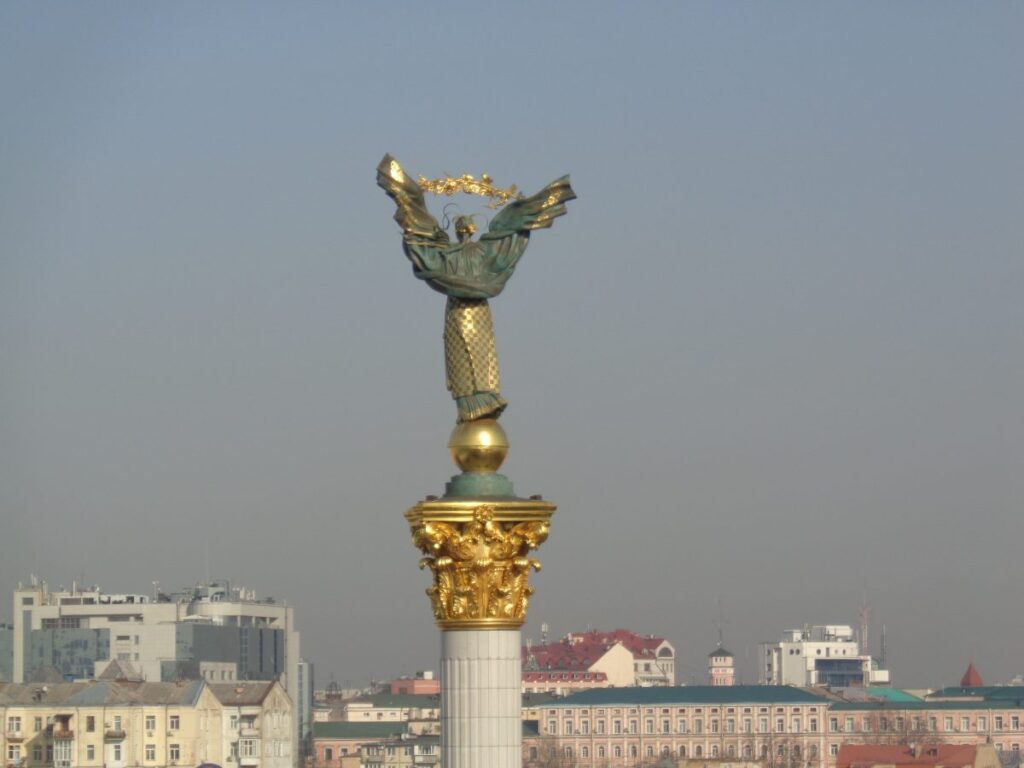
Most readers likely still remember the morning news of February 24, 2022: Russia had launched a full-scale invasion of Ukraine. A “blitzkrieg” was intended to take over Kyiv and install a pro-Moscow government. Ukraine fought back. And then? By Rainhard Kloucek and Georg Lundström-Halbgebauer.
Then everything turned out differently. Probably also different from what many government politicians in the West expected. They had promised to support Ukraine for as long as necessary, and were already proud when they sent a few thousand helmets. At the time, they too believed the war would be over in a few days or weeks with a victory for Moscow. Then things would return to business as usual. Just like in 2014, after the invasion of Crimea and Moscow’s incursion into Donbas.
Before the Russian attack, Western government politicians had for months provided wonderful images of talks at the long table with Vladimir Putin, in which the Moscow ruler had assured them he would not start a war. A blatant lie. Diplomacy had failed. Putin did not want diplomacy; he wanted the subjugation of Ukraine. He disseminated this in several articles that were also reported on in Western media.
Paneuropa had warned
Many in the West are still trying to justify their former stance toward Putin and his regime by claiming he was once a reliable partner. After the fall of the Eastern Bloc, many fell for the general assumption that democracy had now triumphed. Many still know the buzzword about the end of history. Cheap oil and gas helped solidify the myth. And the few warners, such as the then President of the Paneuropean Movement Otto von Habsburg, who warned of Moscow’s revanchism even under Yeltsin, and who then specifically warned about Putin, were no longer taken seriously. But the facts show: for Moscow, war is still merely the continuation of politics by other means. Putin demonstrated this in Chechnya in 1999, in Georgia in 2008, and he has been proving it in Ukraine since 2014.
Chechnya, Syria, Ukraine: A Pattern of Civilian Suffering
When Putin became Prime Minister in 1999, he began the Second Chechen War. The small country in the Caucasus had declared independence in 1991 following the dissolution of the USSR, in accordance with the Soviet Constitution. The first Chechen War had ended with a peace treaty and de facto recognition by Russia. But Putin had other plans: he ended the second Chechen War, which Russia had started under flimsy pretexts, with the total destruction of the capital, Grozny. Residential areas were carpet-bombed, civilian infrastructure destroyed, and hospitals razed to the ground. In the end, the entire city was a field of ruins.
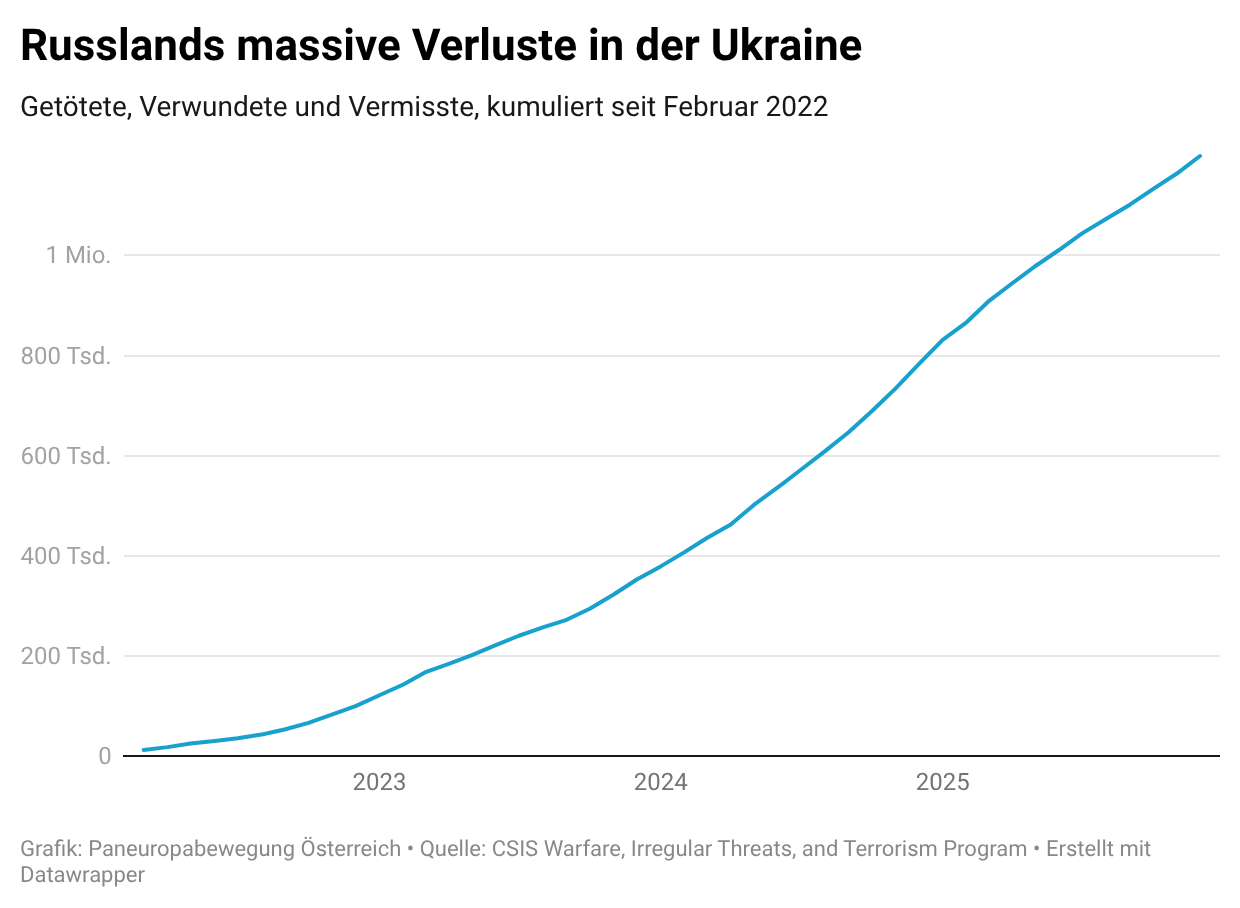
According to Human Rights Watch, Russia’s war crimes and violations of international humanitarian law were the main reason for the suffering of the civilian population in the Second Chechen War. This fatal pattern was repeated when Russian forces were active in the Syrian civil war, and it continues to this day in the cities of eastern Ukraine conquered by Moscow’s troops. Another pattern that dates back much further into Russian history is the military leadership’s willingness to accept massive losses. Putin is also only interested in treaties in the short term, if at all, as shown by his disregard for the 2003 Border Treaty with Ukraine.
Lies are part of the power of the ruler in Moscow. This sounds just as incomprehensible to the ears of Western, democratic politicians as war being a completely normal part of politics. To understand Moscow’s politics, it helps to see Russia as a colonial empire that was created through conquest and is held together by terror. There are geographical, economic, and cultural reasons for this. Above all, however, the restoration of Russia as a great power is a declared political goal of Vladimir Putin. Neither the general prohibition of the use of force in the UN Charter nor treaties will stop him.
Europe Must Take Care of Its Own Security
The only language Russia understands is power. Yet the administration of the current number-one world power is primarily interested in ending the war “somehow” while securing access to critical raw materials. Europe’s security interests or the international order, which is already hanging by a thread, no longer play a role.
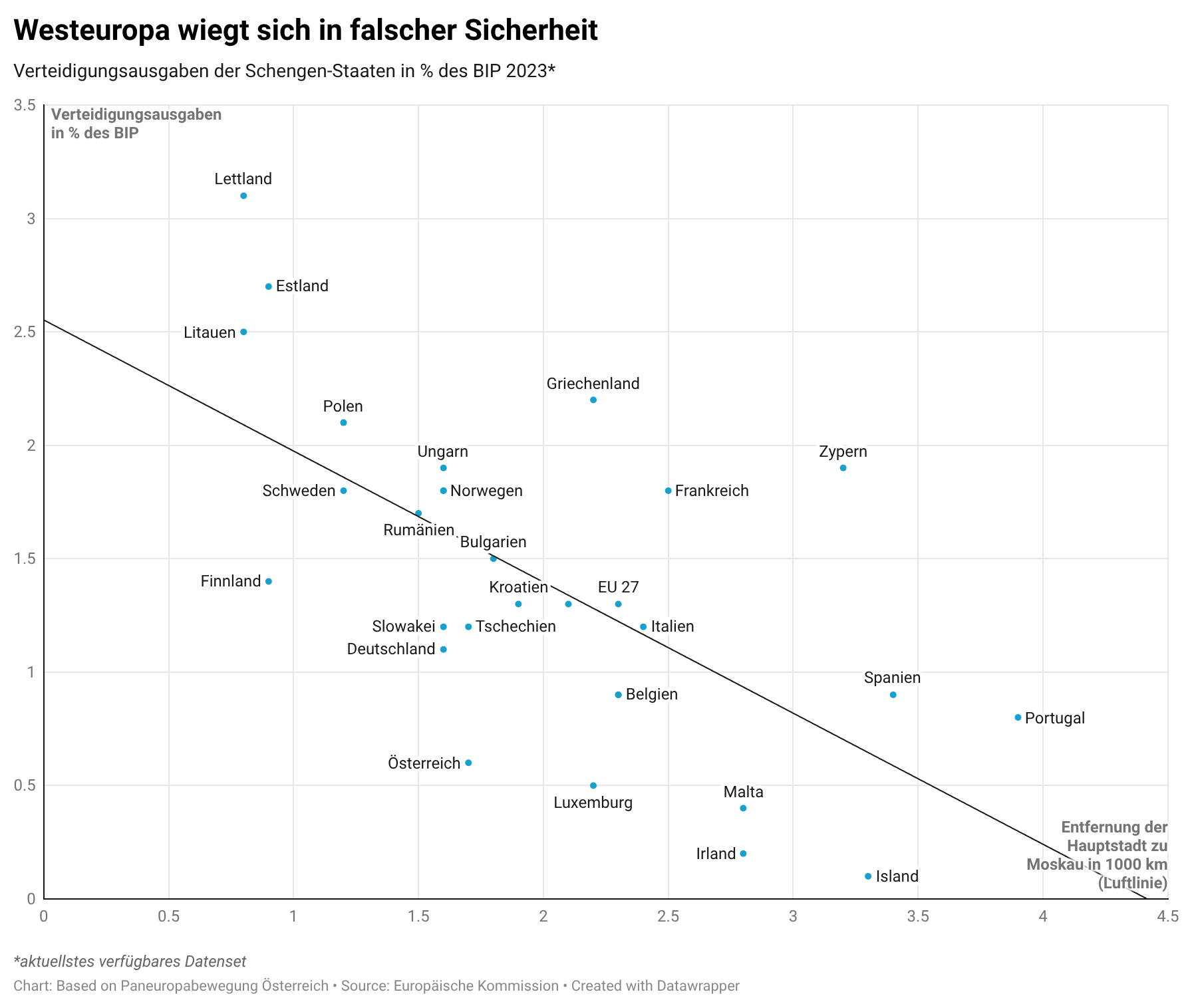
If Europe does not take care of its own security, no one else will. For European security, Ukraine is crucial. A Ukraine that is incorporated into the expansive Moscow colonial empire by force or through a deal made over their heads would create a new threat situation. Not only militarily, but also politically. If the states of Europe cannot agree to defend their own interests and the USA views NATO (or other international treaties) as merely optional, what would stop Russia from invading the Baltics next? This must concern all European states. Yet there is still a divide from East to West. However, the security of Europe concerns everyone.
The “War Aim” is Missing
Every strategy needs a definition of goals. But here lies a crucial weakness of Europe. The response of Germany (and thus probably the EU) would remain reactive, indecisive, and slow even in the event of a Russian attack on the Baltics. This was shown in February 2026 in a simulation by the daily newspaper WELT in cooperation with the German Wargaming Center, involving experts from politics, the military, and conflict research. Even after four years of war in Ukraine and despite the experiences with Chechnya and Georgia, it is still not clear even to experts how Europe must deal with Russia. Karl von Habsburg, Honorary President of the Paneuropean Movement Austria, formulated the following possible goals in his “ Speech on the Future of Europe“: “Restoration of Ukraine’s territorial integrity and sovereignty, reparations by Moscow, and regime change in Moscow. The Putin case must be handled before an international war crimes tribunal.” How do we achieve this?
The EU Needs a Real Foreign Ministry
It will hardly be possible to achieve these goals through a Common Foreign and Security Policy (CFSP) limited to the coordination of member states alone. And even if an agreement is reached, every measure will take far too long. A real European foreign and security policy with a Foreign Ministry accountable to the European Parliament is therefore the order of the day. This would also meet all the requirements of subsidiarity, as European sovereignty here brings the ability to act. It is precisely this ability to act that is necessary so that Europe is not ground down between a revisionist Russia and an indifferent White House.
Austria should not use neutrality as an excuse
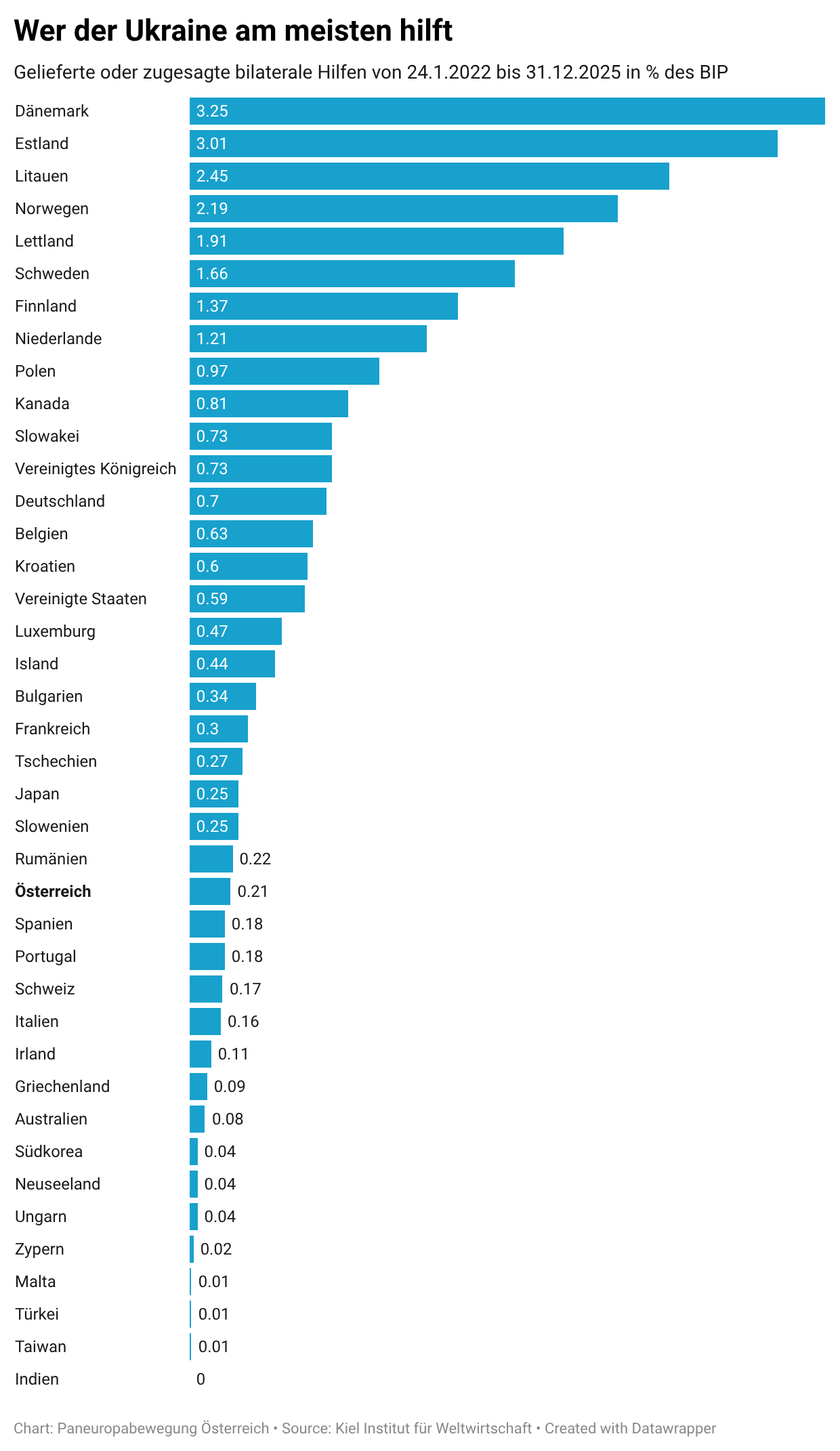
Further support for Ukraine is a core element of the goals outlined above. The challenge of further supporting Ukraine also applies to Austria. With aid amounting to just 0.2 percent of GDP, there is significant room for improvement. To shock some readers now: this also applies to military aid. Neutrality does not serve as an excuse here. Austria is a member of the UN, so the UN Charter applies, which firstly prohibits wars of aggression and secondly enshrines the victim’s right to self-defense. Both individually and collectively. Collective self-defense means that every state has the right to defend the attacked country militarily.
Drones: Economic and Tactical Lessons from Ukraine
The war in Ukraine has shown how important drone capabilities are for defense. But Europe still seemed poorly prepared in 2025: In mid-September 2025, at least 19 Russian drones entered Polish airspace. In early October 2025, drone sightings caused the shutdown of Munich Airport. Both came as a “surprise,” which might have been understandable in 2022, but is inexcusable in 2025. What is worse: Europe had no clearly recognizable plan on how to react. That must change.
It is good news that the European Commission, with the “Readiness 2030” strategy, is making efforts to adapt European defense to today’s threats. One of the central projects is the “European Drone Defence Initiative” and the associated action plan. By the end of 2027, the Commission wants to establish an EU-wide drone network for border surveillance and threat detection. Whether Europe is even capable of producing enough drones quickly enough and adapted to tactical needs remains, however, questionable.
The decisive challenge for the EU’s defense readiness lies in the ability to quickly build a decentralized and economically efficient industry capable of mass-producing drones. Without drones, the defense of Ukraine against the aggressor Russia would not have been possible. And without them, the rest of Europe is not equipped either. In the process, massive amounts of material are consumed. For example: a Ukrainian drone brigade requires about 7,000-8,500 First-Person-View (FPV) drones per month, and the trend is rising. At the beginning of 2024, the Ukrainian armed forces procured a total of about 20,000 drones per month. By the end of 2024, this amount had increased tenfold to 200,000 units per month. Production capacity in the country is allegedly even greater than this massive demand. If one believes the information from the Ukrainian Ministry of Defense, then over 500 Ukrainian companies together could already produce 10 million drones per year. The EU would therefore do well to learn from Ukraine how to build such capacities quickly and adapt the produced drones to dynamic changes in the situation. Perhaps Ukraine could also become a reliable supplier of these systems, whereby European defense spending would simultaneously support Ukraine. The gap between military necessity and the ethical and legal challenges regarding autonomous weapons systems remains problematic.
Europe Must Finally Decide
Ukraine has chosen Europe. Europe must choose Ukraine. Only in this way can the old continent ensure its own security. Only in this way can an expansive Russia be significantly weakened, and only in this way can a genuinely European defense emerge. To promote the necessary internal change in Russia for the time after this terrible war, Europe must also support the democratic and liberal opposition in exile and in the country, insofar as it still exists. This necessitates action in cyberspace, in traditional media, and above all, the direct influence of key multipliers such as intellectuals, politicians, and cultural figures. All of Europe must act together and with determination.
The article was originally written for “Materie”.



