Michaela Jana Löff answers questions on the National Council election
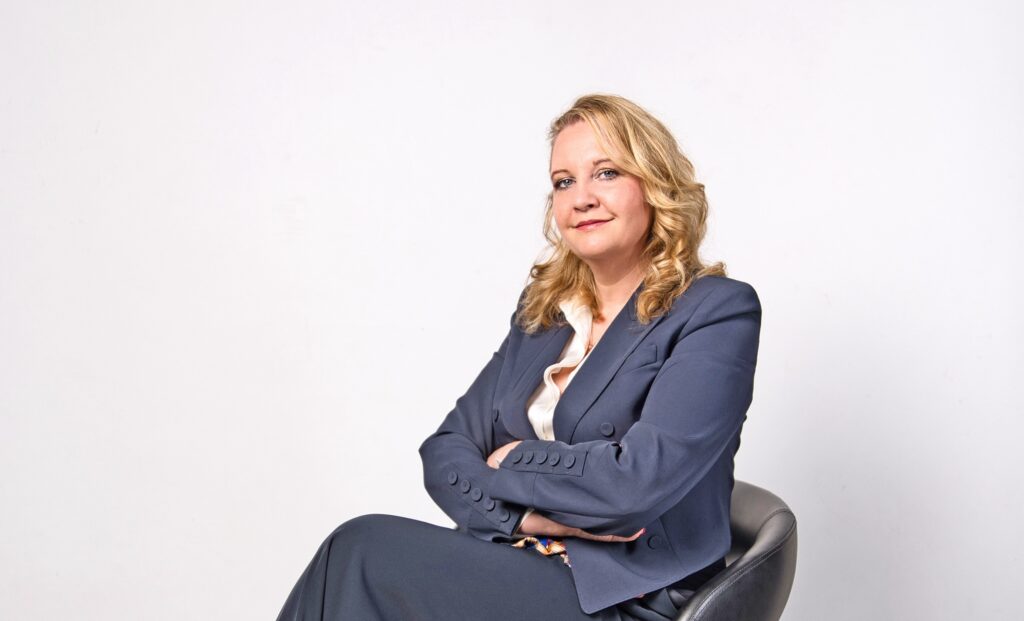
On 29 September, Austrians will have the opportunity to elect a new National Council, the country’s parliament. As a non-partisan European organisation, the Paneuropa Movement Austria will not issue any voting recommendations or engage in specific advertising for any party. Various parties were offered the opportunity to address Paneuropeans through advertisements. One party accepted this offer.
However, as in previous elections, we are once again introducing candidates who are members of the Paneuropa Movement Austria and are standing for the National Council. In this specific case, these are Michaela Jana Löff, who is running on the ÖVP list, and Dominik Oberhofer, who is standing for election on the NEOS list.
We asked both of them questions concerning policy areas from the Paneuropa programme. Given the current situation, foreign and security policy play an important role in these questions, but the general further development of the European Union and Austria’s positioning within this development are also addressed. Here are the answers from Michaela Jana Löff.
Question 1: In Eastern Europe, a war of annihilation by Russia against Ukraine is raging. Ukraine is fighting for its survival, but at the same time defending Europe against the imperialist ambitions of the Russian despot Vladimir Putin. Austria is a country with a reputation for being very pro-Russian. This is evident in the economic activities of Austrian companies still operating in Russia, but also, for example, in the dependence on Russian gas, where there have been no signs so far of ending the support for the war by stopping gas deliveries (we pay more for gas to Russia than we provide in support to Ukraine). In Austria’s current security strategy, Russia is still referred to as a partner (note: a new security strategy was adopted shortly before the editorial deadline). How do you assess Austria’s stance to date, and how should a newly elected parliament and a newly appointed government position themselves towards Russia in the future?
Michaela Jana Löff: The security situation in Europe has changed fundamentally since Russia’s war of aggression against Ukraine, which is in violation of international law. Against this background, a reassessment and further development of the security strategy was necessary. All relevant actors from the security sector were involved in the process, including the parties represented in the National Council. Following intensive negotiations, the new Austrian Security Strategy 2024 was adopted by the Council of Ministers on 28 August 2024. The strategy uses clear language regarding the threat posed by Russia, including the fact that energy exports, particularly gas deliveries, have been and continue to be used specifically as a weapon.
Austria participates unreservedly in all EU sanctions against Russia. A dedicated mechanism was established for nationwide coordination. Anyone who, like me, works in administration is familiar with the numerous legal regulations and internal decrees for implementing the sanctions.
I have no doubt that any future federal government involving the ÖVP will also pursue and implement the new security strategy.
Question 2: Austria provides humanitarian aid to Ukraine but, due to its neutrality, does not consider itself able to help with military equipment. Neutrality requires Austria not to join any military alliance and not to station troops from another country in Austria. Experts interpret this as a possibility to provide support to Ukraine at least in sub-sectors with products that can also be used militarily. One example of this is mine-clearing equipment, which could be used for demining in areas liberated by Ukraine. How do you assess this possibility?
Michaela Jana Löff: There are numerous aid packages from the Republic of Austria for Ukraine. More than 200 million euros have been spent so far to provide humanitarian aid to Ukrainians in need. The Austrian Foreign Disaster Fund for Ukraine has also been increased.
Since you mention demining, in coordination with the Ukrainian civil protection authority, the State Emergency Service of Ukraine, the ITF Enhancing Human Security (formerly: International Trust Fund for Demining and Mine Victims Assistance) is to provide mine detectors for humanitarian demining in Ukraine. As a lawyer, I am very aware of the complexity of the legal framework, starting from the Neutrality Act to the War Material Act.
Question 3: Would you advocate for increasing support for Ukraine and also for making it clearer in political communication that Russia’s war against Ukraine also represents a direct threat to Europe and thus to Austria? (Reference is made here to both the disinformation campaigns and cyberattacks by Russia, as well as actual assassinations and attacks in EU countries.)
Michaela Jana Löff: I believe there is clear communication from members of the government. Of course, the Russian war of aggression also threatens Europe in a wide variety of ways. The new Security Strategy 2024 analyses the threat to Europe and Austria in detail and uses very clear words for the threats emanating from Russia. Examples include hybrid warfare, which attempts to destabilise the EU, or implicit nuclear threats. Austria’s declaration of intent to participate in ‘Sky Shield’, the missile defence shield, is for me a further example that the threat is not only clearly communicated but also responded to within our legal framework. In the digital world, too, cybersecurity is paramount – including at the European level. Network information security and the protection of critical infrastructure have become central European and national tasks.
The danger of ‘cyber warfare’ and hybrid warfare is not a utopia; both the Ministry of the Interior and the Ministry of Defence have made provisions with appropriate structures and personnel. The ‘Inner Circle of the Operational Coordination Structure’ (IKDOK) includes cyber specialists from all security-relevant ministries to exchange information on current threats. Here, too, I see no end to the development. In the future, politics will be challenged by rapid technical developments to act quickly and courageously when it comes to Austria’s security. I am also thinking of the current political debate on the monitoring of messenger services. The ÖVP clearly advocates for an expansion of the powers of the domestic and foreign intelligence services.
Question 4: Next year, Austria celebrates 30 years of membership in the European Union. Article 42 of the EU Treaty regulates the so-called mutual defence clause in the event of an armed attack on a member state. The so-called Irish clause would allow Austria to refrain from military assistance in such a case. Two questions on this:
Firstly: Can you imagine voting in Parliament for a declaration stating that Austria would not invoke this Irish clause, and would you actively support such a declaration?
Secondly: Can you imagine a genuine European defence policy being developed from this mutual defence obligation, in which Austria plays an active role?
Michaela Jana Löff: By joining the EU, Austria committed itself to a Common Foreign and Security Policy. To avoid possible inconsistencies between neutrality and the CFSP (Common Foreign and Security Policy) or the CSDP (Common Security and Defence Policy), a separate constitutional basis was created with Art 23j B-VG.
Question 5: The Paneuropa Movement advocates for a European foreign and security policy. European foreign policy means not just the coordination of the foreign policies of 27 member states by the High Representative for Foreign Affairs and Security Policy, but an EU Foreign Ministry headed by a European Foreign Minister. This would then be controlled by the directly elected European Parliament. This would be a transfer of competences to the European Union, where this sovereignty could also be effective. A demand that also corresponds to the principle of subsidiarity. Would you support such EU sovereignty in foreign policy, and what steps could be taken on the way there?
Michaela Jana Löff: I cannot currently imagine – for legal reasons alone – any transfer of competences that could call into question Austria’s military neutrality. What concerns me greatly is the question of how the currently increasingly obvious drifting apart of European and national interests of some member states can be brought under control over the next five years. I see this as the greatest challenge for every policy area of the EU at present.
Question 6: Austria is a country that has benefited greatly from EU enlargement. Enlargement policy is one of the EU’s strongest foreign policy instruments. Nevertheless, enlargement policy is stalling. From an Austrian perspective, where should strong initiatives be taken in the future?
Michaela Jana Löff: I think Europe Minister Edtstadler put it very aptly when she said that ‘we want to push ahead with the enlargement of the European Union.’ The current focus is on the Western Balkans, and the challenges in these countries are well known. For me, it is quite clear that the firm anchoring of the rule of law and democracy are indispensable elements for the accession of further countries. Since I myself led a project to prepare for the accession of the Czech Republic in the early 2000s as part of the INTERREG IIIA programme (cross-border cooperation), I am more than aware of the complexity of the requirements for EU accession.
Question 7: Austria is an exporting nation. More than 1.2 million jobs are linked to exports; according to the Chamber of Commerce, exports account for more than 50 per cent of economic output. Trade
agreements have a demonstrably positive effect on exports and trade relations. Nevertheless, due to selfish interest groups, Austria is failing to agree to the negotiated treaty with the Mercosur states. Do you see a chance that a newly elected parliament will adopt a positive stance towards such trade agreements?
Michaela Jana Löff: I think that in Austria there is a fundamentally positive attitude towards the possibility of concluding trade agreements with third countries. However, trade agreements must take special account of certain sensitivities so that they are also accepted by the population.
Question 8: In which areas would you like to set your priorities in the next legislative period?
Michaela Jana Löff: Federal Chancellor Karl Nehammer outlined in his ‘Austria Plan’ what a strong and secure Austria should look like in 2030 – with a particular focus on performance, family, and security. Furthermore, it is a personal concern of mine to inspire as many people as possible again for the fundamental ideas and values of Europe in the coming years – regardless of whether I achieve a mandate.
In my voluntary work at the European Academy Vienna, I work intensively to bring the European idea closer to people of all ages and all educational backgrounds. My aim is to show that Europe does not only take place in Brussels or Strasbourg, but is present right on our doorstep and in our everyday lives. It is particularly important to me to sensitise children and young people to the values of a united Europe and to convey the importance of democratic processes to them. In my view, early awareness of the value of democracy and the willingness to participate in elections are crucial.
I remember exactly how I was allowed to vote for the first time in 1994 – in the referendum on Austria’s accession to the EU. At the time, I was studying law and took EU law as an elective because it was unthinkable to me that Austria would not be part of a united Europe. My family was separated by the Iron Curtain for decades, and I also experienced the communist dictatorship first-hand. When the Czech Republic also joined the EU 20 years ago, it filled me with great joy and confidence.
Today, it makes me sad to see the low voter turnout in the last EU election and the often dismissive attitude of many people towards the EU – both in Austria and in the countries that were once behind the Iron Curtain. I am convinced that strengthening democracy and promoting emotional and moral education are crucial for a positive future in a united Europe. That is why I have set myself the goal of making a tangible contribution to raising awareness of the European idea in the coming years.



