Discover Values, Shape the World
Time and again, we are faced with decisions between the easy and the right. Only those who stand by their values can withstand the storm of change. By Anna Pattermann
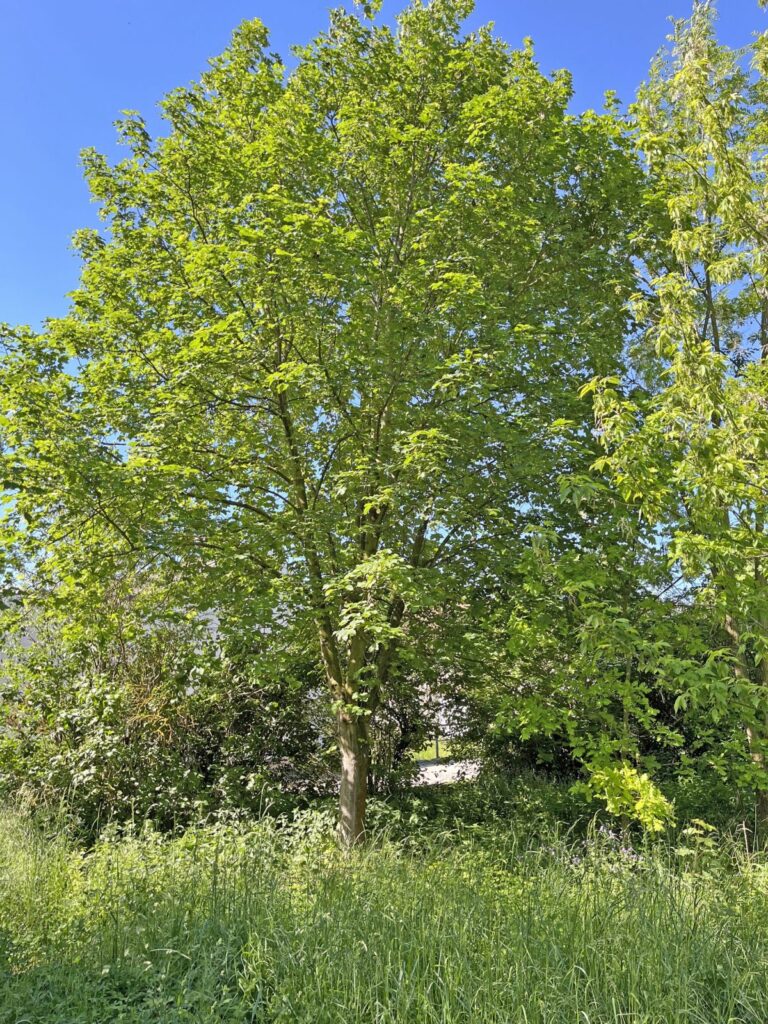
Amidst a dense forest stands a majestic tree, its roots deeply anchored in the earth, its branches reaching high into the sky. This image symbolises the beginning of every change, for just like this tree, whose strength is anchored in its roots, our journey of self-discovery also begins from within. Yet, in a world often characterised by automatism and superficial decisions, many of us lose sight of the compass of our own values.
A temporary life in an office frequented by more than 300 people a month illustrates the degree of automatism in humans, even through simple actions like going to the toilet. Two recently experienced examples highlight this: In the men’s toilet, two urinals and two cubicles were installed. When one of the urinals became blocked, we promptly covered it with strong adhesive tape to prevent its use. However, the second urinal soon became blocked too; the yellow water stood to the brim, and its use was already hazardous for the user.
Surprisingly, this did not deter some male visitors. Instead of using a cubicle, some of them saw it as a challenge. The result? A flooded floor and a lack of responsibility.
The situation was no better for women. As soon as we hired a cleaner, the first incident occurred, revealing what was going on. Imagine: a person enters a cubicle, lowers the toilet seat, and urinates on it! This behaviour is reminiscent of dogs marking their territory. Women automatically mark toilets in a similar way. This unpleasant but illustrative example highlights the extent of the impact of automatism.
Awareness or Autopilot
In my understanding, the perception of the world is divided into awareness and autopilot. It is important to find time in life to reflect on questions such as “Who am I? What am I doing? What do I want? Why do I want it?” This act of “feeling oneself in the space” allows us to lead a more conscious life and resist the autopilot. For autopilot is like being overwhelmed by an avalanche of dirty laundry. In this mode, critical thinking is often absent, and primitive reactions occur instead. Yet, there is a need to “pause” so as not to let life pass by unobserved. How successfully do people make political decisions if they often lack critical thinking and act in autopilot mode?
Between the Easy and the Right
We stand at the crossroads between the easy and the right, a constant balancing act in a sea of decisions. According to Chat GPT, an average person makes about 35,000 decisions daily – from trivial ones like choosing breakfast to significant decisions in professional and private life. Yet, each of these decisions challenges us to make a choice – either to take the tempting but easy path or to embark on the right, often challenging, one.
The easy decisions are those that come easily to us, that entice and seduce us. They are familiar and comfortable, even if they are not necessarily in line with our long-term goals or values. An individual example of this is a toxic relationship, where it is easier to stay than to let go, even if it harms us. The right thing to do would be to break free from this relationship, based on values such as self-worth and self-love. Similarly, at a state level, with plastic consumption. It is easier to use plastic than to seek sustainable alternatives. Yet, the right thing to do would be to opt for more environmentally friendly options to protect our planet.
Decisions with Courage and Determination
In contrast, right decisions are difficult. They require courage and determination, for they change the course of things. Often, they are associated with emotional or economic consequences that are not easy to manage. Yet, they are the only ones that lead to our long-term well-being.
Personally, I like this theory, because it is universally applicable, whether at an individual or state level. We all face this challenge, and the key lies in making decisions based on our values.
Values are often abstract and elusive
The word “values” is ubiquitous, yet do we truly understand what it means in our lives? Often, values remain abstract and elusive. We may recognise them behind our actions, but we rarely take the time to pause and consciously reflect on them.
Yet, this is precisely where the core of our behaviour lies. Our decisions are ideally guided by our values. They are the common thread that runs through our lives and directs our actions. But how often do we stop to reflect on our own values?
I firmly believe that each of us has a purpose in life. But only if we actively seek it and act accordingly can we find true happiness. Only then do we have the energy not only to shape our own bubble but also the world around us.
In contrast, if we do not embark on the path of self-development, if we do not recognise our own values, we lose ourselves in the current of life. We do not know what we want, and we let others decide for us – a rule that prevents us from fully realising our potential.
Find your path, discover yourself, and understand your own values. For only then can you lead an active life and shape both your own self and the democracy around you.
Value-Based Democracy vs. Ideology
As Europeans, we are in a hybrid war with authoritarian states, often referred to as an ideological war. In the debates, it becomes clear that this conflict is not only political but also cultural. If we in Europe neglect our own values and do not give them enough time and attention, how can we then defend our value-based democracy in the ideological war in the long term?
Consider a majestic tree amidst a dense forest. Its roots reach deep into the earth, while its branches extend high into the sky. This tree symbolises the beginning of every change. Just like this tree, whose strength is anchored in its roots, every change also begins within ourselves.

About the Author: Anna Pattermann: Ukrainian, European, activist, political science student at the University of Vienna, chairwoman of the “Unlimited Democracy” association for the promotion of democratisation. Photo: Anna Zhebel
I remember a time when I found myself amidst a storm of uncertainty. My desire to make the world a better place seemed like a lonely cry in the wind. But then I realised that the key to change lay in my own actions. Inspired by Gandhi’s principles, I began to be an example of the kind of changes I wished to see in the world. On my journey of self-discovery, I became aware that our own values are the compass that guides us through the labyrinth of life. Yet, many of us lose sight of this compass and let others make decisions for us. But this has consequences, not only for ourselves but also for the society in which we live.
Europe, a Place Full of History and Diversity
Europe, a place full of diversity and history, needs our voice. We must find our own values and remain true to them, for they form the foundation of our democracy. If we fail to defend our values, we open the door for authoritarian forces that threaten the foundations of our freedom.
Let us embark together on the path of self-discovery. Seek your own values and act accordingly. For only by strengthening our own roots can we withstand the storms of change and positively influence the world around us.



