European Election 2024
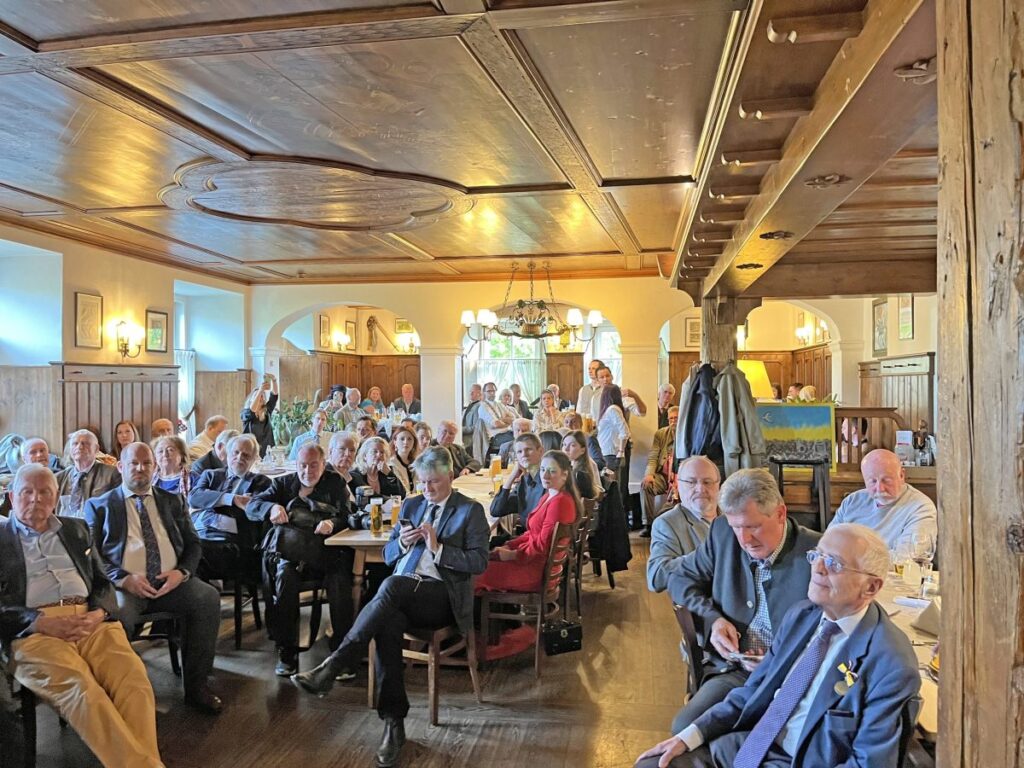
For a Strong Europe. Position Paper of the Paneuropa Movement Austria on the 2024 European Election, adopted by the General Assembly of the Paneuropa Movement Austria on 12 April 2024 in Salzburg.
The global political and economic conditions and challenges demand clear European responses. Only a Europe acting in concert, a strong European Union, can prevent Europe from definitively exiting the stage of world politics. Europe often still faces the same challenges it faced at the time of the Paneuropa Union’s founding over 100 years ago. The frequently resurfacing yearning for the nation-state would benefit not Europe, nor these nation-states, but rather non-European powers. In view of global challenges, strong European solutions are required.
However, strength does not lie in regulation and bureaucratisation; strength lies in a living principle of subsidiarity, where competences are located at the level where sovereignty can also be developed. Its natural limit lies in the freedom of citizens.
The Paneuropa concept follows a geopolitical approach. At its core are, firstly, a European foreign policy – to avoid being dominated by others on the stage of world politics – secondly, a European security policy – to avoid being dependent on and thus dominated by others in this matter, or being drawn into another intra-European war – and thirdly, the dismantling of all intra-European trade barriers (free internal market, free trade). A common currency, a European Court of Justice, the freedom of citizens, personal responsibility, and a state that limits itself to setting the framework conditions in the sense of a rule of law, complement the Paneuropa concept for European unification.
The institutional structure of the European Union offers a balance between intergovernmentalism and supranationality. If national egoisms in the intergovernmental element of the Council are too strong, and the Council thus becomes too weak overall for a European policy dimension, the supranational elements of the Commission and Parliament must compensate. The Commission, as guardian of the treaties, must then drive forward the geopolitical dimension of the EU, and for this, it needs the oversight of a strong Parliament. Through its first direct election 45 years ago, it acquired a clear European responsibility. It is therefore the representation of citizens with responsibility for the whole.
The composition of the European Parliament determines whether the European Union develops into the geopolitical actor we need, given the global situation, if we Europeans still wish to play a role on the stage of world politics.
In view of the upcoming European elections in June 2024, the Paneuropa Movement Austria therefore advocates for:
- European Foreign and Security Policy: It is time for the European Union to begin building a truly European foreign and security policy. European foreign policy means not only the coordination of the foreign policies of 27 Member States by the High Representative for Foreign Affairs and Security Policy, but an EU Foreign Ministry with a European Foreign Minister at its head. For this, the European Union needs the core of a European constitution, in which precisely these foreign and defence policy competences are described. The European Foreign Minister and the European Defence Minister would be subject to the direct parliamentary control of the European Parliament, which is directly elected by the citizens of the European Union. This is true sovereignty, i.e., the ability to act and shape.
- European Security Strategy: In view of the current threat situation posed by Russia’s war of annihilation against Ukraine, by Russia’s hybrid war against the European value system, and the challenges posed by other totalitarian regimes such as China, the European Union must be developed into an effective security community. This requires a rapid restoration of Europe’s defence capability through an expansion of military capacities, alongside ever closer cooperation in military defence, including procurement, as well as the development of intellectual national defence for Europe. The mutual assistance clause enshrined in Article 42(7) TEU should be expanded into a genuine European defence community. Austrian neutrality is a concept from the post-Second World War era. Due to the changed geopolitical situation, it has become obsolete.
- Enlargement: Many European countries still aspire to membership in the European Union because they see democracy, the rule of law, freedom, and a market economy as the foundation for a secure and prosperous future. Enlargement is one of the EU’s strongest foreign policy instruments. Therefore, there is a need for rapid implementation of the integration of the so-called Western Balkan countries – Albania, Bosnia-Herzegovina, Kosovo, North Macedonia, Montenegro, and Serbia – into the EU, as promised at the Thessaloniki Summit in 2003. Above all, however, Serbia must decide whether it truly wants to become part of the European Union, or prefers to continue playing the Chinese and/or Russian card. Likewise, a clear European strategy is needed for the integration of the macro-region of Ukraine, Georgia, Armenia, and Moldova into the European community of values.
- Subsidiarity: Contrary to the widespread opinion that subsidiarity is a principle of delegation, according to which nation-states delegate competences to other levels, subsidiarity is in fact a natural ordering principle. It assumes that responsibilities must be located at the (administrative, political, social) level where they can be best exercised – the ultimate goal always being the common good. Subsidiarity therefore goes beyond the restricted concept of sovereignty of the 19th-century nation-state and recognises ordered sovereignties, which for the respective sovereign mean competence and associated responsibility. For a subsidiary order, there is not only a distinction between the European Union and Member States with an optional regional level, but a decentralised structure ranging from the local unit to the European level. Additionally, subsidiarity recognises societal units (such as the family) and the free individual, who – like the administrative units – possess their own sovereignties. Subsidiarity therefore does not ask “how much Europe do we need?”, but only “how much government, how much state, how much state intervention do we need?” The principle of freedom in responsibility takes precedence over the regulatory zeal of the currently prevailing bureaucracy (both at the European level and in many Member States). In the spirit of this freedom in responsibility, the Paneuropa Movement strives for a drastic reduction of legal provisions and state interventions, which ultimately only serve to centralise power.
- Rule of Law: The essence of the liberal rule of law is not the state enforcement of a particular notion of happiness and welfare. The task of the liberal rule of law is to guarantee law and freedom! An ideology that follows the primacy of politics claims the right to regulate everything, indeed to be able to regulate everything. However, the more politics does this, the deeper the conflict with the law becomes. This conflict is becoming increasingly sharp because it is less and less often the principles of the rule of law – i.e., the supremacy of law – that govern, but rather power relations. This conflict will ultimately harm Europe in the long term.
Furthermore, the Paneuropa Movement Austria advocates for:
- European border protection and a reopening of internal borders
- A free internal market instead of new national protectionisms
- Free trade agreements with countries and regions outside the European Union
Europe must gain competence where this competence – as, for example, in foreign and security policy – can develop sovereignty. At the same time, however, the sovereignty of citizens, their ability to develop their freedom and responsibility again, must be strengthened. The goal is not the extensive paternalistic welfare state, which regulates and redistributes as many areas of life as possible at the state level, but rather personal freedom and responsibility, family autonomy, freedom of religion, private property, a free economy, etc.
Subsidiarity demands not a primacy of politics, but a primacy of law and freedom.
Featured image: General Assembly of the Paneuropa Movement Austria on 12 April 2024 at Stiegl-Brauwelt in Salzburg.



