Diplomatic Aberrations
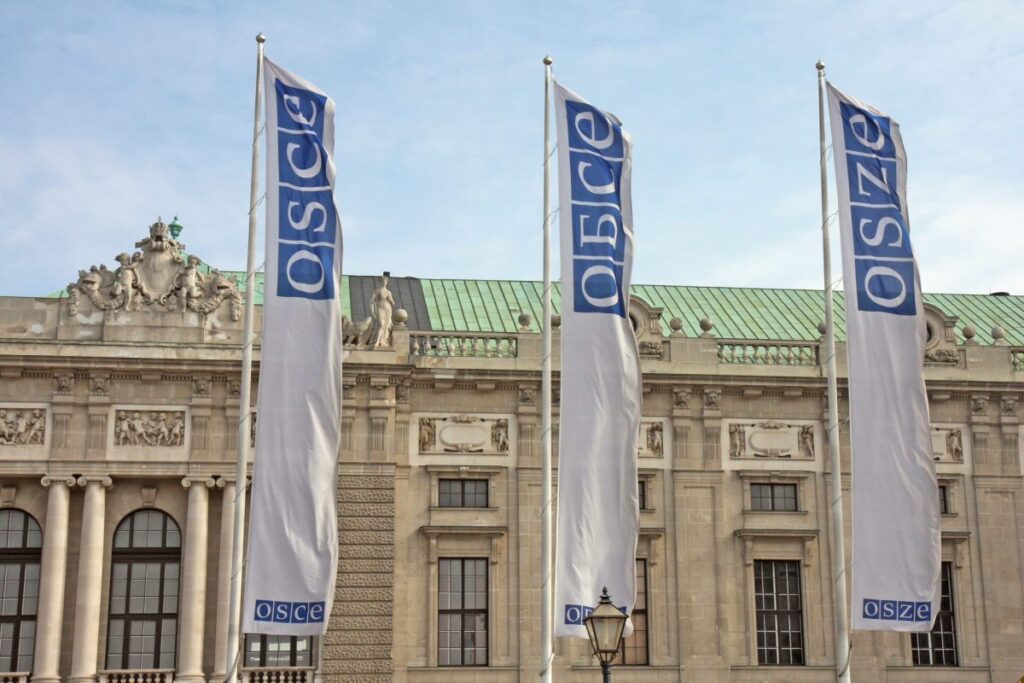
When an organisation of highly paid diplomats comes up with the idea of convening an OSCE meeting precisely on the anniversary of Russia’s devastating invasion of Ukraine, to which representatives of the Moscow terror regime are also invited, this demonstrates the weakness of diplomacy. A commentary by Rainhard Kloucek
This is hardly a new tactic. Whenever there are international meetings to which Russian representatives are invited, Moscow sends precisely those henchmen of its regime who are on a sanctions list. Under the guise of various agreements, they then receive a visa. Meanwhile, Putin sits in one of his palaces, grinning cheerfully to himself, because he has once again succeeded in circumventing sanctions.
Now it is Austria’s turn to be embarrassed. The fact that the OSCE came up with the idea of holding a meeting in Vienna precisely on the anniversary of Russia’s devastating attack on Ukraine, to which representatives of Putin’s terror regime are also invited, does not speak well for the OSCE. And very little else speaks well for this institution, which costs a lot of money and achieves nothing.
Moscow is, of course, not foolish and exploits the situation by sending representatives who are on the sanctions list. This is unfortunate for Austria, because as the host country of the OSCE, visas must be issued due to international treaties.
Naturally, the Foreign Minister could have consulted with his counterparts who placed these very Russians on the sanctions list. Had they agreed to refuse the visas, it would have been merely a tit-for-tat for Moscow, which also fails to adhere to international treaties. There can be no obligation to treat representatives of a terror regime equally with democratic countries.
Had his counterparts not agreed, no one could have condemned Austria for it. As it stands, the Republic of Austria alone suffers damage to its reputation in Ukraine.
c Featured image: OSCE/Sarah Crozier



