Macedonia – 3,500 years of history and now in search of its own name
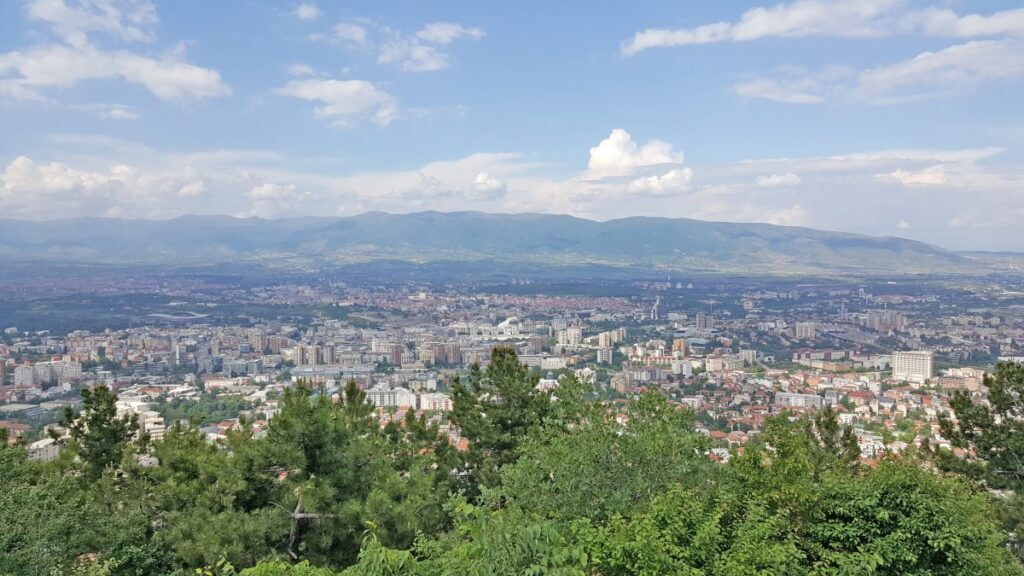
In mid-May, a Paneuropean group travelled to Macedonia. The verdict: the country is not a ‘Former Yugoslav Republic of Macedonia’ – as the humiliating name used internationally suggests – but a country with European roots stretching back to antiquity and the will to be a partner in the European Union.
An on-the-spot report by Stefan Haböck, International Officer of the Paneuropa Movement Austria.
Republic of Ilinden Macedonia. This is the name proposed by the Macedonian government to its Greek neighbour. The two heads of government, Zaev and Tsipras, radiated optimism at the Western Balkans summit in Sofia. It is an optimism that is less shared by the inhabitants of Greece and Macedonia. The unspeakable blockade of Macedonia because of its name is just one episode in the long game being played with the country. While the communist head of government in Greece is trying to find a compromise (and immediately facing resistance from the opposition), the question for us was: what is the situation actually like in Macedonia?
Landing at Alexander the Great Airport? That was then
Our group – including the regional chairman of Paneuropa Saxony, Stefan Richter, and the former federal chairman of Paneuropa Youth Germany, Clemens Raab – landed at Skopje International Airport. Since February 2018, the airport has had a different name – a concession by the Macedonian government to its neighbour.
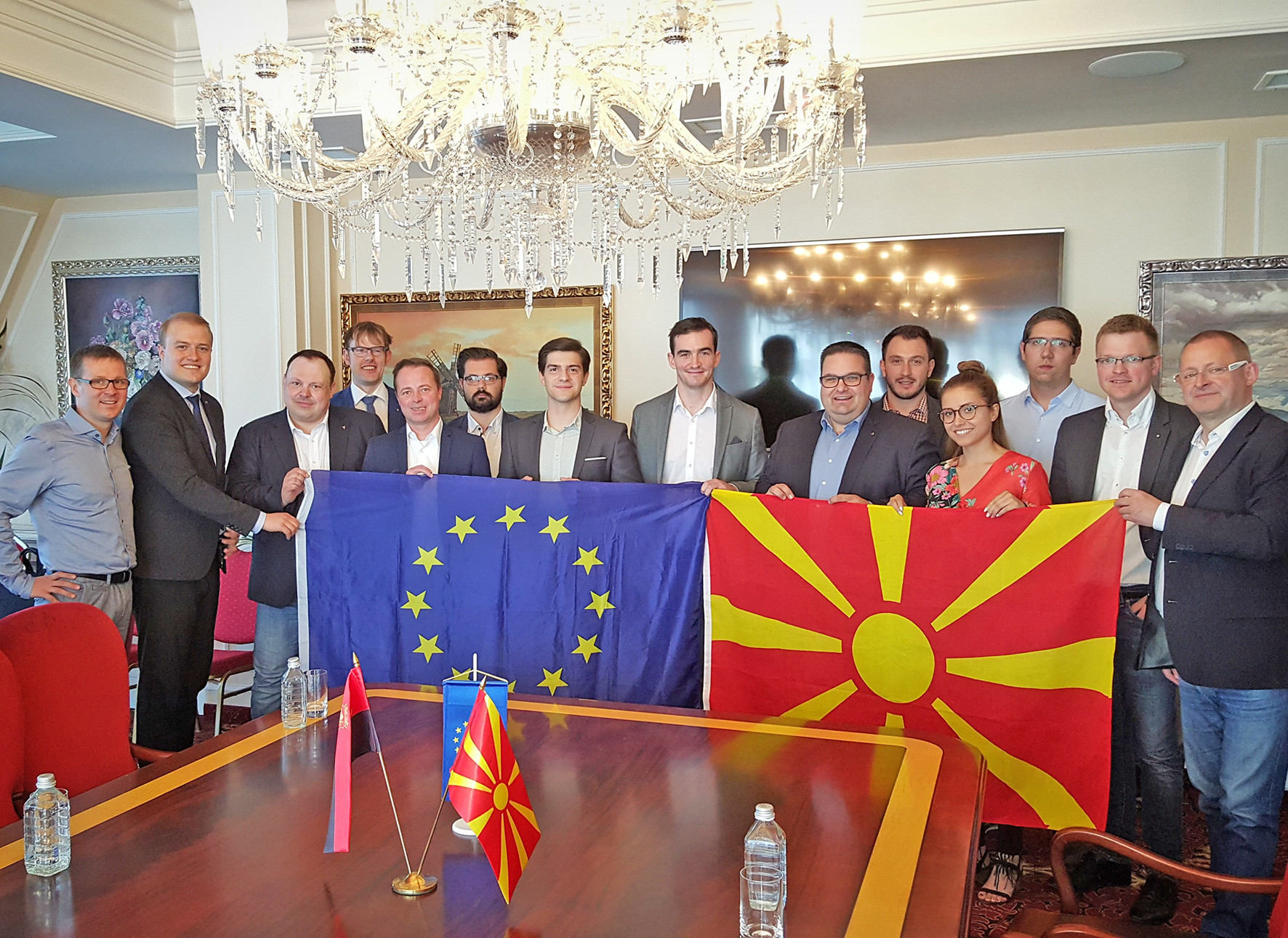
Paneuropa Youth delegation visiting Skopje.
The motorway to Skopje, the birthplace of Saint Mother Teresa – who is also revered in Albania and Kosovo – was also renamed.
A country in search of stability
Macedonia – an independent republic since 1991 with almost two million inhabitants in South-Eastern Europe. The country, which can be described politically and economically as a classic country in transition, is ethnically and religiously mixed – the population is made up of Macedonians and Albanians, but also minorities such as Bosniaks and Turks. Both Cyrillic and Latin scripts are used. Two-thirds of the people are Orthodox, around one-third Muslim.
In 2001, the country was shaken by civil-war-like conditions when the Albanian paramilitary UCK attacked Macedonian authorities. The conflict was ended with the Ohrid Framework Agreement, which granted the Albanian population more rights. The then Macedonian President Boris Trajkovski, supported by the EU and the USA, was largely responsible for the peaceful solution.
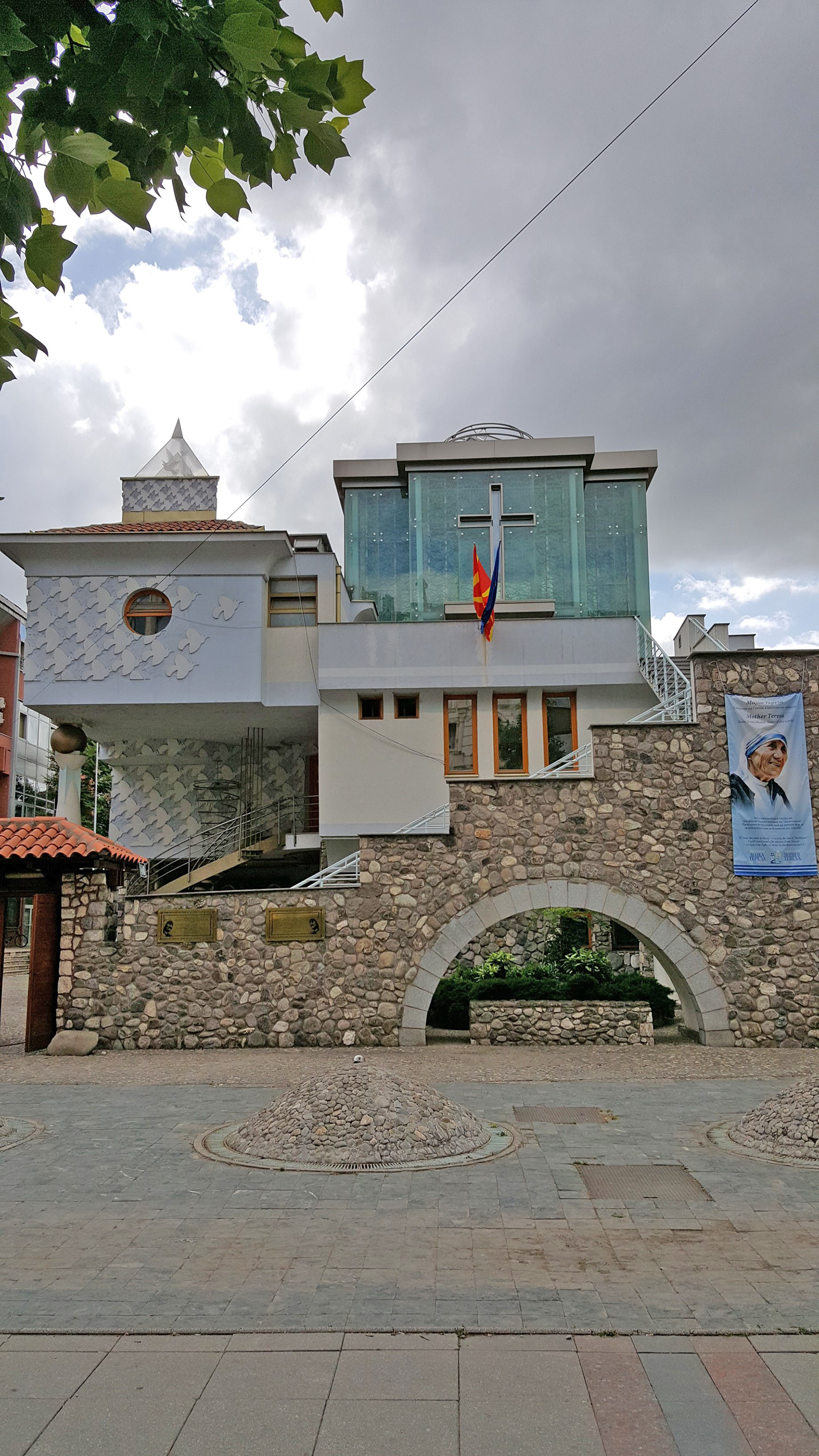
The birthplace of Mother Teresa in Skopje.
Politically, the country is dominated by the conservative VMRO-DPMNE and the Social Democratic SDSM. In addition, there are several Albanian parties. A sharp political dispute between VMRO and SDSM culminated in new elections in 2016. Although VMRO won by a narrow margin, SDSM and the Albanian BDI agreed on a government. After eleven years, VMRO was back in opposition.
From European antiquity through Christianity to the EU – the country is European
A trip to Macedonia must, of course, include Lake Ohrid. The second largest lake in the Balkans is also one of the oldest on Earth. Located on the border with Albania, this region illustrates Europe’s cultural heritage. Ohrid, which is considered one of the oldest cities in the world with a history of settlement spanning over 5,000 years, is not called the ‘Jerusalem of the Balkans’ for nothing. This small town on the lake boasts no fewer than 365 churches. A trade route through Ohrid once connected Rome with Constantinople.
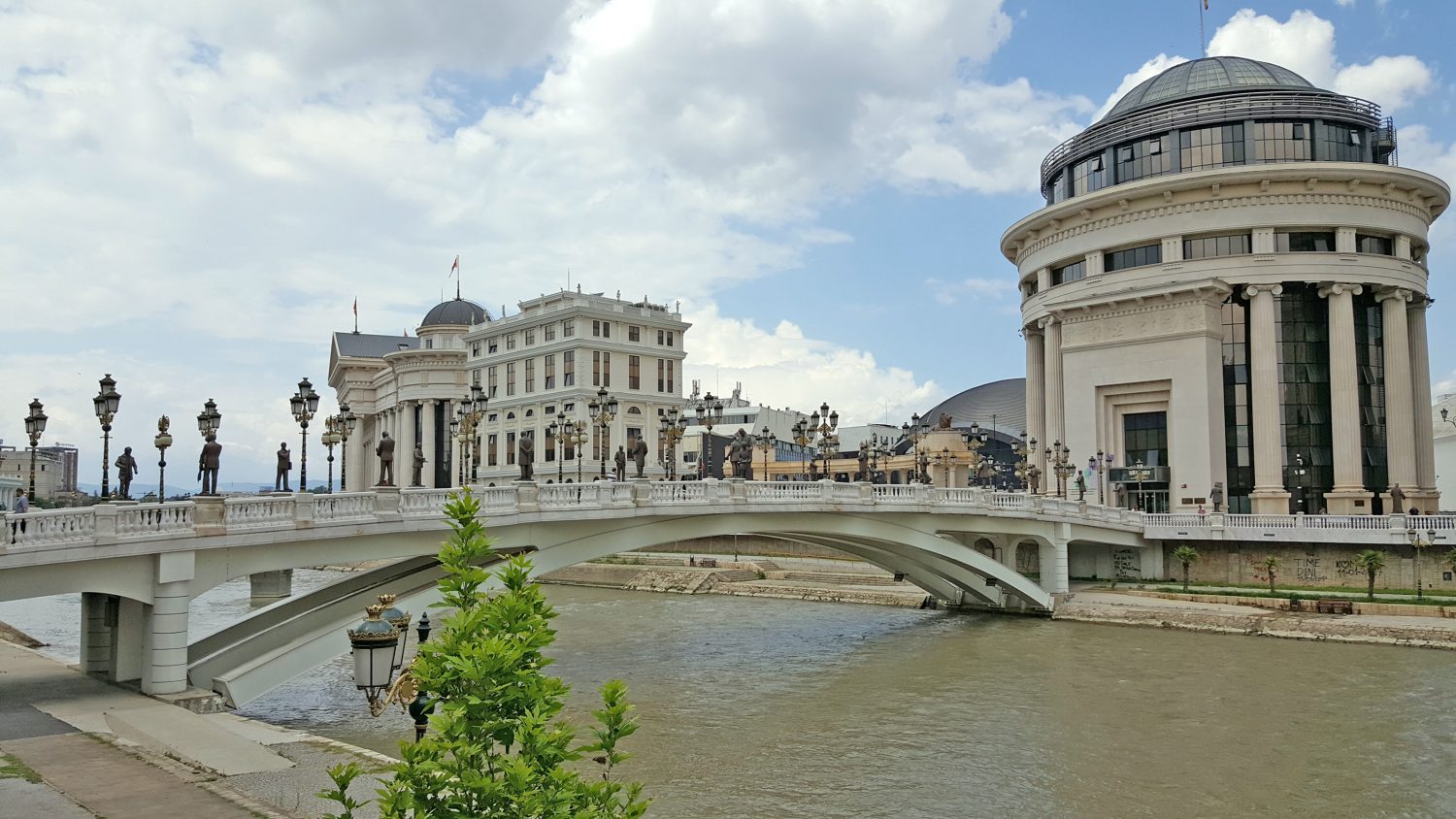
The government district in Skopje.
With Philip II of Macedon and Alexander the Great, two famous rulers are among Macedonia’s heroes. Unfortunately, this also ignites the dispute with Greece. The journey takes longer than the distance would suggest. Only 70 kilometres are motorway. The rest goes through the mountains. The road construction site there? Deserted. Allegedly a dispute with Chinese investors? In any case, the government has stopped most of the previous government’s infrastructure projects.
The country’s political orientation is European – the country seeks EU membership
Regardless of internal political conflicts, there is one common thread that holds politics together: accession to the European Union and NATO. To obtain first-hand information on this, political meetings with Deputy Prime Minister Bujar Osmani and the Vice President of VMRO-DPMNE, Aleksandar Nikoloski, were on the agenda.
Deputy Prime Minister Osmani, from the largest Albanian party BDI and responsible for all matters concerning the European Union, emphasised that EU accession is the most important point for the country. He expressed relief that they are in line with the opposition on this. According to Osmani, the government will offer an acceptable compromise in the name dispute. However, he still sees the promised referendum in Macedonia on the new name as a sticking point. There are fears of massive influence from non-European forces on the vote.
Visa liberalisation by the EU was an important boost for the country. Currently, a roaming agreement is also being negotiated with neighbouring Bulgaria. The expansion of infrastructure – both digital and in the transport sector – is at the top of the list. The meeting with the newly elected Vice President of the largest party, VMRO-DPMNE, focused primarily on party-political issues. How the conflicts between 2015 and 2017 unfolded from the perspective of the conservative party and what conclusions have been drawn from them.
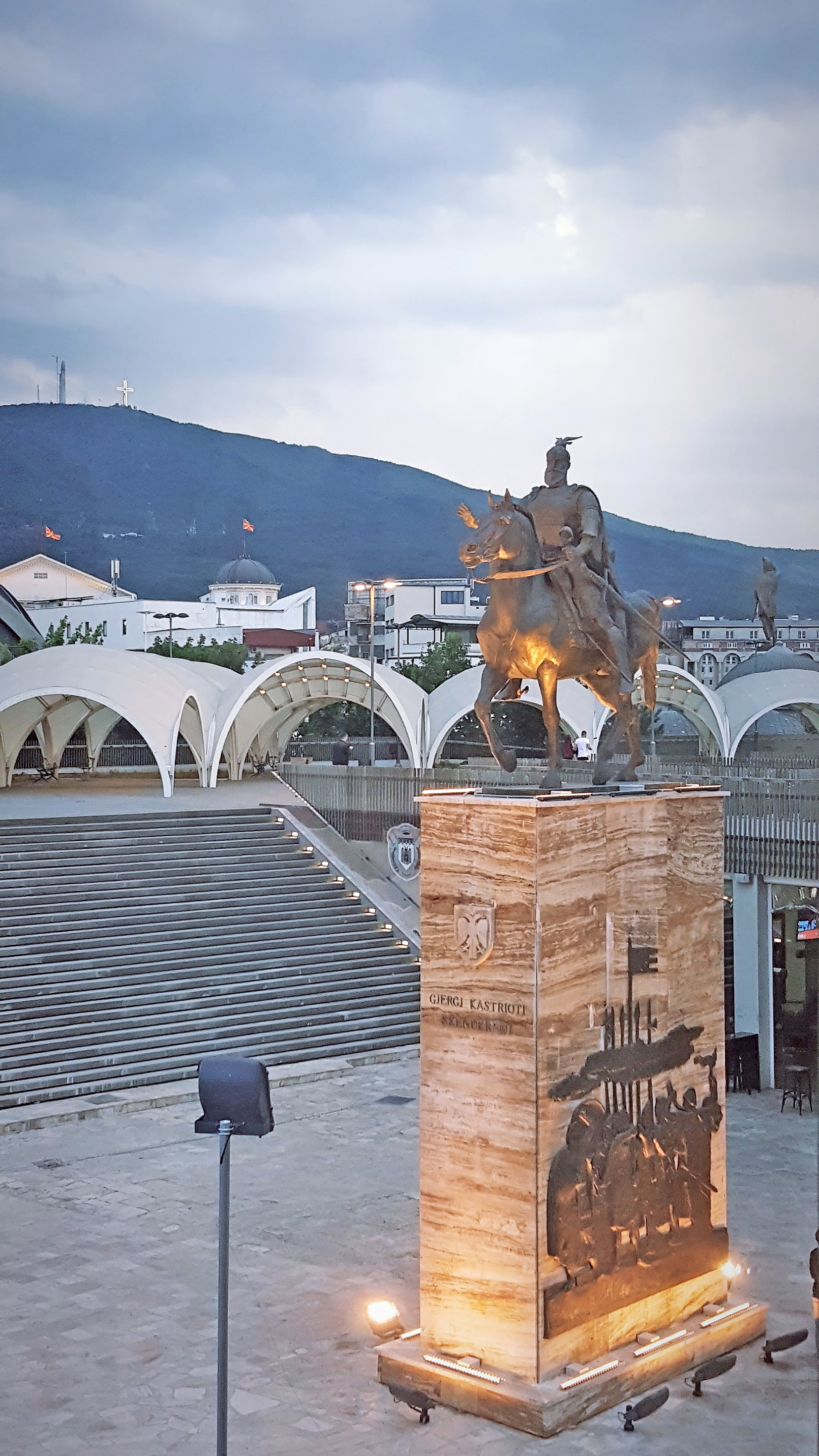
Skanderbeg Monument in Skopje.
The trip was rounded off with a meeting with representatives of the largest political youth organisation, the Youth Union Forces. They emphasised the new orientation of the party’s youth with a clearly pro-European course. There was also a debate on the challenges facing young people in an economically weak country.
Any delay in the EU perspective plays into the hands of anti-European forces
There was agreement: the country, and especially its young people, need a clear European perspective. Further stalling by the European Union and a blockade by Greece are unacceptable and would only fuel resentment in the country and make it easier for non-European powers to seize control. Macedonia, which also has a strong Ottoman past, is also in the focus of Erdogan’s Turkey.
One may smile at the newly erected, controversially discussed colossal statues in Skopje. One may eye the triumphal arch, built a few years ago between two dilapidated buildings, with criticism, or look sceptically at the behaviour of the country’s political representatives. We, as Paneuropa, see the underlying search for identity. Our new friends from the various political camps confirm this.
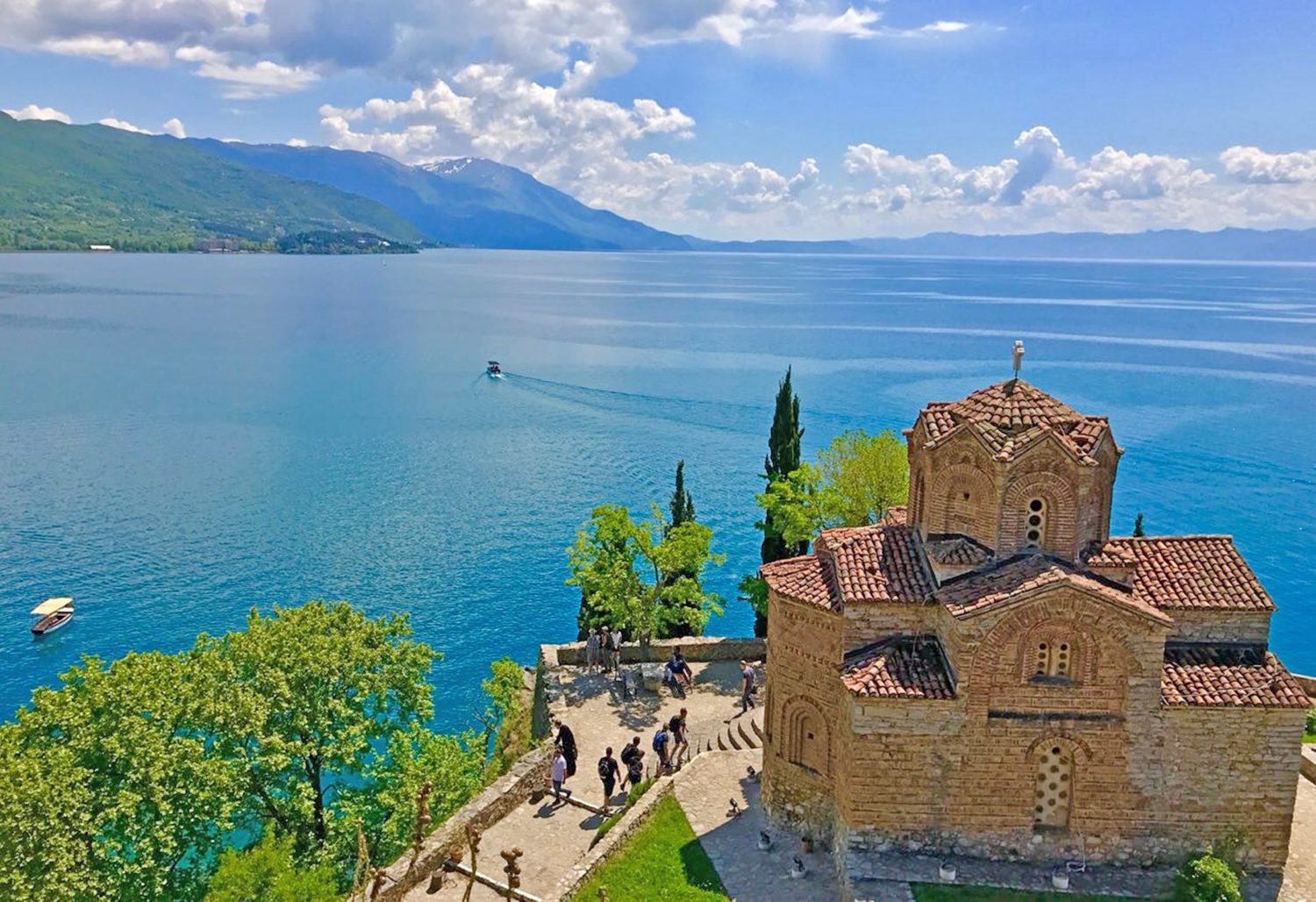
Lake Ohrid is the geologically oldest lake in Europe (excluding Russia). The city of the same name can look back on five thousand years of settlement. This Balkan jewel boasts 365 churches.
The people in Macedonia have endured conflicts for long enough. They deserve to be a full part of the European Union as soon as possible. Therefore, the motto here must also be: pressure on political representatives to put the well-being of the country first and to provide citizens with every opportunity in a united Europe.
Здраво Македонија.
PS: Great thanks go to our Paneuropean friends Trajce Rusev and Andrej Lepavcov, who organised the political programme for us!



