Protests in Albania
Albania is repeatedly plagued by political turmoil. By Rainhard Kloucek
At the beginning of March this year, the General Council of the Albanian Muslim community elected a new chairman for the next four years. Bujar Spahiu was ultimately elected with a two-thirds majority of votes. He is considered a moderate representative of the Muslim community with a European orientation. The election was preceded by weeks of massive pressure from the government to elect another candidate, namely Ylli Gurra. He is considered a candidate of Turkish President Erdogan, and he is said to have close ties to Salafists.
To underscore this pressure from Ankara, the brother of Turkish President Mustafa Erdogan was also present in Albania. Well-informed circles report direct interventions by representatives of the Turkish government via the embassy in Albania. Accordingly, Albanian Prime Minister Edi Rama, Tirana Mayor Erion Veliaj, and the Socialist Party’s parliamentary group leader Taulant Balla strongly advocated for Gurra.
The opposition vehemently protested against the direct interventions from Turkey, but also against the interventions of Albania’s socialist government. They called on the Muftis to preserve their dignity and maintain their European orientation.
Albania has a massive problem with drug cultivation and trafficking. Traces repeatedly lead to the highest government circles, which cover for the drug mafia’s activities. In the specific case of the election of the Muslim representation, a connection to drug trafficking is also being made through a Turkish agent who was leading the interventions. Among other things, the socialist government is alleged to have engaged in massive vote-buying in previous elections with proceeds from drug deals.
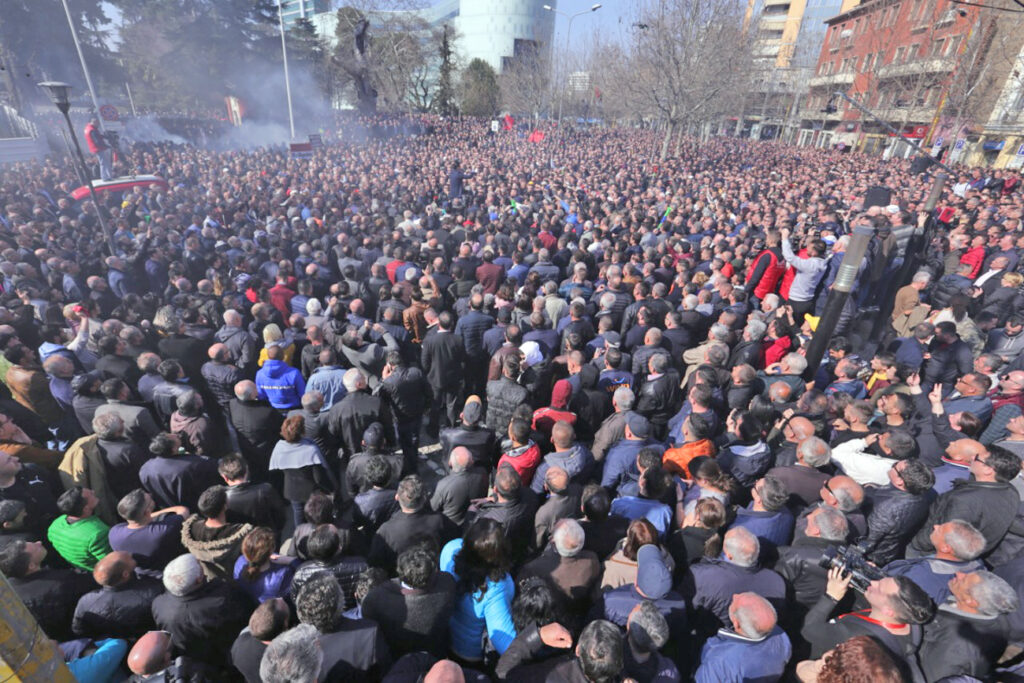
Turkey has a significant presence in the Balkan country. One objective is the acquisition of strategic infrastructure. In this context, accusations of corruption are repeatedly raised. For example, 40 per cent of the Albanian airline went to Turkey. The numerous corruption allegations led to widespread protests in March, where thousands of opposition supporters demanded the government’s resignation.
The article originally appeared in the magazine “Paneuropa”, Issue 2 2019, page 5



