Russia’s Fear of a United Europe
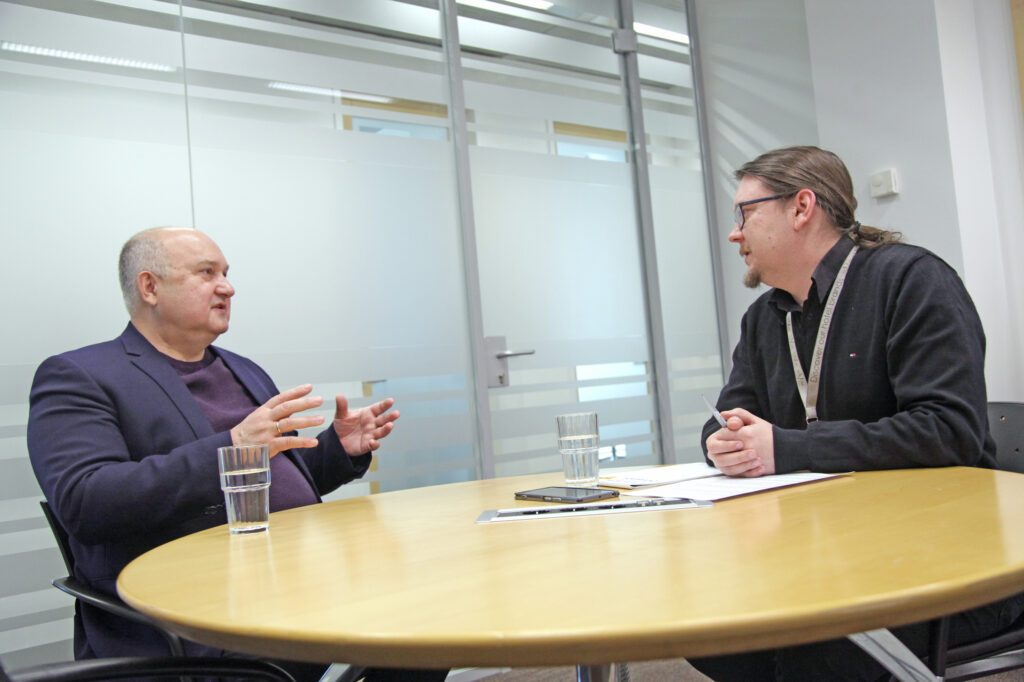
On 31 March, presidential elections will take place in Ukraine. One of the candidates is General Ihor Smeschko, former head of Ukrainian intelligence. He spoke with ‘Paneuropa’ in an exclusive interview. The interview was conducted by Charles Steiner.
In public perception within the EU, the armed conflict in Eastern Ukraine, unlawfully instigated by Russia under international law, now receives little attention, despite people dying there every day. On the contrary, some politicians are now considering an end to sanctions against the aggressor, hoping to profit economically. And even in Ukraine itself, the situation is difficult. Presidential elections will take place on 31 March, yet political reforms since the fateful Euromaidan of 2013/2014 are progressing very hesitantly. Alongside Petro Poroshenko, Yulia Tymoshenko, and dozens of other candidates, General Ihor Smeschko is now also vying for the favour of the voters. Smeschko is someone who knows the political situation in Ukraine very well – during the Orange Revolution, he was head of Ukrainian intelligence, where he prevented a military escalation; under President Poroshenko, he served as his security advisor. ‘Paneuropa’ spoke exclusively with Smeschko in Vienna about the situation in Ukraine, why Ukraine cannot be Russia’s little brother, his relationship with Europe, Austria, and Paneuropa Austria President Karl von Habsburg. Smeschko revealed a great deal about his visions, which he intends to realise if he becomes president.
Paneuropa: General Smeschko, you are currently running as a presidential candidate for Ukraine. How do you assess your chances, and what would a President Smeschko do differently?
Ihor Smeschko: It was a very difficult decision for me. I have never been a politician for a single day in my life, and I have never been elected to any position. I have been a professional soldier since I was 16. My entire career in my country until 2005 was an apolitical professional career. I served people who were regularly elected by the Ukrainian population. I left my post as head of intelligence in 2005, and as I observed the developments in my country, I became increasingly afraid.
The main problem in Ukraine is the lack of a genuine political elite that believes in and acts upon democratic values. I have been an active-duty soldier for 35 years, but I believe in the values of democracy. Perhaps because I never travelled to the United States, Switzerland, or Germany as a tourist, but as a military diplomat. I spent many years in countries with true democracy. Therefore, I know what democracy means. When I look at the development of the political landscape from 2005 until today, I must recognise that currently no single party in power is based on the ideology of democracy. There was a Yushchenko party, now a Poroshenko party, a Tymoshenko party, or Rubinitch, Boyko, and Lyashko parties. None of them has a strategy or vision to build a system based on fundamental democratic values, no vision for building the middle class, for the economy and industry.
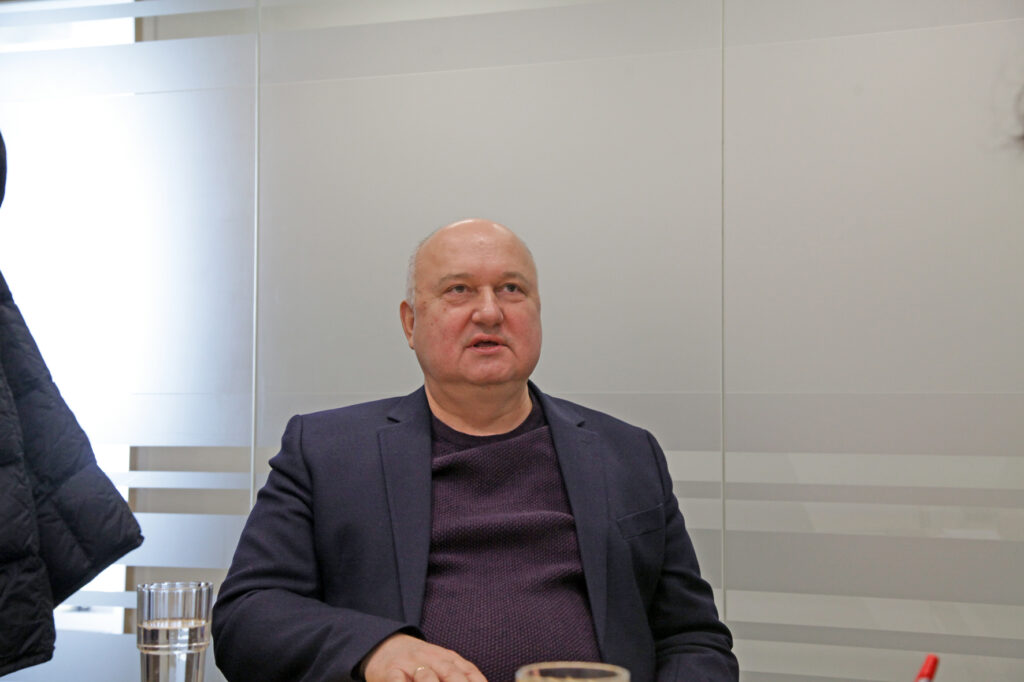
Do you know what Russia fears most? A united Europe and its cultural and democratic values on the Russian border. For those in power in the Kremlin, this is very dangerous, which is why the main goal of their policy is to destroy European unity.
My party primarily aims to defend and build this middle class; it is the foundation of true democracy. We do not work with oligarchs and will not do so. The backbone of our party is also not former soldiers. The main part of the party consists of intellectuals, active students, and regional governments based on the principles of subsidiarity. Our vision is a genuine separation of powers. We have had a wonderful constitution in Ukraine since 1996, but no one has developed the actual law from this constitution that refers to its great humanistic and democratic values. I was often asked why I decided to run. I replied: Can you imagine an aeroplane cabin where you see the plane losing control and descending? And from your seat, you see a crowd pushing into the cockpit to take control? And you were the designer of the plane, you trained pilots. And none of the people pushing into the cockpit can fly. Then your family is on the plane. From this perspective, there was no other option for me but to make this decision.
Paneuropa: Regarding the middle class: What are your strategies for expanding this class? Do you already have a plan?
Ihor Smeschko: First, we want to establish our party with its vision of a constitutional and thus true democracy. To strengthen the middle class, the impoverishment of the population must first be stopped, and small and medium-sized businesses must be strengthened. In our tax system, for example, our government constantly violates our constitution. For instance: Every time we hear that we have too little gas. We have enough gas for Ukrainian consumers. The gas price, with a 30 per cent profit including all taxes, should not exceed 75 dollars/m3. Our government sells gas for more than 350 euros/m3 and says we must calculate according to market prices. In Europe, this may be the market price, but in Ukraine, we do not have market salaries. Oligarchs can obtain gas significantly cheaper, while the rest of the people have to buy gas at these so-called world market prices and do not know how they will heat their homes in winter. Another example is corruption: Ukraine receives three billion dollars from the International Monetary Fund annually. At the same time, our Prime Minister declares that our customs, concerning corruption and bribes, are completely uncontrollable, and therefore we lose three billion dollars per year. It is necessary to attract political professionals to customs to stop this corruption. Then we would no longer need money from the IMF.
Paneuropa: You once said that Ukrainian politics should learn more from European intelligence and that Karl von Habsburg would be the perfect president. Last autumn, the first Paneuropa conference took place in Kyiv, which Karl von Habsburg also attended. How important are these impulses for the future of Ukraine?
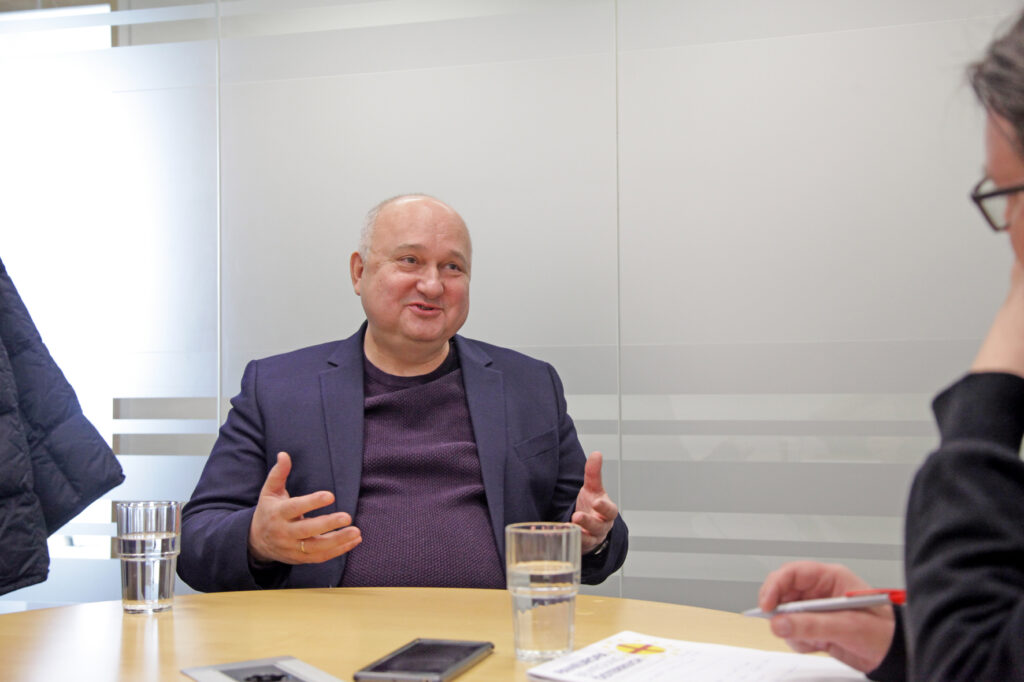
The situation in Europe is also not easy at the moment – there are very right-wing and very left-wing positions gaining power, but hardly any political centre left. However, these extreme right-wing or extreme left-wing slogans are only aimed at people who want a simple answer to complex questions.
Ihor Smeschko: I have great respect for Karl von Habsburg. He is a very unique person; I truly feel honoured to know him. I admire his cultural level, his political wisdom, and his nobility. Only education through generations can produce this level and this deep love for Europe that he represents. In an interview, I once said that parts of our Ukraine were part of the Austro-Hungarian Monarchy. The memory of that time is still very present there. If you go to villages in Western Ukraine, you can see houses with pictures of Emperor Franz Joseph. If Karl von Habsburg had been nominated for president in Ukraine in the 1990s and had accepted, it would have been very good for Ukraine. His dignity and knowledge would certainly have opened the door to the European Union for Ukraine.
Paneuropa: It is very clear from what you say that Ukraine feels strongly connected to Austria and its roots. Would you also say that this applies equally to the Austrian side towards Ukraine? Especially since Austrian Chancellor Sebastian Kurz declared shortly after the beginning of the year that a halt to Russian sanctions would be conceivable if the hostilities in Eastern Ukraine ceased – without addressing the fact that Crimea is still occupied by Russia.
Ihor Smeschko: No, unfortunately not. We respect the decision of the Austrian population and their government, which was legitimately formed under the rule of law. But I think your government could do more for Ukraine. After the Treaty of Versailles and the collapse of the Austro-Hungarian Monarchy, the people in the former crown lands do not have bad memories of that time – just like the Ukrainians. The Austro-Hungarian Empire, regardless of the monarchy, was ultimately very democratically structured internally, with a fair and efficient civil service that was purely subordinate to the legal order and jurisdiction.
And generally: Although many highly knowledgeable people say that the future of Europe depends on Ukraine, I do not feel that the Austrian government currently understands Austria’s historical role. Throughout its history, Austria has brought a great deal of culture and knowledge to Europe, significantly shaping Europe. But Ukraine also had this role. We have repeatedly sacrificed our spirit and our blood for the European idea.
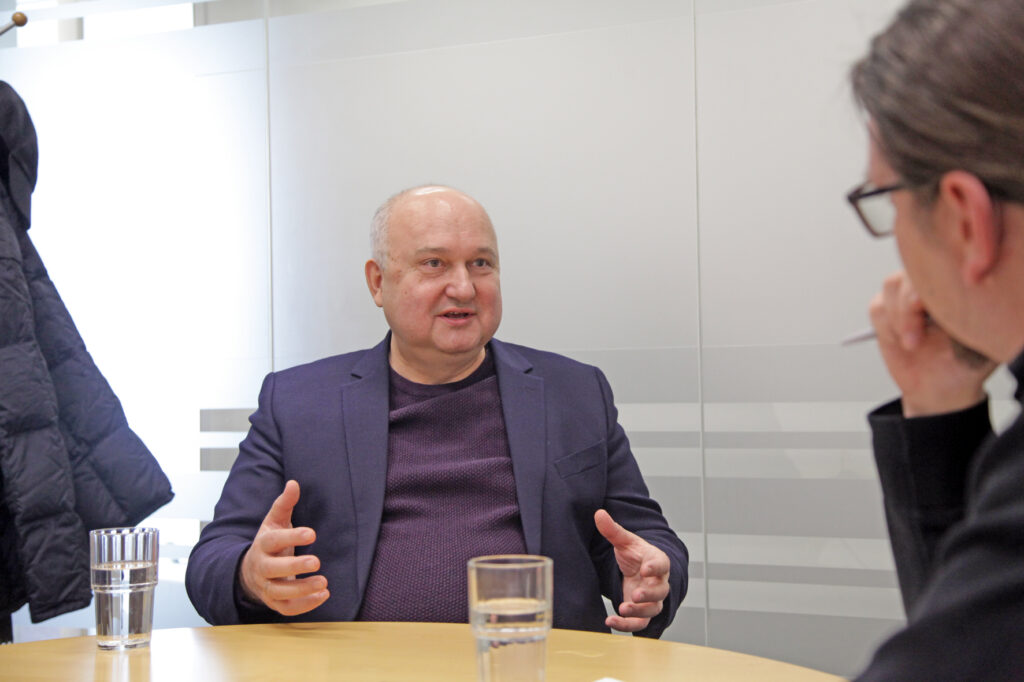
I do not feel that the Austrian government currently understands Austria’s historical role. Austria has brought a great deal of culture and knowledge to Europe throughout its history, significantly shaping Europe. … this policy of relaxed sanctions is extremely short-sighted. And Europe, in general, is not fulfilling its geopolitical duty.
Does it make sense for Europe to build democracy in Iraq or Libya, but forget about Ukraine? Where is the Marshall Plan for us? For Ukraine, this is very painful. No one on Earth has simply given up their entire nuclear arsenal of 176 strategic ballistic missiles for peace without any negotiations. And they did so with joy, because we are not imperialists, but a peaceful people. We have always tried to build democratic statehood. In the 17th century, we no longer had slavery. The first constitution with a separation of powers – it is exhibited in Sweden – comes from Ukraine from the 8th century – a time when the United States was nowhere to be spoken of; it included separation of powers and checks and balances. And why does Europe not recognise this, why does the current Austrian government not recognise this?
Paneuropa: It seems clear that Ukraine feels drawn to the European Union, but Europe is only slowly moving towards Ukraine. How would you assess the current policy in the EU and what would you wish for?
Ihor Smeschko: Since the Euromaidan in 2014, Ukraine seems to have only friends who primarily represent their own interests. And they do not remember that Ukraine destroyed nearly 5,000 nuclear weapons that were aimed at the West. Additionally, 70 per cent of the Ukrainian army’s conventional weapons were eliminated under pressure from the West. The West and the United States spent up to 20 billion US dollars annually on security concerns against the nuclear weapons located in Ukraine. Due to the reduction of Ukraine’s armed forces, we now have the occupation of Crimea and the ongoing war in Donbas, all organised by the Russian Federation, which was armed by the West through oil and gas dollars when Ukraine committed to disarmament according to international agreements.
However, one must not forget that there are also no strategies in Europe to preserve constitutional democracy in the long term. Parties, and even coalitions, that temporarily come to power are not the nation, nor the population. They may have a short-term vision, but this has absolutely nothing to do with the nation’s vision.
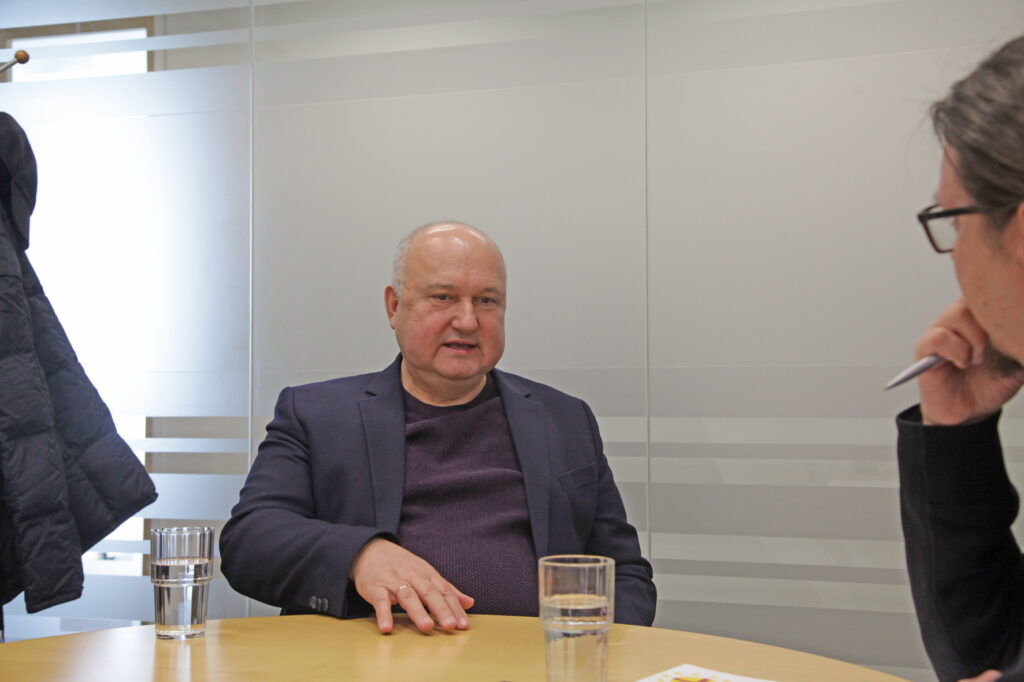
We have always tried to build democratic statehood. In the 17th century, we no longer had slavery. The first constitution with a separation of powers comes from Ukraine from the eighth century. And why does Europe not recognise this, why does the current Austrian government not recognise this?
For example: The two Maidans were not revolutions because the system did not change. The demonstrators ended the dictatorship, but they could not produce political forces that also committed to fundamental democratic values. Afterwards, there were only ministers with political CVs, without any practical experience, without ever having worked outside the political bubble. However, for democracy, it is dangerous when populists without experience, without education, try to destroy the balance with only political slogans. In Europe, the situation is also not easy at the moment – there are very right-wing and very left-wing positions gaining power, but hardly any political centre left. These extreme right-wing or extreme left-wing slogans are only aimed at people who want a simple answer to complex questions. The erosion of Euro-Atlantic democracy and the middle class are the consequence. If the middle class in a country erodes, the values of democracy are also undermined for the population as a result. Aristotle said the most stable state is in the middle. The middle is much stronger than the rich and the poor. If politics only addresses the richest, then there is an oligarchy. If most people are then poor, the result is a revolution. If the government does not care about the middle class with its tradition, the state becomes unstable.
Paneuropa: Back to occupied Crimea: How could Russia be brought back to compliance with international law – or, to put it differently: Would relaxed sanctions not encourage Putin to gain more territory?
Ihor Smeschko: Without a doubt. The main goal of the Asian-influenced self-proclaimed Third Rome is strength. Russia, from history, only recognises power as a geopolitical factor. Do you know what Alexander III said? Russia has only two friends: the Russian army and the Russian navy. Every nation has four elements of power: economy, military, political diplomacy, and information. Currently, Russia, through its armed forces, has the largest army and the second-largest nuclear arsenal in the world. In the economy, oligarchs have appropriated all resources and all the money; the GDP is low. Political diplomacy looks like this: intelligence services in all Western countries engage in lobbying and undermine systems.
In terms of information, there is Russia Today. Russia Today today has a larger budget than the Ukrainian armed forces. In this situation, not wanting to recognise the war raging in the middle of Europe, where thousands of Ukrainian people are being killed, is grossly negligent. While I am absolutely not in a position to criticise your Chancellor’s stance, this policy of relaxed sanctions is extremely short-sighted. And Europe, in general, is not fulfilling its geopolitical duty. Do you know what Russia fears most? A united Europe and its cultural and democratic values on the Russian border. For those in power in the Kremlin, this is very dangerous, which is why the main goal of their policy is to destroy European unity. If there were such a European confederation, including Ukraine, the danger of undermining the autocratic state of Russia would be enormous.
Paneuropa: The Euromaidan was over five years ago. What is the current situation in Ukraine?
Ihor Smeschko: The situation is difficult. Ukraine is in an actual war; we have lost part of our territory, and every day our soldiers die defending Ukraine’s territory. It is a war that the world does not recognise. And this is not just a war between Ukraine and Russia. It is a war between two civilisations, the European-influenced and the Asian-influenced. These two Maidans, which we had in my country in 2004 and 2013/14, were a counter-reaction to the political leadership in Ukraine that tried to build the Russian model of authoritarianism. Western democracy is slowly moving towards the border with the Russian Federation, and the Kremlin has therefore decided to resolve the Ukrainian question with war. The success of democracy in Ukraine could be crucial for the existence of Russia’s authority.
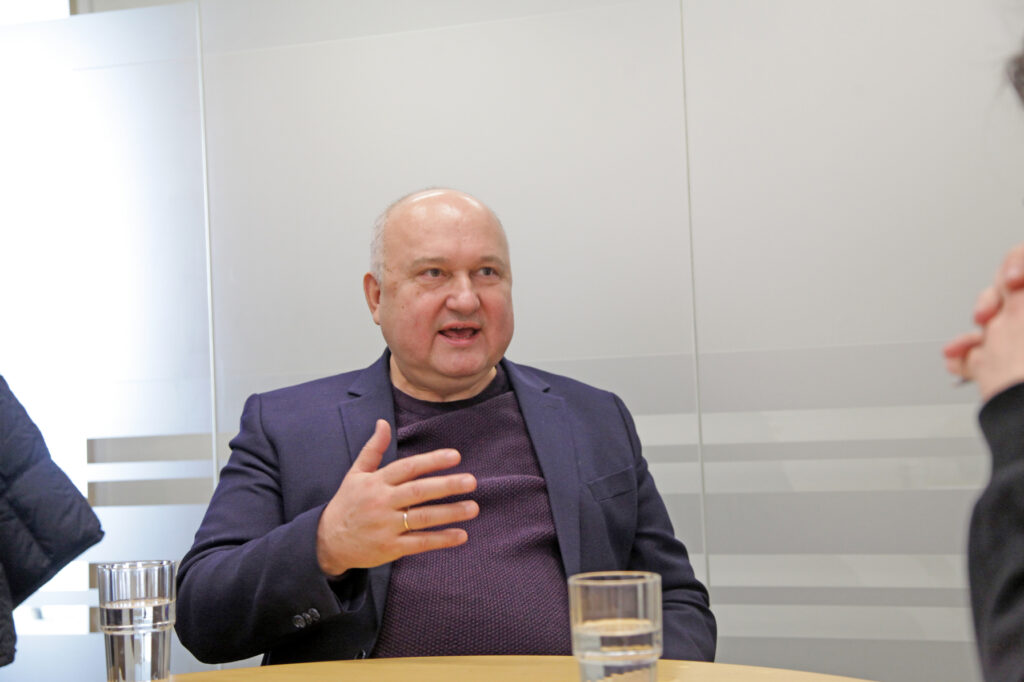
It could be an example that, despite strong propaganda, Russian authority fails to change the mentality and thinking of the Russian population. That is why they act with military force to stop the spread of democracy.
The problem in Ukraine is both internal and external. Internally, the main problem is that since 1991, there has been no real political elite genuinely and seriously committed to the principles of democracy. The political elite in power tried to copy an authoritarian regime like Russia during the Maidans, but they do not know the history of the Ukrainian people. These two Maidans, which were civil protests against the authoritarian regime, were directed against this Russian understanding of the state.
Although the Maidans managed to end the dictatorship, they were unable to build democracy. To build this, genuine political parties committed to the ideology of building democracy are needed.
Paneuropa: Thank you for the interview.



