Paneuropa Wine Picnic
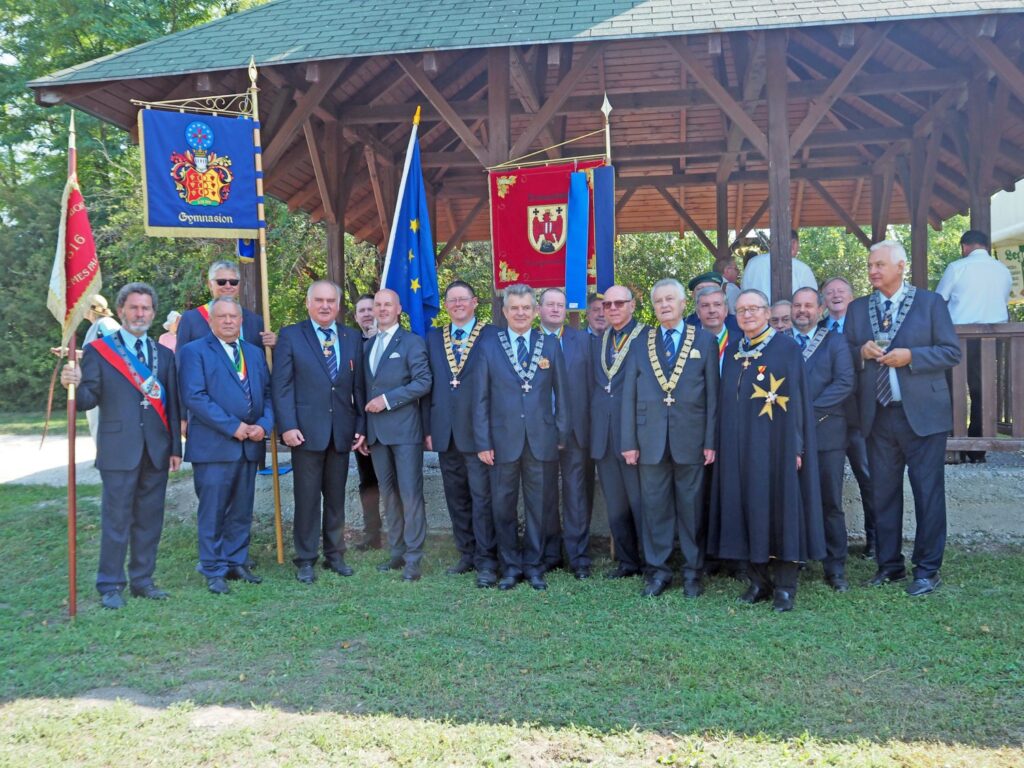
The ‘Paneuropean Picnic’ on 19 August 1989 ushered in the end of Europe’s division. This historical event is commemorated annually.
19 August 1989 went down in history. The ‘Paneuropean Picnic’ took place on the Austro-Hungarian border, between St. Margarethen in Burgenland and Sopron (Ödenburg) in Hungary. Originally intended to allow Austrians to attend a picnic on Hungarian soil without further formalities, a group of refugees from the so-called GDR used it to flee to freedom in Austria. It was the first mass exodus from the former Eastern Bloc. The border was closed once more, until Hungary opened it in September 1989, and then the fall of the Berlin Wall in November paved the way for European unification that was not limited to Western Europe.
HISTORY WAS MADE AT THE BORDER
The historical significance of this event was emphasised in speeches by Alfred Tombor-Tintera, Magister Generalis of the Ordo Equestris Vini Europae (which forms the organisational backbone of the event), Marcus Paar, Vice-Chancellor of the Order of St. George (representing Procurator Vinzenz Stimpfl-Abele), Rudolf Strommer, Second President of the Burgenland State Parliament, and Rainhard Kloucek, Secretary-General of the Paneuropa Movement Austria, at the ‘Paneuropa Wine Picnic’ on 19 August 2018, marking the 29th anniversary of the Paneuropean Picnic. The Paneuropa Secretary-General highlighted that ‘historical’ in this context should not only be understood as an event in history, but that the substantive messages of this 1989 picnic must be heeded: the message of freedom, the commitment to European unification that must be open to all European countries, and the dedication to the rule of law and against all forms of totalitarianism.
Marcus Paar, who delivered Vinzenz Stimpfl-Abele’s speech, referred to the ‘complexity and uncertainty and tensions’ that characterised the situation in Europe at the time. “And, surprisingly, with the words complexity, tensions, borders, and refugees, we also arrive at key concepts of today’s era and politics.” How these challenges are handled will decide Europe’s future. Therefore, the organisations present must continue to cooperate so that “our Europe becomes more than a currency union, namely a union of values.”
WITH OPTIMISM AGAINST EMPTINESS AND ARBITRARINESS
Alfred Tombor-Tintera, Magister Generalis of the OEVE, reflected on current developments through the virtues of freedom, friendship, peace, and joy, such as the gradual erosion of freedom, even in the name of freedom or security. Natural law has been displaced from politics, meaning that only positive law, i.e., the rule of the majority, now applies. In the Western world, an ‘evaporation of faith and idealistic values’ can be observed, which in turn leads to ’emptiness, arbitrariness, and misunderstood liberalism’. These negative developments must be combated with optimism.



