Summer is all about appointments to key positions
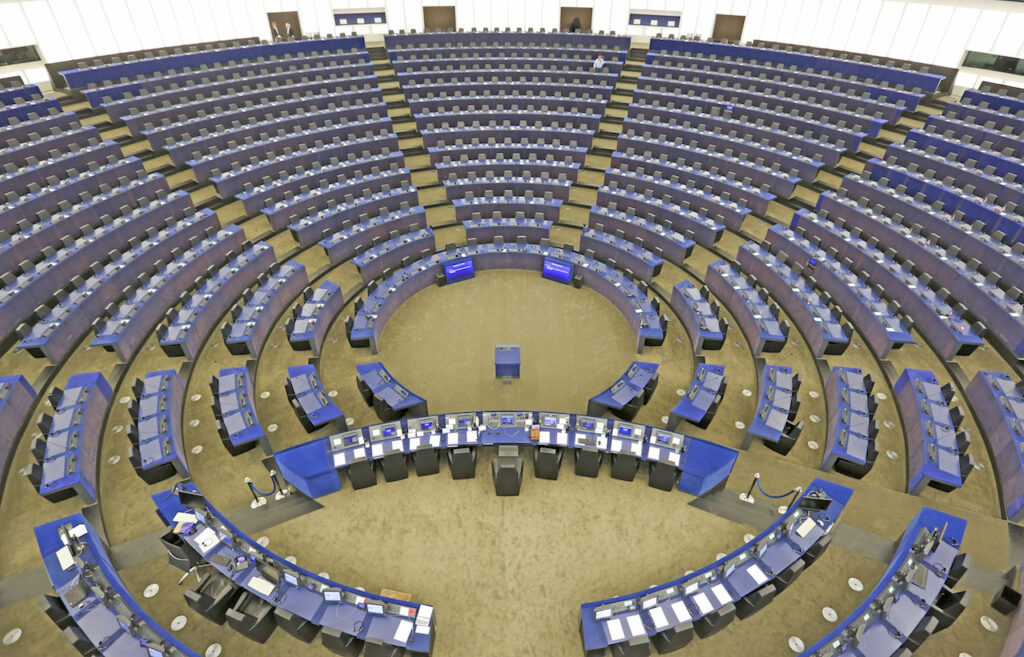
The “shift to the right” feared by many failed to materialise, yet the European Parliament has a completely new composition. A commentary by Karl von Habsburg.
Many commentators never tired of warning against a so-called “shift to the right” in the European Parliament. Some of those who view themselves as the great Europeans have based their own legitimacy on their struggle against nationalists. As is usually the case in history, however, the heralded revolutions fail to occur, even if in individual countries – such as France or Italy – nationalist forces managed to secure their best results.
Another interesting detail emerges from France. The liberal ALDE group gained the most seats in the EP. It secured 40 additional seats, 21 of which came from France through the pact between ALDE and French President Emmanuel Macron’s party (assuming this pact holds). It is therefore to be expected that France will attempt to play an even more prominent role in the European Parliament through this group. This will also be significant for the appointments within the Parliament and the Commission.
The largest group to date, the European People’s Party (EPP), remains the strongest, although it has lost seats. The Socialists suffered a similar fate. Consequently, these two groups no longer hold an absolute majority in the European legislature. While a coalition in the sense of national parliaments does not (yet) exist in the European Parliament, the most important posts could previously be negotiated between two partners. Now, a third is required. Substantively, this coalition never existed anyway. A study of voting results conducted a few years ago clearly demonstrated that the EPP, as the strongest group, simultaneously loses the most votes because different majorities formed on policy issues.
The German election result will likely have repercussions for several groups. In both the EPP and the Socialists, the German delegations suffered heavy losses, which will diminish their influence within their respective groups. In contrast, Germany accounts for almost a third of the new MEPs in the Greens/EFA group.
These group compositions should still be viewed with caution. The impending departure of the United Kingdom (where the Brexiteers became the strongest force, while the Tories suffered losses) will further impact the groups’ makeup. Within the EPP, the question remains as to the fate of Fidesz, the party of Hungarian Prime Minister Viktor Orbán. Rumours suggest he could leave the EPP to form a new group with Poland’s PiS (and others), who were allied with the British Tories in the outgoing term. This would significantly shift the balance of power. After all, Fidesz accounts for 13 of the current 180 EPP MEPs.
Perhaps the most remarkable event of this European election was the significant increase in voter turnout. Since the first direct elections to the European Parliament in 1979, turnout had declined at every vote. In 2019, it rose again for the first time.
The Austrian result is interesting from several perspectives. Firstly, it was astonishing that the FPÖ did not suffer greater losses following the Ibiza video—especially given the increased turnout. Secondly, it was striking that the SPÖ failed to capitalise on the video to reclaim voters from the FPÖ. This highlights a profound weakness of Social Democracy in European affairs, a trend observed in virtually all other EU nations. The fact that Sebastian Kurz was the primary motivation for many ÖVP voters suggests that European elections are still not what they ought to be: namely, elections primarily concerned with European policy rather than national sentiments. Considerable effort will be required to steer the European debate towards genuine European policy.
The new European Parliament has not yet been constituted. Only then can we better assess how the new balance of power between the groups might play out. Above all, the summer will involve crucial decisions regarding appointments in the Parliament, Commission, and Council. By terminating the coalition and the subsequent successful vote of no confidence against the government, Austria appears to have manoeuvred itself into a position of weakness.
This article originally appeared on the website of Karl von Habsburg.



