Fundamental Freedoms Under Threat
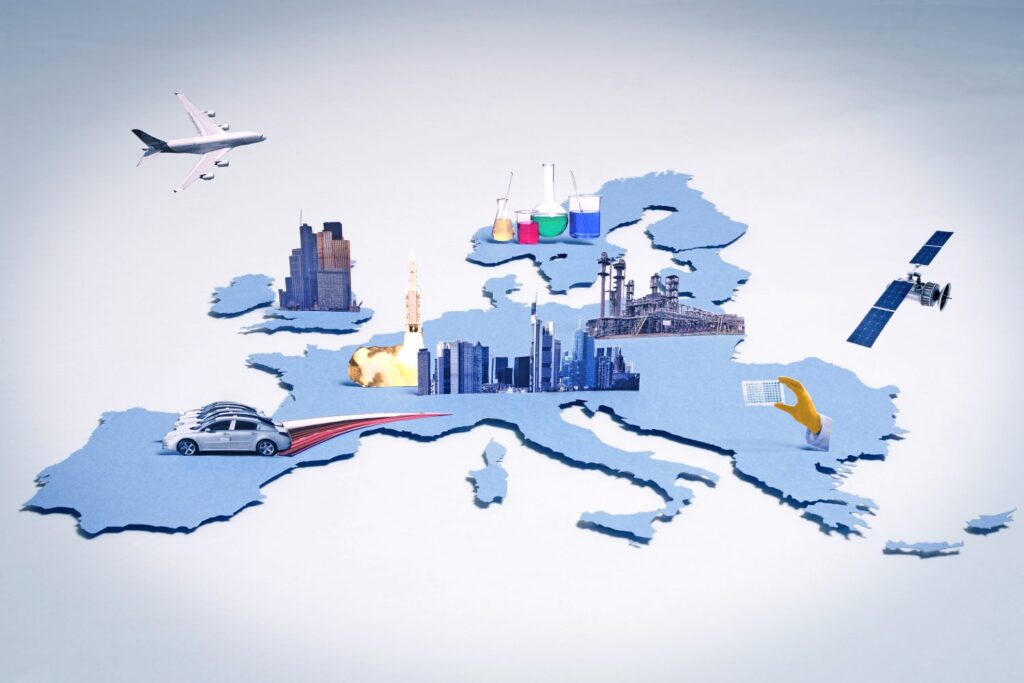
The four fundamental freedoms have been part of European law since the Treaties of Rome in 1957. National bureaucracies have been extraordinarily inventive in restricting them. By Rainhard Kloucek
Since the 1957 Treaties of Rome, they have formed the very core of the European constitution, even if they are usually only seen in the context of the Single Market. The four fundamental freedoms of the EU: the free movement of services, the free movement of capital, the free movement of persons, and the free movement of goods.
The freedom to provide services enables EU citizens to provide services across borders within the Single Market without discrimination based on nationality. The free movement of capital allows for the transfer of funds and securities in any amount between Member States (and between Member States and third countries). The free movement of persons allows EU citizens to live and work in another Member State. The free movement of goods permits the free circulation of goods within the Single Market—in other words, free trade.
By enshrining these four fundamental freedoms in the Treaties, lessons were drawn from the politics following the First World War. 1918 brought not only the collapse of the great supranational empires but also the fragmentation of Central Europe’s cultural and economic space. Where free trade once flourished, national customs barriers now dominated. Every state attempted to export its economic problems by seeking to protect its industry through tariffs and other obstacles. This economic policy followed the ideology of nationalism, which thinks within the narrow confines of the nation-state. However, this policy of isolation could not solve economic problems. On the contrary: they only grew larger. Politics cannot override fundamental economic laws. It may, under certain circumstances, mitigate consequences in the short term, but in the long run, economic laws always prevail.
Free trade in a free economy always leads to increased prosperity; restrictions may bring certain advantages to a politically privileged class, but they are fundamentally harmful. These principles, long known in economics, finally gained political traction with the enshrining of the four fundamental freedoms in the Treaties of Rome.
Yet it was only a pyrrhic victory for reason. National bureaucracies were extremely inventive in creating new obstacles designed to protect specific industries. For instance, harassment was introduced such as the requirement for craft businesses to register a company vehicle in the country where they wish to offer their services, even if they are not based there. This primarily affects tradespeople in the border regions between two EU states. Theoretically, they should have the right to offer their services in the neighbouring country within the EU Single Market without further restrictions; in practice, the obligation to register a company vehicle in the neighbouring country proved to be a financial hurdle too high.
In practically every EU capital, there are regulations that only allow specific taxi companies to provide airport transfers. This, too, restricts the freedom to provide services. Over the decades, thousands of infringement proceedings have been brought against such restrictions on fundamental freedoms. Ultimately, the Services Directive regulated certain restrictions on these freedoms by law.
PROTECTIONISM BECOMES SOCIALLY ACCEPTABLE AGAIN
Protectionism in the labour market—a classic domain of socialist-dominated trade unions—led to further restrictions on fundamental freedoms during the various EU enlargements. Out of fear that workers from the East would take jobs in the older EU countries, long transition periods were created to prevent the free movement of labour. This protectionism now continues in the current Posting of Workers Directive. Under the pretext of preventing wage dumping, the free movement of workers is placed in a tight corset. For example, a transport driver must always carry his payslip to prove he is not being paid below a fixed rate. Since this rate is often far removed from the real conditions in the labour market of the driver’s home country, his freedom as a worker is restricted, aiming to protect the labour market in the destination countries from competition. Countries like France or Austria had long anchored such protectionist measures in national law; now, protectionism is being elevated to the European level with the Posting of Workers Directive.
When the Austrian Vice-Chancellor Heinz-Christian Strache at an event in Vienna, or the Governor of Burgenland Hans Niessl in an interview (one from the FPÖ, the other from the SPÖ), call for a rethink on restricting the free movement of persons, they are not alone. Hitherto, restrictions on free movement have been cast into concrete laws by those very parties that describe themselves as European, and whose representatives enjoy ascribing anti-European sentiments to others.
The Paneuropa Movement Austria responded with a press release to the statements made by Vice-Chancellor Strache and Governor Niessl.
Featured image: European Union 2015



