Speech on the Future of Europe
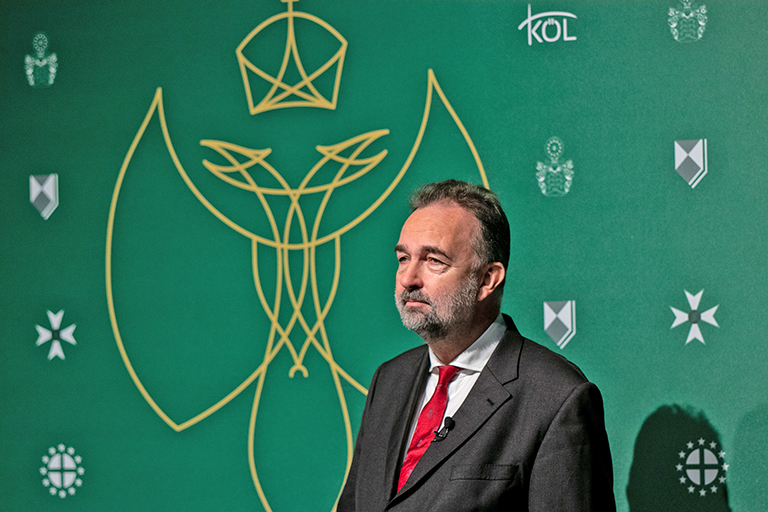
On 11 January 2021, the President of the Paneuropa Movement Austria, Karl von Habsburg, celebrated his 60th birthday. He used the occasion to deliver his “Speech on the Future of Europe”, in which he not only called for a European Foreign Minister but also put forward a proposal for debt relief within the Eurozone.
A milestone birthday should not merely be a cause for celebration, but also an opportunity for critical reflection. My father always used his birthdays as an occasion to cast a critical eye on politics, attempting to place European day-to-day politics into a larger context. In this tradition, I naturally like to begin with a quote from him:
“He who does not know where he comes from does not know where he is going, because he does not know where he stands.” Many of you, ladies and gentlemen, are familiar with this quote. I am using it intentionally as an introduction to this speech, titled “Speech on the Future of Europe”. For the decisive question today is: Can we shape the future of Europe if we do not know what the foundations and the recipes for success of Europe are? And by that, I mean Europe as a whole and the European Union in particular. For the European Union is the nucleus of that vital European unification.
In the previous century, several attempts were made in Europe to create heaven on earth: nationalism, National Socialism, communism – all these ideologies failed. They drove millions of people to violent deaths and caused massive economic damage. Ideologies are supposed doctrines of salvation that can bring no salvation because they elude reason. Especially in times when people are threatened by crises, they evidently become susceptible to such doctrines. In Europe – but not only here – we take the peace and prosperity we have been fortunate enough to experience since the end of the Second World War within the European Economic Community, then the European Community, and now the European Union, for granted, or we want peace and prosperity to be taken for granted.
We ruled out crises from the outset. And when they do come – for even the most peaceful times cannot exist without crises – we relied on that welfare state which established itself in Europe from the 1970s at the latest, beginning in the west of the continent. Looking back critically at the time in which I grew up, I must say we developed this welfare state in the shadow of the Cold War.
Welfare State and Economic Miracle
That we were able to develop this welfare state in the shadow of the Cold War is thanks to at least two circumstances. One is the military protective shield that the Western superpower, the USA, stretched over the western part of Europe with NATO. Austria, though not a member of NATO, was also able to benefit here. The second circumstance is the policy still known today as the “Wirtschaftswunder” or Economic Miracle. It was a policy that focused not on a planned economy, but on a market economy. The state pursued regulatory policy, not interventionist policy. In Germany, Ludwig Erhard stood for this; in Austria, the Raab-Kamitz course. A solid monetary policy by the German Bundesbank helped establish a solid middle class which, through hard work, saving, and investment – in both a private and entrepreneurial sense – contributed to the next generation being better off. I say this with gratitude and respect, firstly because I belong to that generation, and secondly because we can learn a great deal from it.

The welfare state is a concept designed to make citizens dependent on the state – and with their own money to boot.
However, and this must be stated clearly, the policy of the Economic Miracle – regulatory policy on the one hand – and the welfare state on the other, are contradictory concepts. The policy of the Economic Miracle is based on individual initiative and merit. The welfare state is a concept designed to make citizens dependent on the state – and with their own money to boot.
The development of this welfare state in the shadow of the Cold War also caused the foreign policy strength of European countries to wither. This is a development we observed during the Balkan wars following the dissolution of Yugoslavia, and also during Russia’s aggression against Ukraine. It was quite convenient for European politicians to leave the truly important foreign policy decisions, including security policy, to the USA.
William S. Schlamm, then one of the leading conservative publicists in the German-speaking world, summarised this negative development in an “Obituary for the State”. This obituary appeared as early as 1978 in the journal “Zeitbühne”, edited by Schlamm. He wrote: “When it became a welfare state, the state abdicated. For one can no longer ignore the fact that no Western state still conducts politics in the classical sense – that is, acts as a state. Politics in the classical sense is the application of legislative and executive means to enforce a concept – a declared, tangible and, in most cases, foreign policy goal. In the West, state policy was last pursued by Charles de Gaulle; and even he was most foolishly revoked by his successors Pompidou and Giscard d’Estaing. In all other Western countries, there has not been a single government during the last twenty years that has pursued or even understood politics in the classical sense.” Schlamm then criticises the welfare state as a political community “whose entire state potential was so completely consumed in welfare measures for the comfortable public that nothing remained for state policy.”
This welfare state requires an ever-larger state apparatus to manage the communalised funds. In doing so, however, it consumes ever-larger resources from the tax pot to maintain its own bureaucracy. The result is what the economist Felix Somary, unfortunately almost forgotten, describes in his “20 Social Laws of Inverse Proportions”. In Law Number 4, he says: “The more functions a state assumes, the harder its administration is to control.” And he adds in Law Number 5: “The larger and more versatile the state, the more powerless the people.” This state thus becomes more and more an inward-looking bureaucracy. To put it bluntly with William S. Schlamm: “For domestic policy, one needs good accountants; for foreign policy, statesmen.”
Europe and Geopolitics
It is not the task of accountants, to stay with this example, to conduct geopolitics. It is, however, the task of European politics to conduct geopolitics for Europe. If Europe does not conduct geopolitics itself, others will conduct it with Europe. And when the term Europe is used here, it means Europe as a whole, not individual nation-states within Europe. In today’s political reality, none of the individual EU countries has the strength to master this challenge alone.
The aforementioned crisis seismograph Felix Somary is also a witness to the fact that the assumption that there are no more crises in the welfare state is merely an illusion. According to his analysis, one of the sure signs of a crisis is a policy of cheap money. It cannot be denied that practically all major central banks, in the service of politicians, pursue such a policy of cheap money. “The more the economy demands an increase in the interest rate, the more politics lowers it,” Somary summarises in the 20 Social Laws of Inverse Proportions.
The problem is that politics today no longer masters crises; instead, a new crisis displaces the old one from the media and thus from public debate. The so-called Euro crisis, to name a well-known example, remains unresolved. Let alone the over-indebtedness of states. The Corona pandemic has simply pushed everything else out of public perception.
Ladies and gentlemen! Let me return at this point to a matter I mentioned briefly at the beginning but have not yet explained in detail: the foundations of Europe, of which we should be aware if we want to shape the future of Europe.
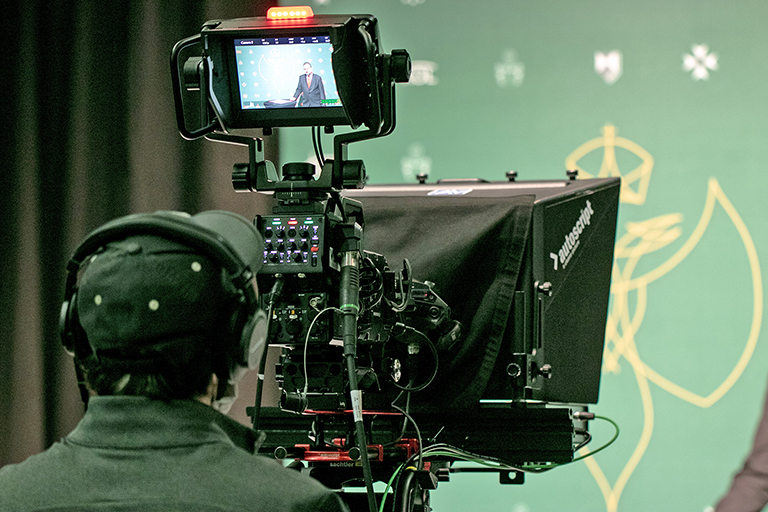
The core idea of European unification is the creation of a common zone of freedom, security, and justice.
Usually, reference is made to the founding fathers of the European Coal and Steel Community, to the Schuman Plan. However, shortly after the end of the First World War, there was already a very concrete idea for European unification, namely the Paneuropa idea of Richard Coudenhove-Kalergi. Almost 100 years ago, he analysed the situation of Europe and drew conclusions from it.
1918, the end of the First World War, was a historical turning point for Europe and for world politics. Until then, there was a European order. Not in the sense that Europe was a political entity, but world politics was synonymous with the politics of European powers. As long as they could talk to each other in congresses to maintain order or create a new one, conflicts were at least dampened. Thus, in the decades before the First World War, Europe was able to record incredible economic growth, which was also promoted by international trade and an international division of labour – what we today call globalisation. In 1918, something occurred that none of the leading politicians in 1914, in any of the participating countries, had ever considered.
In Central Europe, a cultural area that had grown over centuries was dismembered. Nationalism took the helm. 1918 also brought the end of the idea of supranational states. But it was not only a cultural area that was dismembered, but also an economic area. Every single state tried to solve its problems through isolationist policies, through protectionism and nationalism, but in reality only made them worse.
Paneuropa – A Geopolitical Concept
What were the lessons from the turning point of 1918 for Richard Coudenhove-Kalergi? A Europe fragmented into small states would become a plaything for non-European powers – he named Russia and the USA – and the policy of protectionism would only increase the damage; such was his clear analysis. Therefore, Europe had to find a way to unite, otherwise it would plunge into another devastating war. And we know today how clear his vision was back then in the 1920s, and what followed.
His approach at the time was geopolitical in nature. He was concerned with the redrafting of a European order. Not in the sense of an unrealistic – even then – return to the old order, but in the sense of a structure that would restore Europe as a world-political unit of action and not make it a plaything of non-European powers.
Therefore, at the centre of his considerations were, firstly, a European foreign policy – so as not to be dominated by others on the stage of world politics; secondly, a European security policy – so as not to be dependent on others in this matter and thus dominated, or drawn into a new intra-European war; and thirdly, the removal of all intra-European customs barriers. Today, this would be called a free internal market, i.e. Europe as a free trade zone. Added to this even then was the consideration of a common currency, which in Coudenhove’s concept was based on the gold standard still in existence at the time, and a European federal court, i.e. what we have today as the European Court of Justice.
The freedom of citizens, individual responsibility, and a state that limits itself to setting the framework conditions in the sense of a rule of law were a further basis of his considerations for European integration at that time.
European security policy also stood as a foundation at the beginning of actual European unification after the Second World War. Far too little thought is given to the fact that it was one of the basic principles of the founding fathers of the European Union to create a large security area that would make a new war among European countries impossible. The division of Europe at the time by the Iron Curtain made it necessary to limit this security area initially to the free West of the continent. The founding fathers were also aware at the time that, in the situation then, this security area could not be created directly in military and political terms. The political situation after the Second World War was not yet ripe for that. Therefore, they knew it would be necessary to create this space on an economic level, with the aim of letting political and security institutions follow.
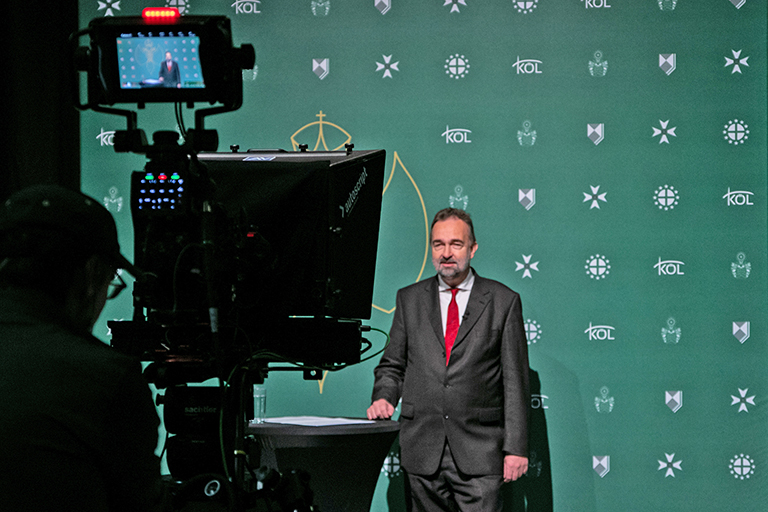
This emphasis on the law is so important because, especially in Europe, calls for the primacy of politics are heard again and again. Politics must regulate everything. The more it does so, however, the deeper the conflict with the law becomes. This conflict is becoming increasingly acute because rule-of-law principles – the rule of law – govern less and less frequently, replaced by power relations. In the long term, this conflict works to the detriment of Europe.
The core idea of European unification is the creation of a common zone of freedom, security, and justice. This core idea naturally applies to the whole of Europe, and is thus based on the principle that every European country must have the right to participate in this European unification. The criteria for this are defined.
The fact that European unification was limited to Western Europe in its initial phase was due to the geopolitical situation in Europe at the time. To derive any kind of privilege for the six founding countries of the then Coal and Steel Community from this, however, would be completely absurd. One cannot blame the Slovaks, Ukrainians, or Kosovars for being cut off from European culture by an Iron Curtain at that time.
The Reunification of Europe
It was therefore only logical, after the fall of the Iron Curtain in 1989, to pursue a policy of enlargement, for which the slogan “reunification of Europe” was even used. At that time, there seemed to be something like a strategic orientation in politics.
Across party and state borders – apart from a few small parties – there was a broad consensus, in the sense of a pan-European approach, to integrate those countries into the EU that had previously had no opportunity to do so. In addition to the three neutral countries of Finland, Austria, and Sweden, these were primarily the Central European states of the former Eastern Bloc and some of the countries of the former Yugoslavia. In doing so, an approach was followed that had already applied to the admission of Spain and Portugal: through integration, democratic institutions were to be consolidated, and a return to authoritarian regimes or totalitarian dictatorships was to be prevented.
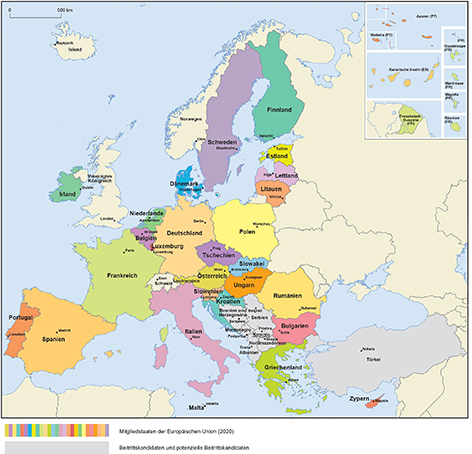
Today, it is about the integration of the six countries of South-Eastern Europe that are not yet members of the EU. The EU Commission rightly states in its latest reports on enlargement that the admission of Albania, Bosnia-Herzegovina, Kosovo, Macedonia, Montenegro, and Serbia into the EU is a “geostrategic investment in peace, security, and economic growth throughout Europe”. The geostrategic importance of the region is clear to anyone who knows history. There is also no vacuum in politics. If Europe withdraws from the region, then other powers have all the more room to represent their interests in South-Eastern Europe. Alongside actors like Russia and Turkey, who are already linked to the region and its politics through history, today it is primarily China, but also, for example, Saudi Arabia with its Wahhabism, that exerts massive influence. The interests of these actors do not coincide with the security interests of Europe.
Europe must formulate and represent its own security interests.
And when I mention Russia and China, it is also clear that this is primarily about geopolitical interests. This should also be considered by those EU member states that build up blockades against this enlargement out of mostly petty national or even nationalist interests.
Continuing Enlargement Policy
But we must also look towards the East, where a country like Ukraine, with the Euromaidan or the Revolution of Dignity as it is also called, has made it clear that the citizens of this country see their future in Europe and not under Russian dominance. Undoubtedly, there are still major problems in all these countries, for example in the areas of the rule of law and corruption, but they are European countries. Anyone who takes European unification seriously must make it possible for every European country to join the European Union. Therefore, I also advocate changing the current neighbourhood policy towards Ukraine into a concrete accession perspective policy.
Even if the European perspective does not play a real role in the democracy movement in Belarus, it is our duty to support this democracy movement wherever possible. If Europe, if the EU, emphasises the rule of law and democracy so much, then these principles must also apply to Belarus.
Ladies and Gentlemen,
From all that has been said, it is of course necessary to draw conclusions and develop concrete guidelines for politics. Before I come to that, however, I would like to touch upon two points that I would also describe as basic principles of Europe, and which are currently the subject of heated discussion and dispute.
These are the topics of the rule of law and freedom.
Let us go back to Greek mythology. Europa was a beautiful Phoenician princess. Zeus, the father of the Greek gods, transformed himself into a fragrant bull to abduct Europa to Crete. There they had several children together. Two of them went down in the history of Crete as the most just rulers because they respected the law.
Rule of law and freedom
Seen in this light, the rule of law actually stands at the beginning of the European idea.
That it was not always a matter of course, however, is known to us from European history. The so-called Papal Revolution of the 11th to 13th centuries was a historical process that made a significant contribution to the emergence of rule-of-law principles. Only absolutism brought a setback. For the absolute rulers, only their subjects were equal before the law. With the principle of the rule of law, however, the rulers themselves are also bound by the law. In more recent times, for me, the Congress of Vienna is something like the turning point from which the principle of the rule of law prevailed in Europe. With this rule of law, Europe was given a stable foundation, which thus enabled a later very positive development.
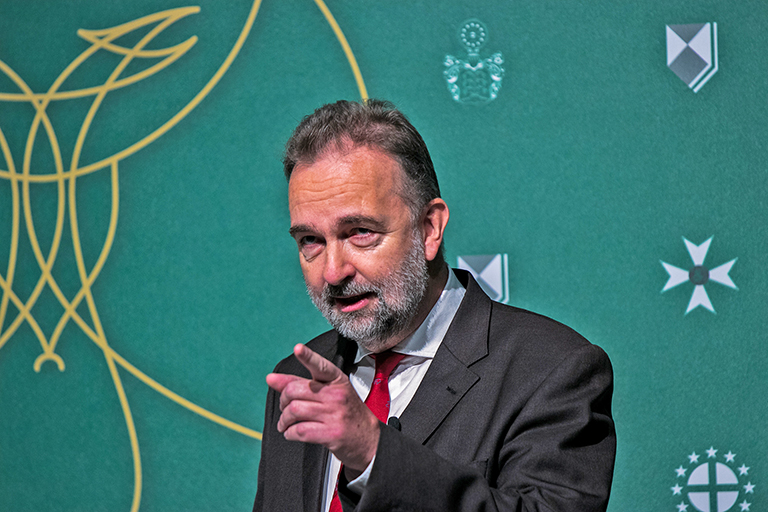
Freedom is not a matter of course. Freedom must be fought for again and again. Freedom is inseparably linked with responsibility. And we cannot delegate this responsibility for freedom to the state.
On this foundation rest further pillars such as private property, personal liability for failure but also success, and thus private entrepreneurship, which must rely on innovation to be successful. Legal certainty is, of course, a basic prerequisite for private property, and private property is a basic prerequisite for prosperity and for the creation of a middle class. The prosperity that Europe has generated as a result can certainly be attributed to this principle of the rule of law. That these principles could develop in a culture that is quite clearly shaped by Christianity is no coincidence.
This emphasis on the law is so important because, especially in Europe, calls for the primacy of politics are heard again and again. Politics must regulate everything. The more it does so, however, the deeper the conflict with the law becomes. This conflict is becoming increasingly acute because rule-of-law principles – the rule of law – govern less and less frequently, replaced by power relations. In the long term, this conflict works to the detriment of Europe.
Another essential element of European identity is freedom. To put it in the words of Richard Coudenhove-Kalergi: “The European ideal is freedom – European history is a single slow struggle for personal, spiritual, national, and social freedom. Europe will endure as long as it continues this struggle; as soon as it abandons this ideal and becomes unfaithful to its mission, it loses its soul, its meaning, its existence. Then it has played out its historical role.”
European unification and European politics, however, should not have the goal of playing out Europe’s historical role, but of using it!
Freedom is not a matter of course. Freedom must be fought for again and again. Freedom is inseparably linked with responsibility. And we cannot delegate this responsibility for freedom to the state.
Freedom and Liberty
To grasp the concept of freedom, I must enlist the help of the English language. It knows two terms for what we call freedom: Liberty and Freedom. Both terms denote something different. Someone who defined the terms very well was Murray Rothbard, one of the classical representatives of the Austrian School of Economics. He said: “Living in Liberty allows each of us to fully enjoy our Freedom.” In other words: only if we live in an external system of liberty can we actually enjoy and live out our internal freedom. “Liberty” in the English sense denotes the external construct of freedom, that which actually creates the free space for us, while “Freedom” means internal freedom. For example, the freedom that I can think what I want. The internal freedom that no one can actually take from me. To be able to live this internal freedom, an external construct is required. It is also quite clear that this concept of external freedom, Liberty, is one of the most important tasks of politics altogether.
The protection of liberty is therefore the supreme task of politics. It is not the preservation and exercise of power, as is so often demonstrated to us nowadays, but service to eternal values: justice, freedom, and humanity. Their safeguarding is the essence and justification of the state. “The three terms – individualism, freedom, legal order – are expressions of the same deeper reality that we can describe as the spiritual-cultural substance of Europeanness,” to use a formulation by my father, Otto von Habsburg.
Ladies and gentlemen! You know the fine saying: Rome was not built in a day. European unification will not be completed in a day either; it is a process marked by progress and setbacks. It is important that we do not forget the foundations of Europe, but constantly allow them to flow into political design. And it is just as important to take the right steps to be able to meet concrete challenges.
The European Union needs a European foreign policy. … For this, we need a core of a European constitution in which precisely this foreign policy competence for the European Union is enshrined.
I spoke at length earlier about foreign and security policy, about the necessity of EU enlargement and about the geopolitical challenges – which are not diminishing – and the weaknesses that the EU still has in this area. From this, a very concrete demand is derived:
Precisely in this question of foreign and security policy, European sovereignty is needed. Sovereignty in this specific case means the ability to act and to shape. European policy would bring a clear added value here in terms of potential compared to pure nation-state policy. To specify further: the European Union needs a European foreign policy. European foreign policy does not mean coordination of the foreign policy of 27 member countries by the High Representative for the Common Foreign and Security Policy (who is also one of the Vice-Presidents of the European Commission), where individual countries can block a European statement on important issues such as human rights policy in China, but an EU Foreign Ministry with a Foreign Minister at its head.
The EU Needs Foreign Policy Sovereignty
For this, we need a core of a European constitution in which precisely this foreign policy competence for the European Union is enshrined. A point, incidentally, that would also meet all the requirements of subsidiarity.
It must be clear to all of us that this step will not be so easy. It will still take a lot of persuasion to actually position Europe in terms of foreign policy. And it will be necessary to overcome one of the greatest obstacles to achieving unanimity on the issue:
This obstacle is the question of public sector debt.
Perhaps the connection is not so clear at first glance. But if we look at the recurring disputes over budgets, funds, or most recently the disputes over a rule-of-law mechanism and blockades to it, then it is clear that the question of budgets can always be used to block progress in individual areas. One only has to think of the mockery of the so-called “frugal four” during the budget negotiations last year.
Even those countries in the EU that do not belong to the Eurozone are linked to decisions on the financial future of the EU via the Fiscal Compact and questions of the EU budget. When money is involved, there is always a lot of explosive potential. An unregulated break-up of the Eurozone would likely severely impair the functioning of the entire EU, if not mean its end. A danger that, given the geopolitical challenges, should by no means be taken lightly.
Ladies and gentlemen, we must therefore consider and prepare very concrete steps for debt relief in the Eurozone.
Fiscal Compact Has Not Worked
The Fiscal Compact, which should have led to a reduction in the debt burden, has failed. Despite legally established debt brakes, many European countries have incurred higher debts. With the Corona crisis, this situation has become even worse. The ECB’s policy counteracts the reduction of debt. This applies both to the zero-interest policy and the purchase of government bonds. This creates no incentives to reduce debt; on the contrary, higher indebtedness becomes attractive.
However, an interest rate freely formed on the market is necessary to make a free economy possible. If the interest rate cannot form freely, the market economy is undermined in more and more areas of the economy and degenerates into a politically directed state economy. A scenario that perhaps socialist, planned-economy ideologues dream of, but which is guaranteed not to be in the interest of a Europe of freedom.
Three Steps to Debt Relief in the Eurozone
In my view, three steps are necessary to carry out debt relief in the Eurozone and then allow a healthy economic system again. Three steps mean that these three steps are actually implemented as a total concept.
Firstly, the ECB should take the national debts of the Euro countries onto its balance sheet. Secondly, it would have to enable the citizens of the Eurozone to have a secure bank deposit through full coverage with central bank money and create a digital Euro as sovereign money. And thirdly, market-based pressure to migrate must be generated by allowing competing private currencies, which stabilises the Euro through the practical possibility of migrating out of it.
However, an interest rate freely formed on the market is necessary to make a free economy possible. If the interest rate cannot form freely, the market economy is undermined in more and more areas of the economy and degenerates into a politically directed state economy.
The first step has already been started by the ECB, albeit not in full, through its bond-buying programme. The moment it is implemented in full, the greatest source of division in the EU, national debt, is eliminated at a stroke. The other two steps are necessary to make the transition to a market-based monetary order possible. Banks can then go bankrupt without problem because bank deposits are not lost through central bank money. The respective bank customer only needs to inform the resolution authority to which other bank his deposit should be transferred.
What is important in this concept is the implementation of all three points, whereby it should be noted that not all digital Euros are the same.
Ideas for a digital Euro have already been presented in publications by ECB staff and have been tested internally by the ECB since October. However, these concepts do not aim at the transformation of our fragile monetary and banking system towards a market-based monetary order, but on the contrary are intended to maintain the existing fragile monetary system.
Digitalisation is not being used here to solve problems, but to further delay them. Such a digital central bank money would de facto be nothing other than the entry into the abolition of cash. Cash, however, is freedom in practice.
Such a concept might fit in China, where a central authority then determines, according to some social credit points, who is allowed to buy what, or whether they are allowed to buy anything at all. This totalitarian concept is prevented by the admission of competing private currencies, such as cryptocurrencies.
Conference on the Future of Europe
Ladies and Gentlemen, Last year, the European institutions – Commission, Parliament, and Council – announced a Conference on the Future of Europe. It is intended to discuss the most important future questions for European unification. Completely independent of such conferences, it is always important to discuss the future of Europe, controversially if necessary, and also with ideas and approaches that perhaps do not feature so prominently on the agendas of the institutions’ meetings.
Even if it is currently a small but dangerous virus that dominates the headlines daily, we should concern ourselves with the necessary reforms.
Even if we can only hold this event digitally, even if we cannot debate the content over a glass of wine or water following this speech, the world around us does not stand still. If we as Europeans do not take our destiny into our own hands, then others will do it for us.
My priority here is quite clear. We must shape the future of Europe ourselves!
Photo credit: Matthias Dolenc, European Union 2016 / 2018 / 2020
References:
William S. Schlamm “Nachruf auf den Staat” (Obituary for the State), in “Zeitbühne”, Issue 3, March 1978
Felix Somary “Die Sozialgesetze der verkehrten Proportionen” (The Social Laws of Inverse Proportions), in Felix Somary “Krise und Zukunft der Demokratie” (Crisis and Future of Democracy), pages 125 to 134, TvR Medienverlag 2010, ISBN: 978-3-940431-19-6
Otto von Habsburg “Mut zur Pflicht” (Courage for Duty), Patmos Verlag 2011, ISBN: 978-3-8436-0044-6



