Conference on the Future of Europe
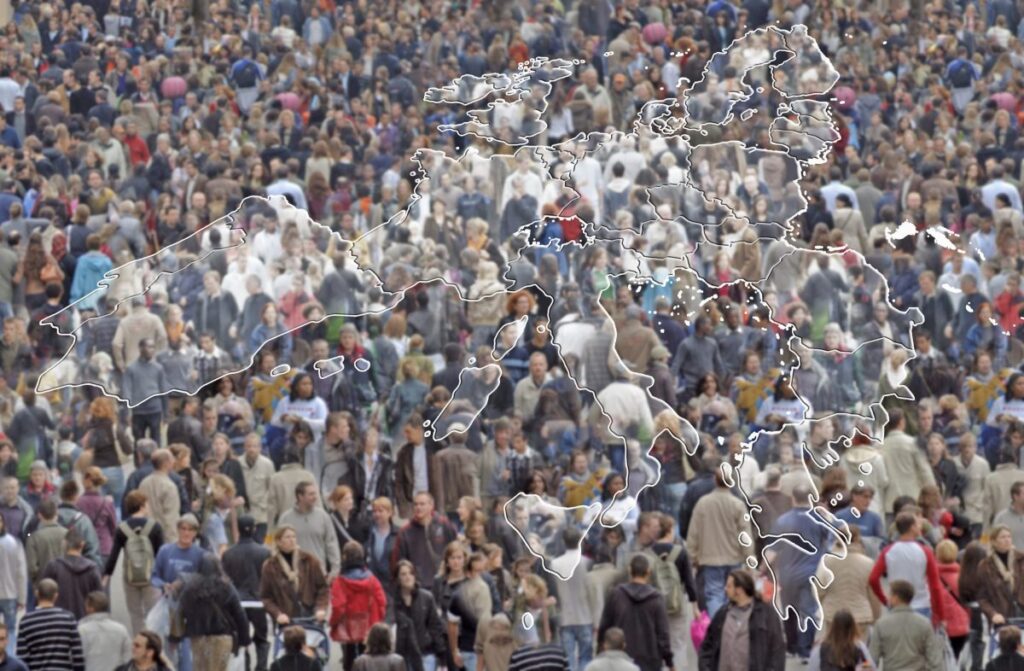
European politics once again needs a clear idea of where European integration should lead. A Conference on the Future of Europe was supposed to have been in session since May. Yet several questions remain open, and the start date remains unclear. By Rainhard Kloucek
Strictly speaking, it should have been in session long ago. The “Conference on the Future of Europe”. On Europe Day, 9 May, under the Croatian Presidency of the Council, the capital Zagreb should have hosted the solemn commencement of this debate on the future of Europe. After all, the responsible Commissioner, Dubravka Šuica, is Croatian. But the virus known as Covid was already on the move, making such an event impossible. So, it was postponed.
Then a date in September circulated, under the German Presidency. But that didn’t hold either. As recently as early November, an enquiry to Commissioner Šuica revealed that she expected the conference to begin before the end of the year. However, at the editorial deadline for this article on 27 November, there was still no concrete date for the official start. By then, it was clear: Covid is not the reason why the conference is still waiting for an official opening.
The idea came from the President of France
The original architect of this conference was the French President, Emmanuel Macron. In his Elysée speech in early March 2019, before the European elections, he presented a series of measures intended to reform the European Union. These were to be discussed in a Conference on the Future of Europe. The conclusion was planned for the next French Presidency in the first half of 2022. If it wasn’t to be a new Treaty of Paris, it would at least be a solemn closing ceremony in which French politics could document its leadership role in Europe.
Parliament and Commission
Ursula von der Leyen, the current Commission President, took up the idea of such a conference during her candidacy and integrated it into the six priorities of her five-year term. The European Parliament also took up the initiative and has since issued several statements on the matter. The Council—the level at which Macron had situated his conference idea—was ultimately the last of the three EU institutions to develop a position.
The necessity of a debate on the further steps of European integration is evidenced by the many crises appearing in European politics. One need only think of the wrangling over the start of accession negotiations with Macedonia and Albania, or the visa issue for citizens of Kosovo. We have also seen, in the context of border closures due to migrants and then in the wake of the pandemic, just how pronounced national egoisms are. The recent dispute over the EU budget, the mixing of the rule of law with ideology, and the resulting blockades are further proof of the need for a purposeful debate on Europe.
Where are the European personalities?
There seems to be a lack of European personalities, and a clear definition of the goal—the meaning and purpose of European integration—is missing. For Paneuropa, the goal was clear as early as its founding in 1922. It was a geopolitical approach that sought to see Europe as an independent political entity, with a strong emphasis on freedom and values. After 1945, the goal was to prevent war in Europe. The great idea of peace. After 1989, following the fall of the Iron Curtain and the collapse of the Soviet Union, this still seemed clear. At that time, there was an openness to admitting Central European countries into the EU. There was a clear enlargement strategy; people even spoke of the “reunification of Europe”. It was about stabilising democracy, the rule of law, and a free economy.
Removed from rational debate
If you ask politicians today what Europe should be, the common denominator is likely: fighting the pandemic and fighting climate change, perhaps accompanied by the weasel word of “social justice”. All of this is wrapped in a Green Deal and served with a trillion-euro budget so unfathomable in its dimension that it is effectively removed from rational debate.
In any case, the goals for the Conference on the Future of Europe, formulated in the European Commission’s communication in January this year, are set high. “The time is ripe,” it states, “to give a new impulse to European democracy.” If many Europeans continue to worry about their future in an increasingly multipolar world, the European Union must now show that it can provide answers. “European policy must help both citizens and businesses to benefit from the ecological and digital transition. It must fight inequalities and ensure that the European Union is a fair, sustainable, and competitive economy. … The Conference, as a major pan-European democratic exercise, will be a new public forum for open, inclusive, transparent, and structured citizen debates on key priorities and challenges.”
All citizens should be involved
All EU citizens should be able to participate in the forums. “This forum should be a reflection of European diversity. … Its aim is to strengthen the link between the European population and the institutions that serve them.” The responsible Commissioner, Dubravka Šuica, also emphasised in various video messages to conferences (most recently for an event of the Paneuropean Union Croatia) that all citizens will be involved in this debate.
Slight contradictions arise regarding which topics should be discussed at the conference. In its communication, the Commission notes that the younger generation in particular is demanding more of a say in politics and is no longer satisfied with just casting a vote every five years. One subheading reads: “Open discussion on issues that are close to citizens’ hearts.” Yet the press release accompanying the communication states that while the Commission does not wish to exclude any topics, it “believes that the debate needs a certain structure through specific guidelines and that the topics described in the Commission’s political priorities and the European Council’s strategic agenda should be addressed.”
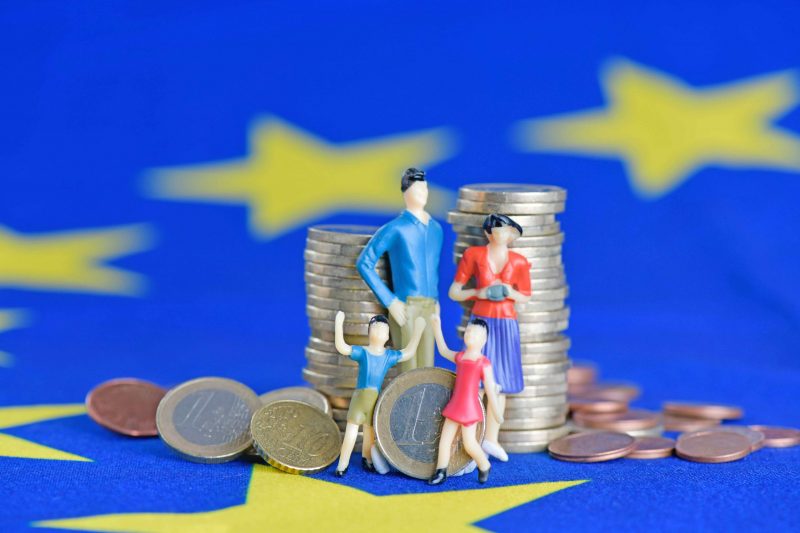
In all areas, the aim is to ensure a balanced gender ratio.
The communication goes on to say that there should be a joint declaration by the three institutions (Council, Commission, and Parliament) setting out the “concept, structure, scope, and timetable of the Conference”. The Commission wants to cover two major thematic areas. Firstly, the question of the future of the Union, which it sees as already predefined in the Commission’s six political priorities and the Council’s strategic agenda. Secondly, it should deal with institutional issues. Here, the lead candidate (Spitzenkandidat) model and transnational lists for European elections are mentioned.
The European Parliament defined its position in two resolutions (15 January 2020 and 18 June 2020). As early as January, it was stated “that the involvement of citizens, organised civil society, and a range of stakeholders at European, national, regional, and local levels should be the key element of this innovative and original process”.
The European Parliament wishes to discuss the following topics: European values, fundamental rights and freedoms, democratic and institutional aspects of the EU, environmental challenges and the climate crisis, social justice and equality, economic and employment issues including taxation, digital transformation, security, and the role of the EU in the world. It is emphasised, however, that this is only a guide and not an “exhaustive compilation of political topics”.
Citizens’ forums and a steering committee
In the view of the European representative body, the structure of the conference should consist of a series of bodies with different responsibilities: citizens’ forums, youth forums, a steering committee, and an executive coordination committee. All conference bodies should have a balanced gender ratio. The citizens’ forums are to be organised by theme and consist of 200 to 300 citizens, with at least three per member state.
The European Parliament has also formulated very concrete ideas about the composition of the Conference Plenary. The conference should meet twice per half-year for a plenary session in the European Parliament.
The June statement reiterates the position from January, refers to the current situation with Covid, and regrets that the Council has still not adopted a position.
The Council wants a political approach
Shortly thereafter, on 24 June, the Council issued its statement. The member states define a political approach as essential. A vision of the EU in ten or 20 years should be the result. Therefore, the Council wants a focus on a few core points, such as those anchored in the EU strategic agenda. These include sustainability (climate neutrality), societal challenges (gender policy), fundamental rights, and the international role of the EU (foreign and security policy are cited as examples).
According to the vision of the member state governments, the institutions should be involved in the process on an equal footing, bureaucracy should be avoided, and effective involvement of citizens must be ensured.
Anyone who thinks that the Conference on the Future of Europe could begin after all these statements and expressions of intent is mistaken. For this is an eminently political question. And thus, who chairs it is of decisive importance. It is a matter of interests and prestige, party politics, national egoisms, and vanities. Since at least the beginning of October, this question is likely the reason behind the delay in starting the conference.
© Image credits: European Union, European Union 2020 Claudio Centonze



