The Conservative Movement
Today’s ideas are tomorrow’s deeds: individualism, freedom, and the rule of law are the cornerstones of Europe and America. Lack of freedom is a defining characteristic of every socialist variety, including “green socialism”. The road to hell is paved with earthly promises of paradise. Envy paralyses; freedom inspires. Influences from Friedrich August von Hayek and Russell Kirk. By Ludwig Bayer
Otto von Habsburg’s words on the importance of freedom (quoted in the previous edition of PANEUROPA) provide the impetus for these reflections. The focus is on individualism, freedom, and the legal order. The exercise of power must always be bound to these values and designed to be close to the citizens through decentralisation in the spirit of the principle of subsidiarity. Since “property is one of the most important elements of freedom”, the state’s ability to become a “risk-free co-owner” through its tax system must be strictly limited by law. Otto von Habsburg’s plea: “The containment of bureaucracy in the state, and even more so in the economy, is the order of the day.”
The second impetus comes from Chancellor Sebastian Kurz, who fired a warning shot in July in a guest article for the American news magazine TIME: the fight against climate change must not lead to a “socialist central state in green disguise”. Climate change can only be combated effectively and sustainably if we remain grounded in democracy, the free market economy, and the rule of law.
Indeed, left-wing ideologues endanger freedom as soon as they work towards a policy of prohibitions within a “socialist central state in green disguise”; they then resemble watermelons: green on the outside, red on the inside. The more competencies the state bureaucracy receives to enforce green-red goals, the smaller the individual’s room for manoeuvre becomes – until, at the end of such a process, freedom runs out of air to breathe.
A lecture I recently wanted to hear was broadcast via video from Vienna. A self-proclaimed prophet appeared on the scene, calling for the shrinking of industry. With the persistence of a Tibetan prayer wheel, he spoke of the “untenability of capitalism” and conjured up a future red-green idyll. He probably dreams that half the population could be turned into organic farmers and the other half sent into houses (if they still exist) or the straw huts of future generations as green food commissars. To enforce and manage this politically, a monstrous control bureaucracy in an eco-tax state is inevitably required. This is how grey green socialism looks.
One inspiration for this world of thought was a wealthy man whose servants served champagne with white gloves while he served up utopias of a “post-growth society” to his prosperity-weary and sullenly pessimistic listeners: Aurelio Peccei, founder of the “Club of Rome”.
Satiated People and Their Utopias
Satiated people, who had everything, raved about a romantic life of renunciation – with Birkenstock sandals and Bircher muesli. They claimed our planet could not tolerate economic growth. Without a radical reversal, the Earth would collapse. Prosperity does not bring happiness, preached members of the moneyed aristocracy. And they demanded that industry be frozen at the level of the 1970s. These “pessimists of the future with a guilty conscience” announced 50 years ago that humanity would perish at the beginning of the 21st century due to overpopulation, food shortages, and environmental pollution.
The problem of rapid global population growth was correctly identified, but most other forecasts turned out to be soap bubbles. The progress of science and technology offers new solutions to problems year after year. This allows resource consumption to be reduced, and today it is a matter of course for economic reasons alone that our industry often relies on recycling. The switch to electric cars for individual mobility, wind and solar power for electrolysis, and hydrogen for blast furnaces are the next steps.
There is no doubt about the good intentions of the Club of Rome. However, much of what it says is inconsistent. For instance, the melody is played that rich industrialised countries of the North should do more for the poor developing countries of the South. How this is supposed to be possible without economic growth, however, remains one of the best-kept secrets.
It is also questionable that some of the Club’s pronouncements provide the intellectual nourishment for that ideological aberration against which Sebastian Kurz rightly warns in TIME magazine.
It seems unthinkable that green-red programmes for shrinking the economy (and prosperity) could be democratically decided. A left-wing professor with an appetite for power explained in a small circle (I was there) that if no majority could be found, one would simply have to take the Leninist path and create an “avant-garde” to enforce “what is necessary” in an authoritarian manner. These are highly dangerous thoughts that only the embalmed Lenin in his Moscow mausoleum could enjoy. For a utopia promising happiness for future generations, everything seems permitted, including the Leninist path of abolishing democracy. Those who count themselves among the “good” and consider their visions to be without alternative (the English mock this as TINA = there is no alternative) can fall into the delusion that the end justifies any means. The quoted Austrian university professor is an avowed left-wing Green. His example points to the bridges that connect red and left-green ideologues. The more bigoted their conviction that they alone hold the key to a “better world”, the more dangerous they become. History teaches: the road to hell is paved with earthly promises of paradise.
Serfdom or Freedom
As soon as society and the economy are subject to state command, the “road to serfdom” (book title) is mapped out. The Austrian Friedrich August von Hayek published this groundbreaking work in English in 1944 (“The Road to Serfdom”) and in German in 1945. This was followed in 1960 by the programmatic book publication “The Constitution of Liberty” in the USA. Hayek, who received the Nobel Prize in Economics years later, brought Otto von Habsburg into the Mont Pelerin Society he led, the aim of which was to make the market economy popular after the planned-economy excesses of the war years and to secure it with a theoretical foundation through the universities. Hayek knew: the proliferation of the power of state bureaucracies, and thus functionaries who fatten themselves by means of excessive taxes, is always at the expense of freedom.
Another Austrian, who also worked for years as a professor in the USA and supported Barry Goldwater there, was Helmut Schoeck. In his books, he described envy as the motivating basic emotion of socialists. Let us summarise the impulses of Hayek and Schoeck: envy brakes – freedom inspires. It is always ideas that are followed by deeds. The idea of freedom was stronger than the collectivist promises of salvation from left-wing preachers of equality. The Cold War, which followed the Second World War, was initially a struggle of arguments and concepts. Since collectivism and egalitarianism paralysed the creative forces of an economy dependent on freedom and innovation, the countries of “actually existing socialism” fell further and further behind, even in material terms.
The Anti-Americanism of the Left and Right
Although the Atlantic currently threatens to grow wider, it must not be forgotten that it was the USA that for decades first contained, then pushed against the wall, and finally brought down communist rule in Europe. The anti-Americanism of the Left is the logical consequence. A Salzburg political scientist asked me why there is also fierce anti-Americanism among right-wing extremists. I answered him: for a similar reason, because the USA prevented both communist rule and National Socialist rule over the whole of Europe. Since then, the friends of both ousted totalitarians have hated America with equal fanaticism, whereby in the right-wing extremist milieu, anti-Semitic garlands with confused conspiracy fantasies are added as an ideological speciality.
The utopias of the socialists found relatively few followers among the more pragmatically minded Americans. The down-to-earth entertainer Groucho Marx achieved more resonance than the unworldly intellectual acrobat Karl Marx. It was beneficial that the burgeoning Conservative Movement possessed great thinkers who engaged with the arguments of the socialists.
Intellectual Ammunition for Political Work
The rallying movement that formed around the Republican presidential candidate Barry Goldwater in 1964 needed intellectual ammunition for its work. In the Goldwater campaign – which, of course, did not lead to the Senator’s entry into the White House at the time – something like a functioning organisation of conservatives reaching from coast to coast was formed for the first time. Ronald Reagan gave his first major political speeches, which were broadcast nationwide and revealed his political talent. The conservatives made contact with one another and stuck together in the following years. Finally, a powerful movement emerged that led Ronald Reagan to election victory in 1980. Barry Goldwater visited Ronald Reagan in the White House afterwards. Reagan thanked Goldwater for the path-breaking achievements of 1964, which had helped him in the following years.
From Barry Goldwater to Ronald Reagan
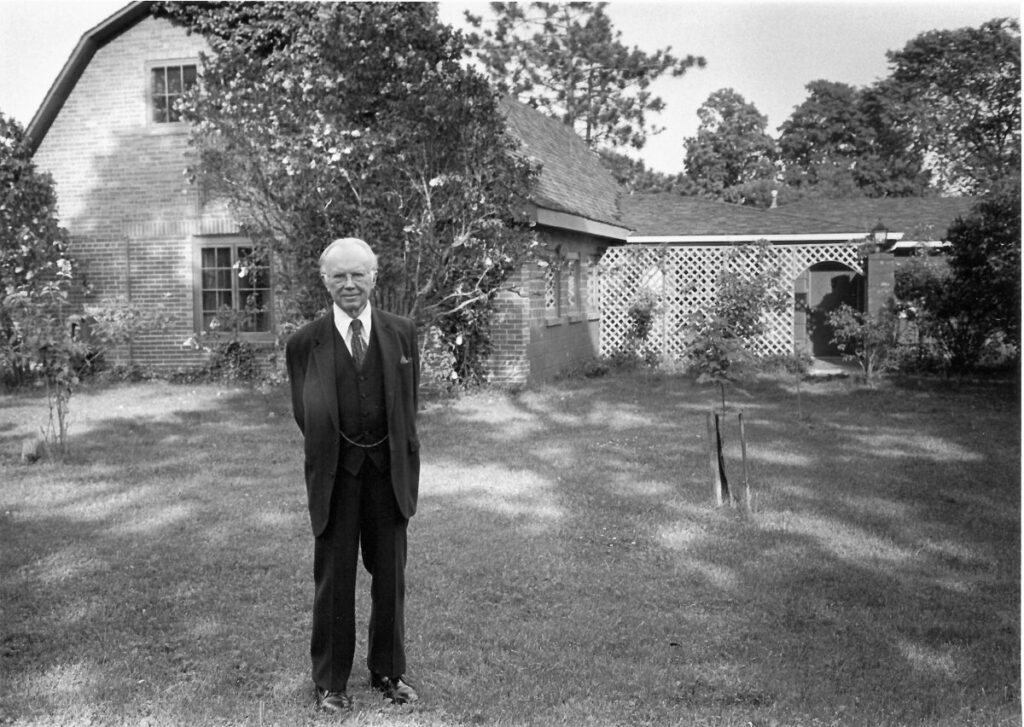
In a speech of thanks to the inner circle of his friends and helpers, Reagan said at the time that he did not want to speak of the election victory of a single person. For success rested on many shoulders. Ronald Reagan paid tribute to the intellectual groundwork involved in building the Conservative Movement. He mentioned the economist Friedrich August von Hayek, the philosopher Russell Kirk, and several other personalities. Otto von Habsburg was a close friend of Russell Kirk. Karl von Habsburg lived for a time in Kirk’s house in Michigan. I also knew Russell Kirk personally and held him in high regard.
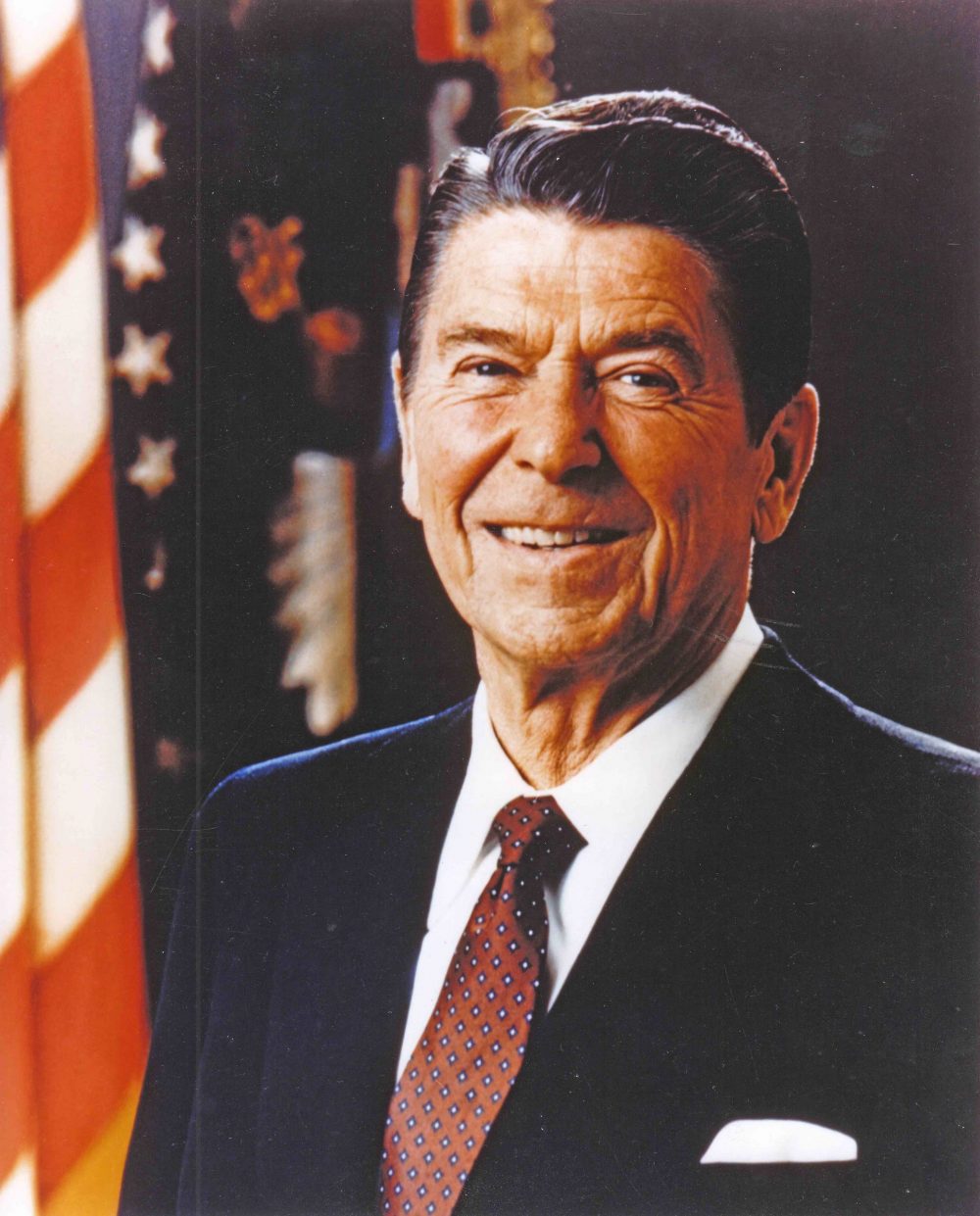
The victory of Ronald Reagan in the 1980 US presidential elections was due, among other things, to the consistent work of the conservative movement.
Kirk taught, among other places, at the Catholic University in the American federal capital, Washington. There we once waited a long time for Kirk, who had surprisingly been chauffeured to the White House in one of Reagan’s official cars. After Kirk returned from the meeting with the President, he said laughing – I remember it as if it were yesterday – what he had heard at the centre of power. Ronald Reagan had recently returned from a meeting with Mikhail Gorbachev. Reagan reported that he had told the Soviet leader the following joke: “How big is communism?”; Reagan raised a hand to chin height and continued “this big, because everyone says: we’ve had communism up to here”. Kirk remarked that Reagan possessed such a natural sense of humour that he had said to his staff in the White House: “If anything important happens, wake me up immediately – even if it’s during a cabinet meeting.”
Conservative Mind also in Austria
Reagan had read Hayek’s work on the red “road to serfdom”. This book reached a circulation of over two million and was also a frequently used source of ideas in the Goldwater campaign, in which Reagan participated as a brilliant speaker. Russell Kirk’s book “The Conservative Mind” later had a similarly lasting impact as a foundational work for conservatives. The Pan-European Young European Student
Initiative (JES-Studenteninitiative) circulated T-shirts in Austria with the inscription “Conservative Mind”. Kirk appeared as a speaker at JES events.
For decades, the media played an outstanding role. Russell Kirk founded – together with the publisher Henry Regnery – the journal “Modern Age”. Russell Kirk gave American conservatives identity, self-confidence, and courage. The historian Stephen Tonsor even claimed that with Russell Kirk, the “Godfather of the Conservative Movement”, the beginning of the end of left-liberal intellectual dominance had arrived. Intellectual milestones were set on several occasions.
Media Played an Outstanding Role
Bill Buckley founded the magazine “National Review”. And in New York, the journal “Commentary” (self-description: our readers are leaders) established itself. Bill Buckley wrote several books and founded the conservative youth organisation “Young Americans for Freedom”. Richard M. Weaver published a work that exerted great influence. Its title “Ideas Have Consequences” became the fanfare of American conservatives. Weaver warned that an erosion of the supporting pillars of our society, created from the Christian tradition, could lead to the dissolution of the West. James Burnham and other authors argued similarly.
Parallel to this, the mobilisation of the young generation succeeded. From the first issue of the conservative youth magazine “New Guard”, it is clear what moved young conservatives: “We are sick to death of collectivism, socialism, and other utopias”. The enthusiasm of relevant parts of the youth for conservative ideas made an impression. The often left-liberal “media elite” had to say goodbye to one of their favourite clichés: the assumption that young people drift to the left as if by a law of nature.
Among the oldest think tanks of the Conservative Movement is the Heritage Foundation with its journal “Policy Review”. Part of the movement is formed by those intellectuals who call themselves neo-conservatives. According to Irving Kristol – their first spokesman – the neo-conservative is “a former leftist who has been mugged by reality”. The “neocons”, as they are called, have their own workshop for ideas and arguments in the American Enterprise Institute for Public Policy Research. This too began, as so often, with a journal. In 1965, Irving Kristol founded “The Public Interest” – with the aim of freeing political thought in America from left-wing utopias. His son William Kristol continued the successful clean-up work with the magazine “The Weekly Standard”. Then as now, it is about the political implementation of conservative values and concepts. Even Irving Kristol, the father, was convinced that this goal could be achieved through constant “intellectual ammunitioning”. The result was that some basic truths were hammered into the American consciousness. Such as the insight that a welfare state bloated with high taxes leads to negative changes in behaviour and reduces the willingness to perform.
Today’s ideas are tomorrow’s deeds. Our future in freedom must be secured by intellectual means. Envy, equality ideology, and collectivism – characteristics of red-green thinking – can be defused through awareness-raising work. Every intellectual endeavour also needs a basic material foundation. An example: in 1964, the young conservative Richard Viguerie went to the House of Representatives to copy the list available there with the 12,500 names of those who had donated more than fifty dollars to the Barry Goldwater campaign. In 1965, he founded his own mail-order company with one employee. In 1980, he fought for Ronald Reagan with more than 200 employees. He had the names of millions of Americans who were ready to join the fight.
Conservatives and Classical Liberals
The Conservative Movement grew into an intellectual superpower that possesses a broad base in the present and future. It is not a purely American affair, for it has also shown us how the central concept of freedom welds together conservatives and classical liberals. According to Russell Kirk, conservatives embody an attitude, not an ideology. Regardless of their political preferences, they are not firmly bound to any party. Goldwater and Reagan were candidates of the Republican Party who were supported by the Conservative Movement. Donald Trump, on the other hand, appears to many conservatives as unelectable.
To live is to learn. The intellectual exchange between Europe and America has functioned in both directions for centuries. But enough of the look back at the arsenal of success of the conservatives in the USA.
We should not see the past as a cushion, but as a springboard.
Photos: Kirk Center, United States Information Agency



