Multiple Organ Failure
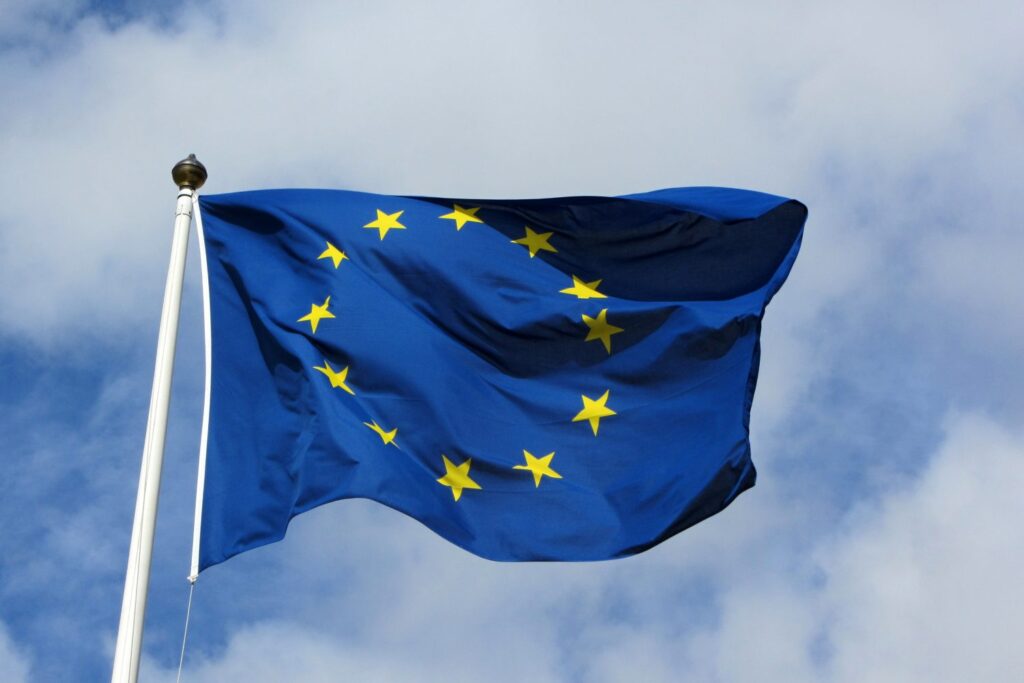
The argument put forth by national politicians during the COVID-19 pandemic, claiming the EU had failed, does not hold water following a revelation by the Reuters news agency. An emergency plan was already in place by the end of January, which was rejected by almost all governments. Gross negligence, says Charles Steiner.
Consider the following scenario: Dark clouds gather over Europe. The EU Commission sees them, warns member states that it will rain, and offers to coordinate the provision of umbrellas to member states. Most national governments – including Austria – refuse, claiming they have enough umbrellas. And besides, the rain will pass anyway. Only four thought it was a good idea. A month and a half later, it rained, much harder than national governments had anticipated – and there aren’t enough umbrellas. What do the national governments do? They complain that the EU has left them out in the rain.
The reality is far worse. What has descended upon Europe is not a storm, but a virus that has already claimed thousands of lives. And it wasn’t umbrellas that the EU Commission offered at the end of January, but test kits, masks, and protective equipment. Things that are now desperately needed, especially in Italy, France, and Spain, where people are dying miserably in their thousands. The dead have long since become nameless; doctors and nurses work non-stop but cannot prevent the dying. National governments hastily tried to seal off borders in mid-March, albeit without coordination. Medical supplies must be bought expensively on the world market, if they can even be obtained, after the US has already intercepted these materials from the tarmac with suitcases full of cash. Yet, instead of national governments taking responsibility for their own failure, they prefer to shift the blame to the EU. We had to learn through the Reuters news agency, which published the relevant meeting minutes from Brussels, that this is simply not true.
Warnings Ignored
Austria is one example among many. Chancellor Sebastian Kurz dramatically complained that it was unacceptable to have to fight alone for two weeks and that the EU would have to face this criticism after the crisis. But, as we were forced to learn through Reuters, that is not the truth. The truth is, rather: this crisis is a case of multiple organ failure, and the Austrian government, under its almost messianic Chancellor, is part of this failure. While the coronavirus had already begun to rage fiercely in Northern Italy at the end of February, everything seemed rosy in Austria. Ski lifts carried thousands of tourists to the Tyrolean mountains; in the valleys, people celebrated their existence in après-ski huts. Although COVID-19 cases had already appeared in Tyrol at the beginning of March, warnings were ignored. Similarly, when dozens of COVID-19 cases among Tyrolean holidaymakers had already been registered in Iceland and Norway, it was claimed they had been infected on the plane. It took a precious two weeks for our government to react – and that only because Norway had raised the alarm with the European Health Authority and Iceland had already issued travel warnings. Until then, the virus was able to spread unchecked. Now, public life in Austria – as across Europe – has come to a complete standstill, the economic damage now amounts to tens of billions, and Austria’s unemployment rate is now higher than it has been since 1946.
Grave Errors
One might have thought that lessons would be learned from mistakes. Yet, Austria immediately made further grave errors. Firstly, the Epidemics Act of 1950 was hastily replaced by the COVID-19 Act, probably with the ulterior motive of not having to compensate all businesses that had fallen into severe distress as a result. A relief fund was set up for this purpose, administered through the Chamber of Commerce, which many legal experts consider unconstitutional. The main thing is to be able to boast about how many billions could be made available for the struggling economy in the short term – without, of course, revealing who would have to pay for it. Joint action with other European partners? No. The so-called ‘Corona Bonds’ are explicitly rejected, with an alternative offered only through the ESM. For Italy and Spain, which were already in serious economic turbulence, this is a dagger blow. And a boomerang that will ultimately hit us too. A country whose economy largely consists of the service sector and whose export goods are limited will cut its own flesh with this solo approach. While one can argue the pros and cons of this bond programme, the ESM does not seem to be the appropriate tool for the crisis, as it has only been applied to individual countries so far, not for the entire Union itself. Indeed, many economists dispute whether a stability mechanism, whose primary goal is to protect the euro from fluctuations caused by fiscally unsound states, can be effective in the face of this crisis, especially since global financial markets have collapsed.
Grey Areas
Generally, laws, decrees, and ordinances are passed daily that not only partly contradict the Austrian constitution but also open up more legal grey areas than they intend to close. It may sound great to some tenants when our Minister of Justice, Alma Zadic, declares that rents for tenants facing payment difficulties will be deferred. However, only until December and with default interest. If this then meets rising unemployment rates and a lack of income, it is merely a postponement of the problem, which will hit those affected with full force at the end of the year. Piles of rent arrears, plus interest, and no way to ever pay them off. The idea of direct financial support for these people, of course, does not occur to anyone. This alone will lead to a rude awakening once the pandemic is contained.
But that’s not all: the government is now encroaching further on personal rights, be it through a mandatory app or the evaluation of mobile phone data. It is questionable, given the lack of legal oversight resulting from the lockdown of the courts, whether these measures will ever be reversed. The possibility of total control and total power is simply too tempting. The majority of the population may still applaud these measures now, but the longer this crisis lasts, the more people become unemployed, and the more discontent with the situation grows, the sooner the applause will die down. What will remain are surveillance measures, despite all attempts at appeasement.
That this might be an attempt to distract from their own failure at the end of January, by rejecting a coordinated approach to procuring medical supplies, seems to have gone unnoticed or unacknowledged by anyone. For the European idea, this is already more than fatal, especially when the Chancellor – as always, when it comes to populist measures – shifts responsibility to the EU, which cannot act without legitimation from the national states. The crisis would have looked significantly different if national governments had not ignored the warnings at the end of January and had tackled the problem together. It was not the EU that left us in the lurch; it was the national governments that not only abandoned the European idea but all of us, every single person living and working in Europe.
The only hope, given the gross negligent endangerment of the general public, is that this will be ruthlessly and legally clarified once the pandemic subsides. Now, as upright citizens, we must be more vigilant than ever. Otherwise, we will find ourselves in a system we never truly wanted.



