Clear Commitment to the EU, Yet Open to Reform and Not Uncritical
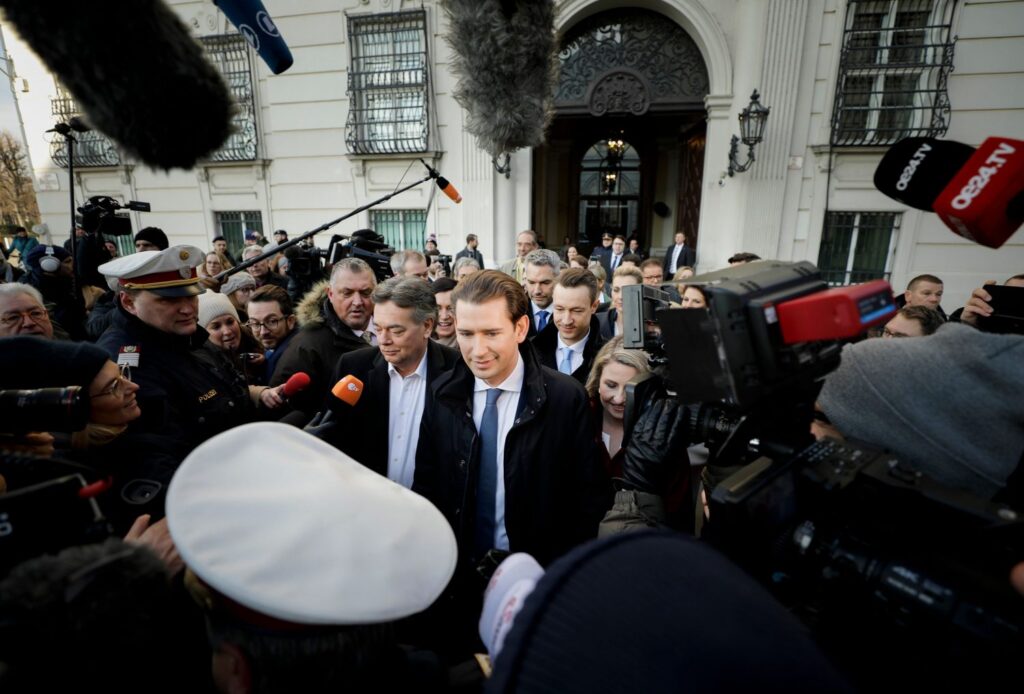
The new government programme has a clear pro-European orientation. An assessment by Franz Schausberger, President of the Institute of the Regions of Europe and former Governor of Salzburg.
An extremely positive aspect of the new turquoise-green government coalition is its clear pro-European orientation, which would not have been possible in this form with the FPÖ. The government programme is pro-European and EU-friendly in a way that would be hard to find in any other EU member state. However, this by no means implies that the new Austrian government is entirely uncritical of the EU. On the contrary: it puts forward concrete and constructive proposals for EU reform, rather than dull, populist EU-bashing. The coalition partners are committed to an active European and foreign policy, whereas the previous government’s EU policy had to expend a great deal of energy covering up the fundamentally EU-sceptic to outright rejectionist stance of the FPÖ. This left little room for active shaping. Now, the invitation from the new EU Commission President Ursula von der Leyen to a ‘Conference on the Future of Europe’ has been immediately embraced, and Austria’s intended path has already been clearly outlined: there should be a reform of the Treaty for Europe, based on the fundamental principle of subsidiarity.
The principle of subsidiarity, which originates from Catholic social teaching, means that the next higher state unit (i.e., the EU level) should only be responsible and actively intervene with regulation, control, or assistance if the immediate, member state unit is unable to do so. Help for self-help should always be the supreme principle of action for the respective superior authority. This, of course, applies not only between the EU and member states, but also between nation states and their regions and municipalities.
For the major challenges of the future, a strong European Union is needed; all other tasks are efficiently distributed according to the principle of subsidiarity, which leaves it to the member states to resolve them at national or regional level. For a convinced European and federalist, this is the right path and fully corresponds to the resolution of the Austrian provincial governors on the occasion of the current 25th anniversary of the European Committee of the Regions.
The concrete reform proposals for the EU are refreshing: reducing bureaucracy and scrutinising EU legal acts, as well as abolishing regulations that are no longer necessary, downsizing the EU Commission, consolidating the meeting places of the European Parliament, and reducing the unanimity principle. Implementation will require tough negotiations with other EU member states. But it is good that Austria intends to take the initiative. This also applies to Austria’s commitment to an EU accession perspective for the Western Balkans and to the immediate start of accession negotiations for North Macedonia and Albania. These will take years anyway before accession can occur. Austria will also actively support the dialogue between Serbia and Kosovo.
It is also interesting that the government will continue the ‘Sochi Dialogue’ between Austria and Russia and is positively disposed towards a gradual lifting of sanctions against Russia, provided the Minsk agreements are implemented.
The government programme is also very clear in its language towards all those who believe they must break away from the European community of solidarity: transgressors against the rule of law and budgetary rules must expect effective sanctions. This also applies to member states that breach the Dublin Agreement by allowing illegal migration into Central Europe and failing to act against human trafficking. This could well immediately affect Bulgaria or Greece.
On the other hand, the new federal government sees no point in over-implementing EU rules in Austrian transposition (‘gold-plating’). It is also very unequivocally pointed out that the MERCOSUR trade agreement with the South American states is rejected in its current form.
The programme also includes a commitment to strengthening proximity to citizens and people’s trust in the EU by involving regions, municipalities, and cities more than before in the EU decision-making process. Austria has set an example for all of Europe in this regard through the EU municipal councillors created by former Foreign Minister Michael Spindelegger. EU Budget Commissioner Johannes Hahn now wishes to extend this initiative to other European countries, primarily to inform down to the local level about the multiannual EU financial framework.
Speaking of EU finances: the government programme says nothing about this. This means it has moved away from being tied to strict contribution limits and is free for negotiations in the spirit of a new cooperation.
The Author: Franz Schausberger, University Professor, Historian, Head of the Institute of the Regions of Europe, Special Advisor to the European Commission, Member of the Committee of the Regions, former Governor of Salzburg.
Feature image: The new federal government on its way to being sworn in. Copyright: BKA/Andy Wenzel



