Law and Freedom
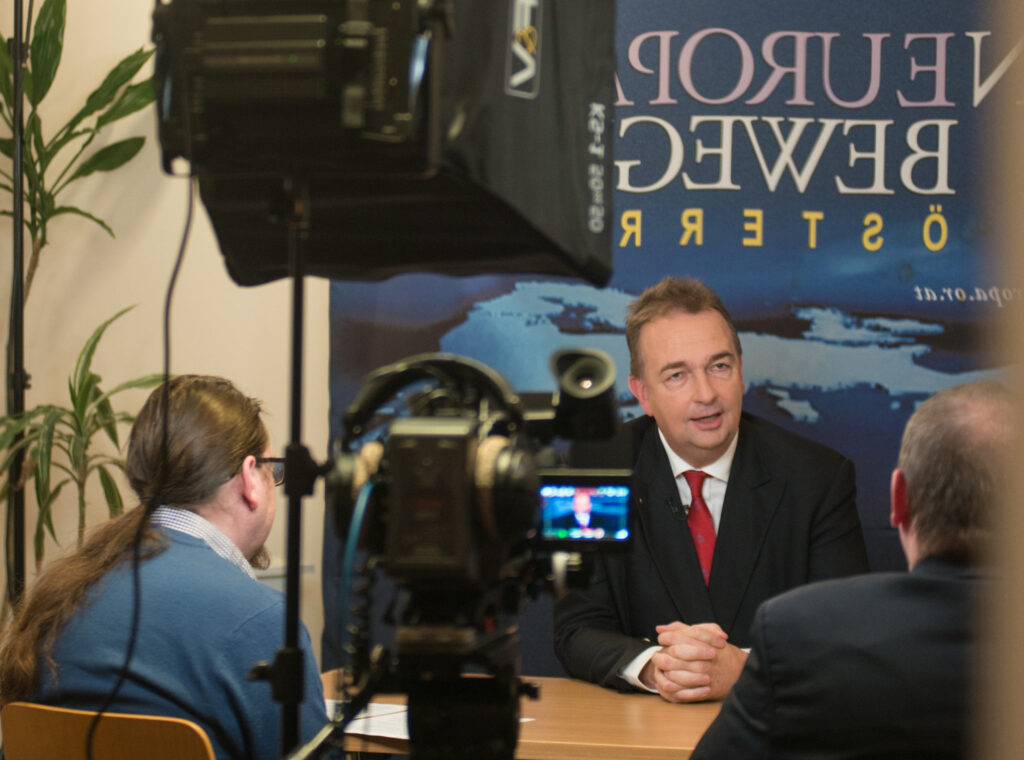
Europe’s strength lies in its commitment to law and freedom. This principle must be reinforced once again. Paneuropa President Karl von Habsburg emphasises the importance of law and freedom as fundamental elements of European political culture.
Until the end of the First World War, world politics was synonymous with European politics. Europe had undergone an extraordinarily successful development that made it the defining power on the globe. If one examines the roots of this success story, one finds a foundation based essentially on the pillars of the rule of law and freedom. Added to this are further elements such as the importance of the family as the nucleus of society, which was protected by the state but not regulated by it. Upon this foundation rest further cornerstones such as private property and personal liability for failure as well as success—and thus private entrepreneurship, which had to rely on innovation to succeed. The combination of entrepreneurial spirit, innovative power, and individual responsibility laid the groundwork for prosperity and, consequently, for states capable of conducting world politics.
It is surely no coincidence that this development took place within a culture shaped by Christianity. One also speaks of the Judeo-Christian heritage (in combination with Roman law and Greek philosophy) as the cultural basis for Europe’s path to significance.
The Basis for Prosperity
A glance at the political and economic map shows that these cornerstones of the rule of law and freedom were a prerequisite for the rise of other countries as well. The USA has a cultural background very similar to that of Europe. Since the Second World War, Asia has gradually adopted many elements of these cultural prerequisites. In other regions, however, the rule of law, legal certainty, and thus the protection of private property are completely absent. These are the regions of the world where the most problems exist.
The rule of law simply means that everyone is bound by the law. This includes those who rule, whether they be monarchs, presidents, democratic or autocratic governments. Without the rule of law, there is no legal certainty, hence no protection of private property and no economic development. Russia is a prime example. The country is rich, not only in raw materials but also in oligarchs. Yet they prefer to move their money abroad; the industrial development of the country is effectively non-existent.
This emphasis on the law is so vital because, particularly in Europe, there are repeated calls for the primacy of politics. Politics, it is claimed, must regulate everything. Yet the more it does so, the deeper the conflict with the law becomes, because it is no longer principles of the rule of law that govern, but power dynamics. In the long term, this conflict works to the detriment of Europe. Politics simply cannot regulate everything; this is already stated by the principle of subsidiarity, so often cited in Austria today. Logically, the Paneuropa Movement also formulated in a declaration: “Subsidiarity does not demand a primacy of politics, but a primacy of law and freedom.”
And when politics attempts to regulate everything, it increasingly restricts initiative, individual responsibility, and thus freedom. This applies to the level of the nation-state just as much as to the level of the European Union. For the states of Europe also owe their development to European culture. It is therefore no coincidence that at the beginning of the original approach to European unification, which started with Richard Coudenhove-Kalergi’s Paneuropa idea in Vienna in 1922, stood the European ideal. Coudenhove-Kalergi formulated it thus: “The European ideal is freedom – European history is a single, slow struggle for personal, spiritual, national, and social freedom. Europe will endure as long as it continues this struggle; as soon as it abandons this ideal and becomes unfaithful to its mission, it loses its soul, its meaning, its existence. Then its historical role is played out.”
The article originally appeared on the website of Karl von Habsburg.
Photo: Katharina Schiffl



