Schengen: Do Internal Borders Deliver Internal Security?
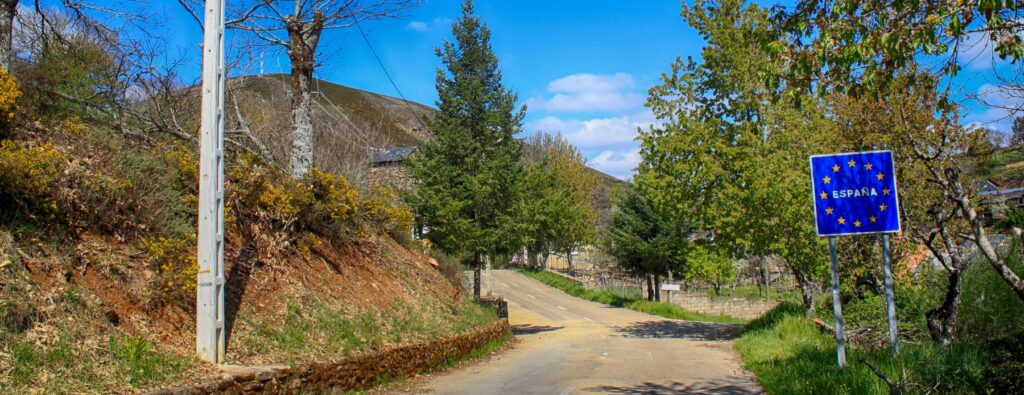
What do Germany and Croatia have in common, even though Germany is a member of the Schengen Area and Croatia is not? In both countries, blanket controls are in place at border crossings. An analysis by Elias Kindl.
This occurred due to the large refugee movement in summer/autumn 2015. These controls were actually supposed to end in February 2017, but the Bavarian government continues to implement border controls at the German-Austrian border and intends to maintain them until next spring.
Bavaria’s Interior Minister, Joachim Herrmann, considers border controls within the EU indispensable, also due to the threat of terrorism. “Although the migratory pressure from refugees has decreased in recent months, the current attacks represent an intensified and thus new situation compared to 2015, to which Europe must respond,” the CSU politician told the German Press Agency in Munich. The Bavarian government thus links the issue of border control with the issue of security. Now, how effective are border controls with regard to a country’s internal security?
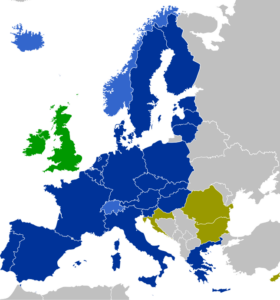
The states of the Schengen Agreement: Full member states (blue), non-EU Schengen members (light blue), future Schengen members (yellow), cooperating states (green).
The effectiveness of border controls was also brought into play in Austria. FPÖ MEP Harald Vilimsky reported a 35 per cent decrease from September to December 2015. From September 2015, the main border crossings such as Nickelsdorf, Spielfeld, and Walserberg were controlled.
Is this claim true? This can be disputed, as, firstly, this is not the purpose of border controls, and secondly, longer-term trends since 2007 show nothing of the sort. Border controls target specific groups of people and are usually only carried out on a random basis. At most, they can have a deterrent effect. Because even if the controls were to have a deterrent effect, we would see this in the figures. Controls were suspended at Austria’s eastern border in 2007 when the Czech Republic, Slovakia, Hungary, and Slovenia joined the Schengen Area. Following Vilimsky’s and Herrmann’s argument, crime should have increased in these years compared to 2006. However, this is not the case. The numbers for residential burglaries have remained relatively constant. In 2006, there were 16,548 burglaries. If one compares this figure with that of 2014 (17,109 cases of residential burglary), one might assume that border controls would have paid off, at least in this area. Even looking at the first few years, there was a slight increase after the initial border opening, from 18,896 burglaries in 2006 to 21,165 in 2009. Even then, individual politicians and media outlets suspected a connection with the Schengen opening. Yet, the number significantly decreased in subsequent years, falling below the value before the lifting of border controls. In 2014, the police recorded 17,109 such offences nationwide.
Lower Austria: Fewer Burglaries After Border Opening
An even clearer trend was observed in Lower Austria. There, burglary crime significantly decreased in the first few years after the border opening, from 4,000 burglaries in flats and houses in 2007 to 2,532 in 2010, after which it slightly increased again.
However, the figures in between are overlooked here, e.g., 15,442 cases of residential burglaries in 2012. This figure is the lowest since 2005. Therefore, it can be assumed that the lifting of border controls due to the eastern neighbours joining the Schengen Area has had no impact on the numbers of residential burglaries.
The opposite development to that indicated by Herrmann and Vilimsky can be observed in vehicle theft. Here, there has been a steady decline. Vehicle theft decreased between 2005 and 2014, from 10,446 cases to 3,347 cases.
Overall crime also significantly decreased. It fell from 604,229 cases in 2005 to 527,692 cases in 2014, which would also be the lowest figure since 2005. Fewer criminal offences occurred not only in the west of the country, such as in Tyrol, but also in Styria and Lower Austria – regions directly adjacent to the opened eastern border. In Burgenland and Vienna, the numbers remained largely stable.
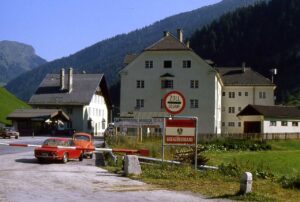
© Piergiuliano Chesi
The border between Austria and Italy at the Brenner Pass in 1978. With Schengen, border controls between Tyroleans north and south of the Brenner finally ceased.
The example of vehicle thefts, in particular, demonstrates the invaluable advantage of the Schengen Area. Schengen also leads to more efficient investigations. With the implementation of the agreement, cross-border police cooperation was strengthened, and a Europe-wide database was established, making not only wanted persons but also stolen vehicles retrievable. The European Vehicle Identification File is worth mentioning here.
Terror – via open borders?
But what about terrorism, one might object. In the CSU in Bavaria, border controls are also seen as an effective tool against terrorism. The Amri case in Germany and his escape across national borders serves as an example here. The problem is that there are no valid figures for this, unlike for crime. Here, it cannot be determined whether border controls would have succeeded in preventing this escape. In my opinion, this discussion is approached from the wrong end.
Open borders are the wrong approach when it comes to escape. The lack of cooperation among European intelligence agencies would be required to prevent such attacks. Critics of the Schengen Area should strive to change the federal structures at the intelligence level. After all, the rejected Tunisian asylum seeker Amri was known as early as early summer 2015. Even then, he was involved in Salafist circles. In 2016, the Tunisian intelligence service warned the German authorities about Amri twice. The North Rhine-Westphalian State Criminal Police Office also assessed him as dangerous. Here, the interaction between the authorities in Dortmund and Berlin failed.
Another alternative, proposed by the Belgian government, also appears to offer little reassurance. This aims to oblige travel companies, from next year, to store information about passengers on international routes – not only for air travel but also for rail, bus, and ship transport. Only travellers with a ticket issued in their name would then be allowed to cross Belgian borders. The registration requirement would certainly have made his escape more difficult.
Conclusion: Many Disadvantages, No Benefits
Why are the Belgian plans viewed critically in Germany and other EU countries? Because, in the opinion of many experts, the effort and benefit are not in an appropriate ratio. The EU Commission, for example, argues that checking tickets and identification documents at railway stations would likely lead to long queues. These could become new targets for suicide bombers.
Rail and bus companies fear the additional effort for controls, which could force them to increase ticket prices. According to the Federal Ministry of the Interior, German security authorities also have no indications that cross-border high-speed train traffic is subject to a higher risk than other railway traffic in Germany.
In addition to the immense costs that border controls would incur, they would also be of no benefit. As we have seen from the figures, there is no connection between the opening of borders and crime. We have also seen that closing the Schengen Area would make no sense even in the context of terrorism, and that increased cooperation among intelligence agencies would be far more necessary here.

The Author
Elias Kindl is Vice-President of Paneuropa-Jugend Österreich (Paneuropa Youth Austria). The political scientist specialises in security policy and Eastern European issues.
This article appears in cooperation with the magazine “Couleur” of the Mittelschüler-Kartell-Verband (Secondary School Students’ Cartel Association).



