France Remains Socialist
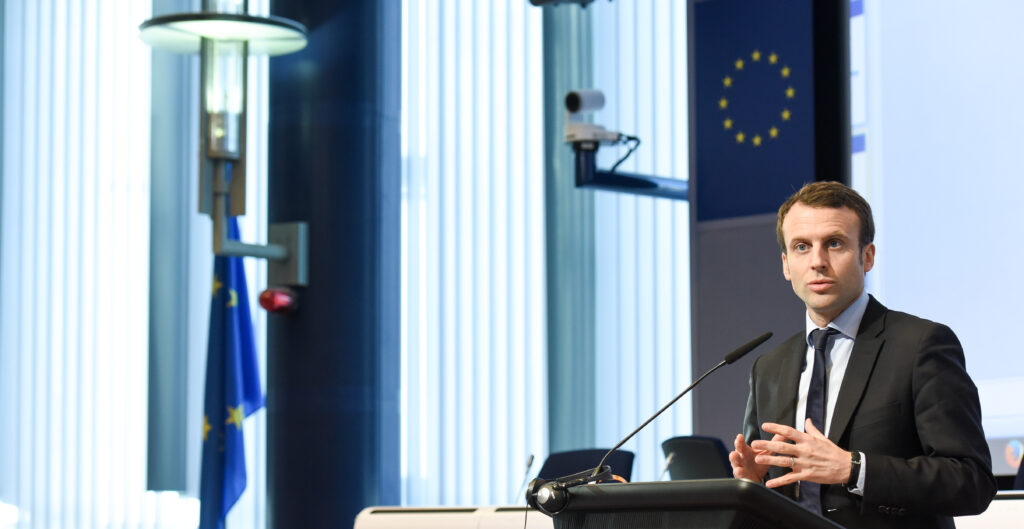
The prognosis was hardly difficult, and was already made immediately after the first round of voting in France. Emmanuel Macron will be the new President of France. France thus remains socialist. It would have remained socialist even if the far-right Marine Le Pen had won. In terms of content, she stands for a socialist economic policy, for state intervention, for the welfare state, albeit limited to her own nation.
A commentary by Paneuropa Secretary General Rainhard Kloucek
Why Macron is described as liberal or a centrist candidate in various media is baffling. His programme, insofar as it is even concretely available, does not permit such conclusions. Certainly, he wants to roll back the state in some areas and implement economic reforms. However, that alone does not make a centrist candidate or a liberal policy. France desperately needs reforms towards greater business friendliness if it is not to crash and burn.
What makes him more likeable than Le Pen is his commitment to European unification. But even that is not a liberal achievement. Regarding the kind of Europe he envisions for the future, some contours are already emerging. Macron – like his predecessor and mentor, Hollande – stands for the idea of a central economic government in the EU, a separate parliament for the Eurozone, a debt union, and an expansive monetary policy; in other words, an economic and financial policy typical of the so-called Club Med in the EU, and one identified as the cause of many crises. And, he wants to relax the stability criteria for the Euro. In other words: he stands for less market and more regulation, i.e., for socialism and certainly not for liberalism.
Revival of the Franco-German Axis?
Macron – like his predecessors – intends to make his first “foreign trip” to Germany. Supporters of the Franco-German axis as a kind of EU leadership hope for a revival of this axis. It remains to be seen whether Macron truly represents a new, European political style, or whether he will fall back into old patterns of hegemonic claims.
Among other things, the French presidential elections have shown that the old right-left paradigm is long outdated. Le Pen may be considered right-wing due to her nationalist rhetoric, but in economic policy, she certainly is not; the Front National’s programme fits more into the left-wing schema. Although nationalism itself is based on collectivist, and thus rather left-wing, patterns. Macron comes from the socialist party, owes his political career to it, yet is still described as liberal. However, today’s decisive political distinguishing feature lies between the friends of freedom and the friends of the paternalistic, regulating, and intervening welfare state. There are currently no real indications that Macron could develop into a friend of freedom.
Parallels with Austria?
The second lesson from the election is the weakness of the party system. Here, parallels with Austria emerge, because here too, in the first round of the federal presidential election, the candidates of the previously ruling parties failed. Just as Alexander van der Bellen made his entire political career in one party but was then promoted as an independent candidate, Macron also made his political career in a party, left it before the election, and with the help of this party and some other experts, built a new electoral movement that marketed itself under the slogan of independence.
However: the prognosis – France remains socialist – could yet be wrong. That is, if a different majority is elected in the parliamentary elections in June. Even experts in French politics dare not make predictions. It is too unclear whether the movement that propelled Macron into the Élysée Palace (the alternative offer was not truly attractive, Fillon had damaged himself with his past activities and was thus an easy target for opponents) will actually create a new force in France, or whether the victory was merely a rejection of the competitors. Since the first round of the election, the bourgeois parties have had time to prepare for the parliamentary elections. Overall, the French political system is statist, centralist, and paternalistic.
Feature image: Emmanuel Macron speaking as French Minister of Economy, c European Union 2016



