France Remains Socialist
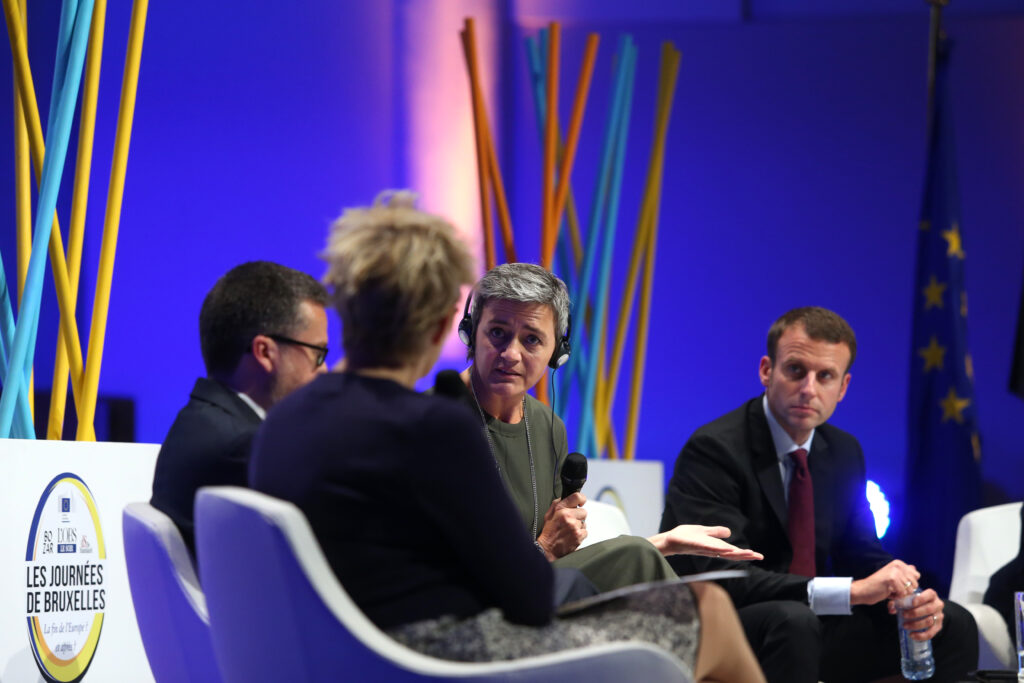
Emmanuel Macron will be the next President of France. Any other outcome is considered out of the question. The country’s socialist folly is thus prolonged. A commentary by Rainhard Kloucek
France has apparently invented statism and centralism. Even the so-called bourgeois or conservative parties rely on the paternalistic welfare state. This policy, however, is no longer exclusive to France today. Socialists in all parties (to borrow from Friedrich August von Hayek) now dominate politics (both in governing parties and in opposition – individual politicians are an exception).
From this perspective, François Fillon was an exception for France. Among the candidates for the first round, he was the only one who advocated for a reduction of the state apparatus and for the rehabilitation of state finances. His victory in the party primaries was apparently driven by a strengthening Christian movement in secular France. The party establishment immediately dropped Fillon when the first stories of his wife’s fictitious employment and very expensive suit gifts became known. The fact that he still managed to hold large rallies without party support, and even against the will of the party leadership, is further proof that the political landscape in France is in flux.
It was not enough for the run-off election. This will now be contested between Marine Le Pen and Emmanuel Macron. Le Pen stands out with aggressive nationalist and anti-European rhetoric and is therefore often described as right-wing. However, this example shows that the old right-left paradigm is long outdated. Many a candidate from her Front National comes from the socialist camp. The party, like most nationalist parties, advocates for a socialist economic and social policy, for example. In contrast to international socialists, their horizon is limited to their own nation.
According to French political experts, Emmanuel Macron is considered the candidate of the still-reigning President François Hollande. Hollande knew that he would be defeated if he ran again. He did not agree with the candidate of his own socialist party. This led to the candidacy of the ‘independent’ technocrat Macron.
Hollande is considered a powerful string-puller in the campaign against Fillon. As French political experts suggest, the information against Fillon came directly from Hollande’s office. It therefore seems that Fillon was the only candidate whom the socialists saw as posing a certain threat to their own majority. After the first round of the presidential election, practically all political forces except the Front National called for a vote for Macron. A victory for Le Pen would therefore not only be a gigantic surprise but would also have unforeseeable consequences.
One more detail from this first round of the presidential election is worth mentioning. All parties except the Front National conducted internal primaries for their candidate. Macron did not run as a party candidate but appears under the guise of independence. The run-off election now features the two candidates who did not face a primary. This will certainly be very exciting for the parliamentary elections in France, which will take place in the summer.
Copyright featured image: European Union 2016



