The Election in Bulgaria – Will Stability Return?
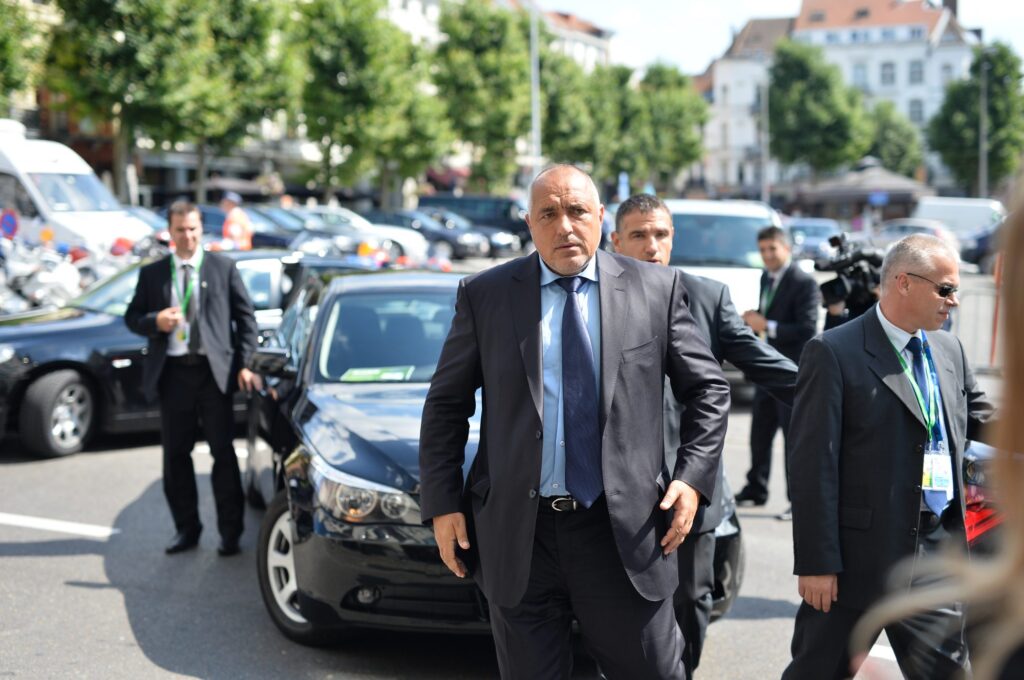
In 2013, Prime Minister Boyko Borisov resigned. In the snap elections of 2014, his GERB party once again became the strongest force, and Borisov returned as Prime Minister. At the end of 2016, after his candidate lost the presidential election to the independent challenger Rumen Radev, who was supported by the Socialists, Borisov submitted his resignation again.
The parliamentary elections took place on 26 March 2017, and Borisov’s GERB party (Citizens for European Development of Bulgaria) once again became the strongest force.
A stable government would now be the goal, yet serious coalition partners are few and far between. The Socialists have rejected participation in government, and the ‘United Patriots’ party is considered nationalistic and extreme.
A massive problem, overlooked or ignored by European media, is that this country is massively divided not only between Europe and Russia, but also on the question of Turkey’s influence.
While the Turkish minority in Bulgaria (around 600,000 people) has representation through the DPS party (which belongs to the European party family ALDE/Liberals), the influence of the government in Ankara has intensified. The DOST party is considered close to the AKP – and thus within the sphere of influence of Turkish President Erdoğan. However, it failed to enter the Bulgarian parliament.
The country is also divided on the Russia question. Moscow’s influence on the regions of the former Soviet Union is clearly present, yet all major parties strive to present themselves as pro-European. The Socialists, among other things, have demanded the lifting of sanctions against Russia, but deny a pro-Russian course. President Radev (supported by the Socialists) is considered rather Russia-friendly in Europe – but in Bulgaria, as an independent candidate, he is seen as an alternative to the ‘system’, and his proximity to the Kremlin is rated lower.
The Parliament in Sofia – the future cooperation of the parliamentary groups will be decisive. (Image rights: By Julian Nitzsche – Own work, CC BY-SA 3.0, https://commons.wikimedia.org/w/index.php?curid=28200059)
How the government negotiations will unfold remains to be seen, but what remains is that Southeast Europe is torn. Moscow’s influence on the (largely) NATO countries is known and obvious. That Turkey has massively expanded its influence in recent years was previously more of a side issue until the incidents in the Netherlands and Germany (bans on appearances, statements by Turkish politicians, etc.).
The European public would do well to pay more attention to developments in this region. The EU cannot afford a politically unstable region with strong external influence, yet it is precisely here that security and peace are decided. The Balkan route, Russian, Turkish, and US influence on politics and the military, social problems, the emigration of young people – all of this poses greater challenges for Europe than domestic political developments in civilised rule-of-law states like the USA ever could.
Featured image: Election winner Borisov in Brussels in 2014 – a difficult task awaits him. (Image rights: By European People’s Party – EPP Summit, Brussels, July 2014, CC BY 2.0, https://commons.wikimedia.org/w/index.php?curid=34076764)



