A military museum polarises!
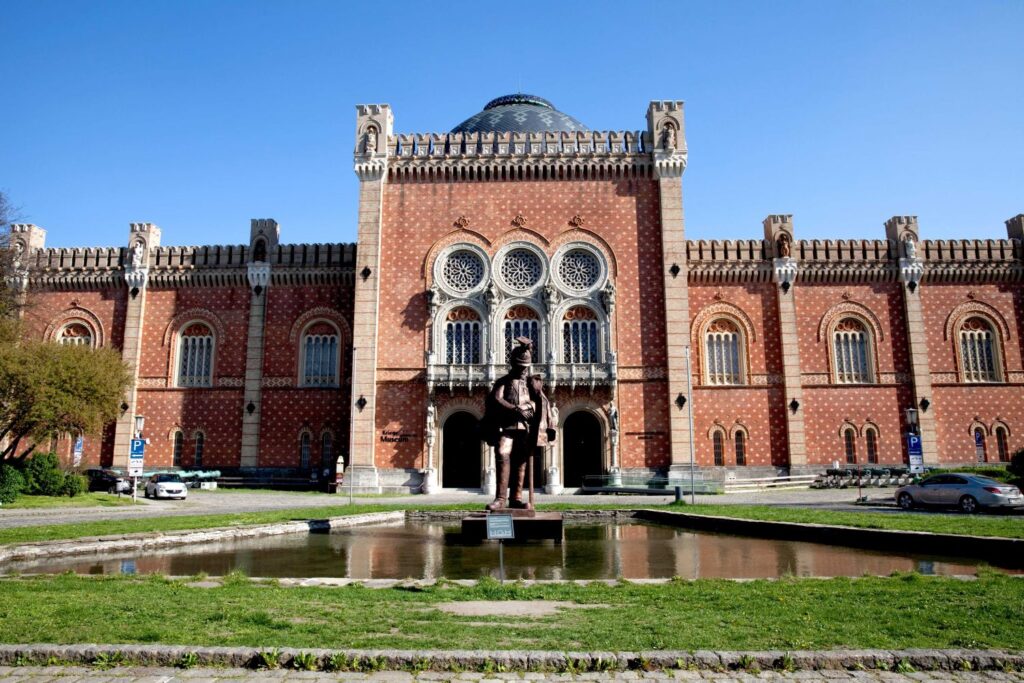
Who is destroying the HGM? The wittily written commentary in the 1/2020 issue of the magazine “Paneuropa” caused quite a stir, reaching far beyond the magazine’s usual readership. The majority of the reactions were positive and encouraging. However, harsh and fact-free accusations also came from those circles that have apparently been trying for some time to bring the Museum of Military History in Vienna under their ideological control. Regarding the many attacks on the Museum of Military History, “Paneuropa” conducted an extensive interview with its director, Dr Christian Ortner. The interview was conducted together with the Union of European Re-enactment Groups and the Order of St. George.
Paneuropa: The Museum of Military History (HGM) is arguably a unique museum. What is so special about this institution?
Christian Ortner: The Museum of Military History is not only the oldest purpose-built museum building in Vienna, but its overall concept is impressive because architecture, content, and museological significance merge into a unique whole within this institution. Its importance is not limited to today’s Austria; it has a strong Central European, perhaps even European dimension.
Paneuropa: The museum has a special history of origin. What was the original mandate?
Christian Ortner: The museum itself owes its existence to an elementary event, namely the social and national revolutions of 1848/49. After they were suppressed or ended, the military leadership decided to build three large barracks in the greater Vienna area as so-called “defensive barracks” to be able to control the city in the event of new unrest – a clear anti-revolutionary, perhaps even anti-democratic purpose. These include today’s Rossau office building, the Arsenal barracks, and the third barracks no longer exists today; it was built “am Hof”. These three barracks formed a triangle with which one could “always keep the city under control”. The Emperor himself also ordered a cultural building for the Arsenal, which was intended to house the imperial weapon collection at the time. This became the so-called k.k. Hofwaffenmuseum (Imperial Court Weapons Museum). Today’s HGM was first opened as a weapons museum in 1869, naturally on a smaller scale. In the years that followed, however, parts of the collections were transferred to today’s Court Hunting and Armoury, i.e., the Kunsthistorisches Museum. A new concept had to be found, which was particularly promoted by Crown Prince Rudolf, and now envisaged the creation of a historical military museum. That was revolutionary at the time. This makes the Museum of Military History the oldest historical military museum in the world. It was then reopened in 1891 as the k.(u.)k. Heeresmuseum. After the end of the monarchy in 1918/1919, there were initiatives to close the entire museum as a symbol of k.u.k. militarism or monarchism, even to tear it down or to sell it in its entirety – collections and buildings – to the USA. Ultimately, however, it was the veterans of the First World War, among others, who asked who would then tell their own story. These considerations eventually prevailed.
Paneuropa: What is the museum’s mandate today?
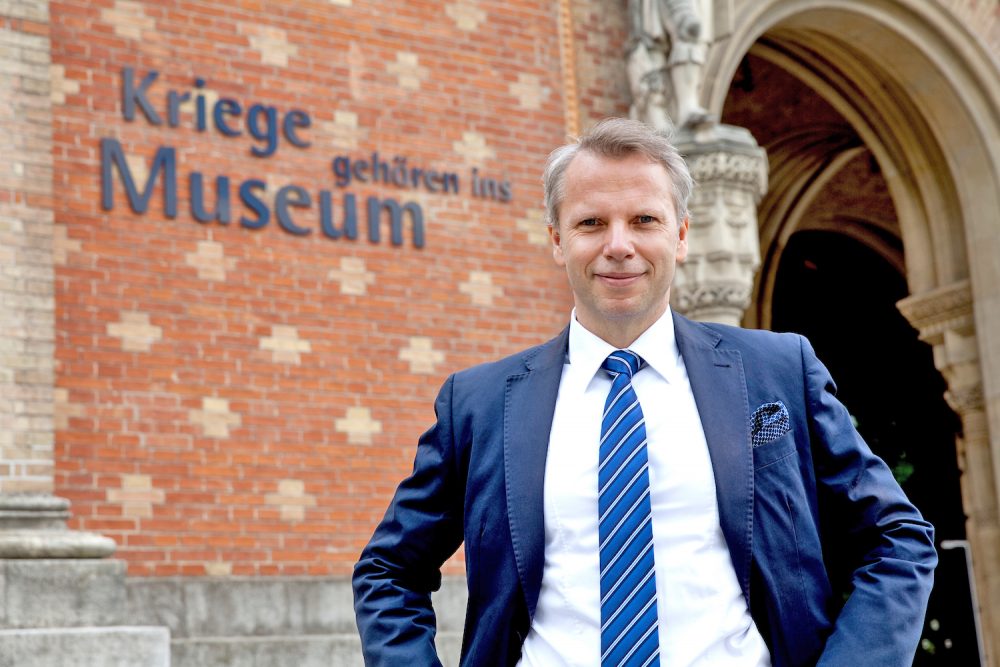
Dr Christian Ortner was initially entrusted with the management of the house in 2005 on an interim basis, and then took over permanently in 2007. From around 58,000 to 60,000 visitors back then, the HGM has now risen to around 287,000, and revenue has quadrupled.
Christian Ortner: The museum’s mandate today is to present Austrian military history from the late 16th century to the present, within a broader geographical and historical framework, aligned with military-technical, social, and societal developments, as well as political history. This means military history not as pure operational history, but embedded in a general historical thread. However, Austrian military history serves as the “common thread” of the presentation.
Paneuropa: When listening to critics, one gets the impression that for them such a museum no longer fits into today’s world because it allegedly glorifies war or weapons. Yet with the slogan “Wars belong in the museum”, you have provided a fairly clear answer to this accusation.
Christian Ortner: We must not forget that military history museums or army museums always polarise. Especially in the German-speaking world. It is simply about how a society deals with “armed power”, both in the present and in history. Accordingly, everyone will approach this subject from the perspective of their own personal history. That is precisely why I believe that the museological presentation of military history should not be excluded. On the contrary. Even if the topic naturally polarises, military history has an important function. In modern society, especially during long periods of peace, people forget that it often emerged due to warlike or military developments. The Museum of Military History can, of course, not replace good history lessons, but it can accompany and support the understanding of one’s own history.
Paneuropa: In an ORF cultural programme, it was pointed out almost reproachfully in the introduction that the Habsburg rulers and their commanders are still standing here. What would be left of the HGM if this period were omitted?
Ortner: The HGM currently presents military history from the late 16th century to 1991; the history of the Federal Army of the Second Republic is shown in the special exhibition pavilion. If the history of the monarchy were excluded, it would mean excluding almost 350 years; de facto, around three-quarters of the museum would no longer exist.
Paneuropa: That means one would be sweeping a part of Austria’s history under the carpet.
Christian Ortner: We must not forget that this is a comprehensive presentation of almost five centuries; the history of the Republic covers around 100 years.
Paneuropa: You are a historian yourself. As a historically interested observer today, one often gets the impression that a strong trend in historical science tends to interpret and evaluate everything historical from today’s perspective. Is such a thing permissible?
Christian Ortner: That is a popular approach to history. Also because people tend to highlight those elements from history that offer themselves as a historical foundation for their own worldview, their own understanding of culture, or perhaps their own ideology. This results in evaluations or judgements based on current values that are not very useful. To prevent this, serious historical science uses contemporary comparison. This means: protagonists and events are placed in an international contemporary context and compared. This makes an assessment “from the time” possible. For example, when approaching the person of a Chief of General Staff, one cannot compare him with a today’s Chief of General Staff, but must compare him with his European counterparts of the time. Only then is it possible to determine whether he was a particularly martial or a peace-loving general.
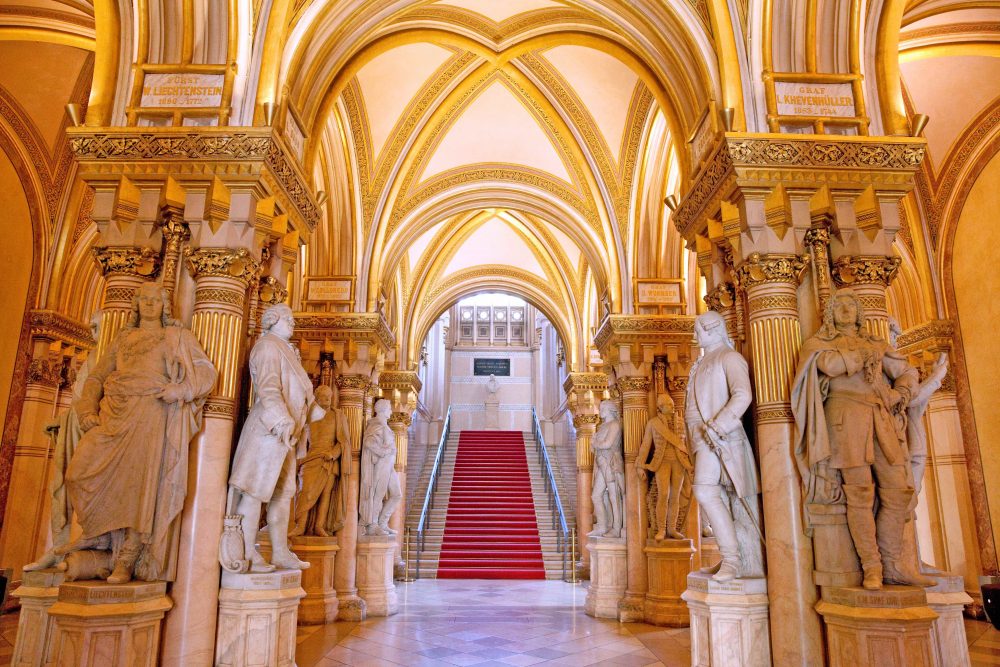
: In an ORF cultural programme, it was pointed out almost reproachfully in the introduction that the Habsburg rulers and their commanders are still standing here. If the history of the monarchy were excluded, it would mean excluding almost 350 years; de facto, around three-quarters of the museum would no longer exist.
Paneuropa: That would also mean that historical science would become a political operation and thus also manipulable.
Christian Ortner: I believe that historical truth reveals itself when one succeeds in considering as many perspectives as possible. This is sometimes difficult and, of course, also costly. Sometimes we are tempted, for the sake of simplicity or because it fits our own concept, to use only one perspective. I consider this very problematic, because history students learn this in their very first introductory lecture at university: a lot of abuse can be committed with unprofessionally conducted historical science.
Paneuropa: That is also one of the accusations made against this house. Critics then say: Yes, there is an exhibition and weapons are shown, but it is not shown what these weapons were used for. Does a museum visitor today really need to be presented with everything in explained bite-sized pieces, or should they not be able to evaluate a museum and history themselves?
Christian Ortner: I think that the classic museum visitor should not be portrayed as a fool. As a rule, visitors are very capable of reflection, especially adults. With young people, the challenge is of course different. However, they almost always come accompanied, mostly in school groups. They are then usually accompanied by in-house cultural mediators and familiarised with the historical context. Here, too, we find that young people do get involved and actively participate in the individual educational programmes.
Paneuropa: And of course there is the accusation that in such a museum not only tanks are shown, but also war-glorifying pictures, sometimes devotional objects from a totalitarian era, although there are very strict laws in Austria. Has the HGM ever violated laws here?
Christian Ortner: No, the Museum of Military History is, of course, as a department of the Federal Ministry of Defence, exempt from certain legal requirements, especially regarding war material and weapons. On the other hand, I do not think it is very sensible to ban symbols representing totalitarian systems from the exhibition as well. It seems more sensible to me to show them in the museum as witnesses of the past than to find them sprayed as graffiti somewhere on a wall or on a Jewish gravestone.
Paneuropa: There were also exhibitions where various dealers offered their goods, where the accusation was again made that they had sold such symbols. How do you proceed in such a case?
Christian Ortner: It concerns a single event where we also allowed flea market dealers to increase revenue. All stallholders were required to comply with all legal requirements regarding the Weapons Act, the War Material Ordinance, and the provisions regarding the handling of objects from the National Socialist era. They also guaranteed this contractually. We checked this several times during inspections. The police were also on site and checked. There was not a single violation of any of these provisions.
Paneuropa: That would probably have caused a huge stir.
Christian Ortner: Well, of course. We strictly instructed all stallholders to comply with these requirements and also checked this. Whether someone sells something under the counter cannot be controlled, but there was no reported violation of any of the legal provisions.
Paneuropa: Is there also something in the exhibitions that documents the resistance, especially against National Socialism?
Christian Ortner: Of course. In the “Republic and Dictatorship” hall, which covers the period from 1918 to 1945, we have a separate area with the chapter “Resistance”. This is primarily about those Austrians who were in action with the Yugoslav Tito partisans, for example, or served in Allied armies, such as the members of the little-known Austrian Battalion of the French Army. So the area of resistance, especially military resistance – we are, after all, a museum of military history – is presented very prominently.
Paneuropa: You have been director for 15 years. How has the house developed during this time?
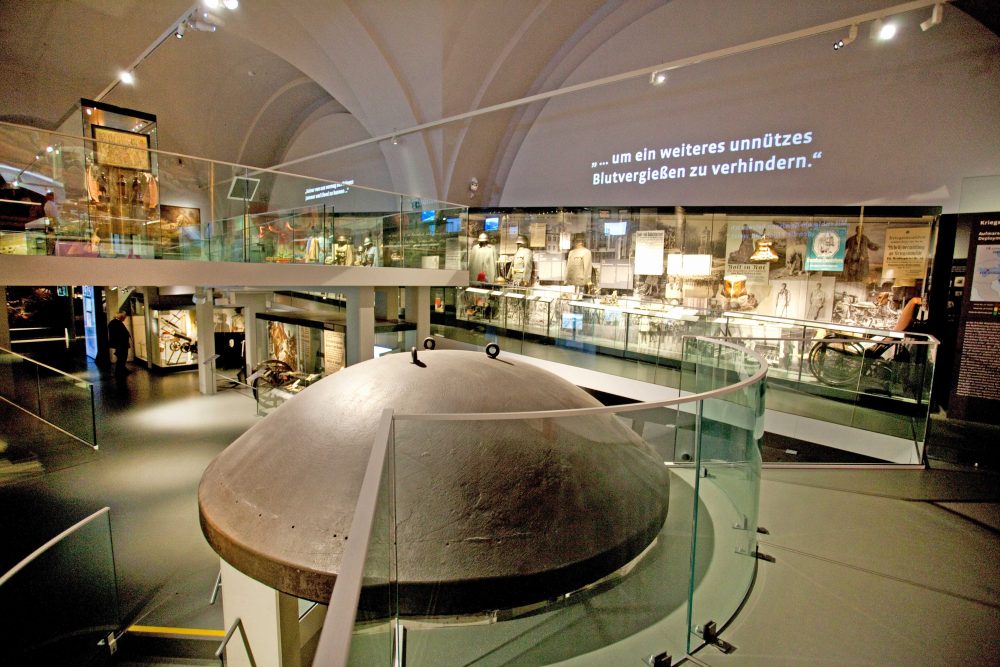
Christian Ortner: I was initially entrusted with the management of the house in 2005 on an interim basis, and then took over permanently in 2007. At that time, the house was in a serious crisis, as annual visitor numbers were falling rapidly, and with them the corresponding revenue. The department’s instructions to my management were very clear: to bring the museum back to a level appropriate for a federal museum. We actually succeeded in doing that. From around 58,000 to 60,000 visitors, we have now risen to around 287,000, we have quadrupled revenue, and are thus back within the Viennese museum landscape. Furthermore, corresponding changes were made within the house itself during this phase. With the increase in revenue, larger projects were also possible. The renovation or redesign of individual halls was tackled. For example, the First World War hall was completely redesigned, and there were also adaptation works in other halls, particularly regarding conservation, labelling, and lighting. The problem of the tank garden was also solved. At that time, the combat vehicles stood outside, unprotected from the weather. We were now able to move all the vehicles into a hall. We also solved the desideratum of presenting the history of the Federal Army of the Second Republic through a creative action – by building an exhibition pavilion. A lot has happened, but there is still more work to be done in the halls.
Paneuropa: Another special feature of this museum is that it belongs to the military, the Ministry of Defence. Which is again criticised by some people who think the HGM belongs in a kind of museum holding. What would change if the Ministry of Defence were no longer the owner?
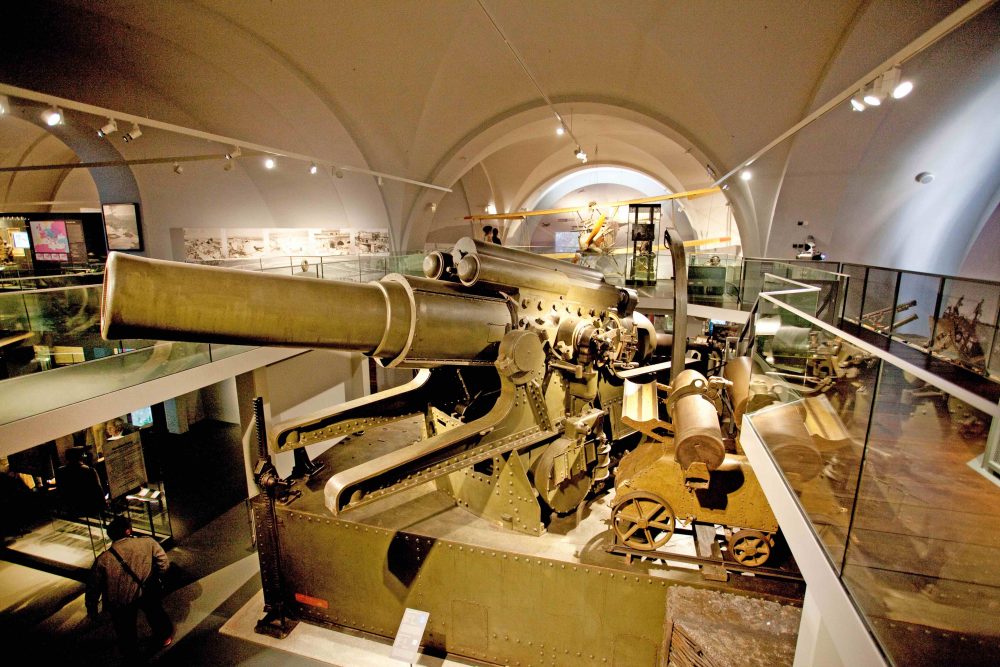
Christian Ortner: The idea of finding another legal personality for the museum, either through a change of department or through “privatisation”, was already examined very intensively at the beginning of this millennium. It was found that, on the one hand, there are legal problems – provisions such as the Weapons Act or the War Material Ordinance – and secondly, the support from the Federal Army’s logistical systems would cease. If one had to buy in all the services provided by the Federal Army, the museum would no longer be solvent after one or two quarters. Of course, we are very dependent on the infrastructure of the Federal Army, for example, regarding the storage, maintenance, and restoration of heavy equipment. The museum would partially collapse without military support. These services, which the Federal Army provides free of charge for the museum, are pecuniarily high in the six-figure, sometimes even seven-figure range. In return, the HGM provides important representation and educational services for the armed forces and contributes to the historical self-understanding of the Federal Army. These are also the reasons why, in international comparison, all state army museums – with one exception – are subordinate to the ministries of defence.
Paneuropa: In connection with the aforementioned accusations that a platform was being offered here for so-called right-wing forces, personnel policy was also criticised. Asked directly, do you have problematic people in the house?
Christian Ortner: No, all employees of the Museum of Military History are employees of the Ministry of Defence. They are immediately subjected to a reliability check upon entry. This also checks the area of extremism. Among the approximately 80 employees of the HGM, there are more than 20 with university degrees. If one or two joined a student fraternity during their student days, or perhaps joined a political faction within the framework of the Austrian Students’ Union, that is due to the time and age. But you will not find any political articulation by my employees within the framework of the house. Accordingly, I consider this accusation absurd and grotesque.
Paneuropa: Would an employee of the HGM be allowed to get involved in a political party?
Christian Ortner: Every employee naturally has their active and passive rights as a citizen.
Paneuropa: Another accusation is that the exhibits shown here are operational. In the evidence room, for example, care is also taken to ensure that the weapons exhibited there are still fully operational. Is it necessary for a museum that the exhibits are operational?
Christian Ortner: The question is which philosophy one follows. I believe that museum pieces should be preserved authentically, i.e., unchanged in their original state. So weapons are functional, because it is also about documenting technical development. A second point concerns vehicles in particular. Anyone who owns a classic car at home will know that you have to leave a certain amount of operating fluids in the vehicle to prevent corrosion of the technical parts. That tanks would be standing here in the HGM fully fuelled and ready for operation is, of course, not correct: the batteries and the breeches of the weapons have been removed. To put these vehicles into operation, numerous specialists are required, and numerous safety precautions must be observed. The advantage of partial operability also lies in the fact that combat vehicles can be moved independently. If, to take an example, you want to move a recovery tank with its 60 tonnes by three metres, it is of course extremely costly to do this with a transport or towing device.
Paneuropa: In the media, it was often mentioned that for individual exhibition objects, there is not enough critical indication of what they mean and where they were once placed. Is it the task of a museum to convey this criticism?
Christian Ortner: Especially in military museums, every visitor goes into an exhibition with their own history, usually family-related. This means that the level of knowledge is divergent. We cannot replace good history lessons, and we cannot replace the study of relevant specialist literature. The decisive thing is that we do not necessarily always have to contextualise with texts, but also by arranging the objects into ensembles. It is an often-discussed museum-philosophical approach how the relationship between text and object should be shaped. There are exhibitions that consist only of text without original objects, others again only of original objects. If you put groups of objects together, for example by representing the two opponents in a theatre of war, then a context already emerges.
Paneuropa: One is classified quite quickly by the reports: one is said to be a monarchist or right-winger if one goes to the museum. That bothers me personally. I don’t like being pigeonholed when I go to a museum. I have also never experienced, when I go to the Natural History Museum, that someone says I am following the mindset of Stone Age people. Are there approaches to counter this image?
Christian Ortner: This image can be countered relatively easily. Firstly, the inscription “Wars belong in the museum” is already on the outer wall. This clearly establishes the pacifist attitude of the museum. The second point is the number of youth and school groups we can welcome each year. Of the approximately 2,600 guided tours, around 1,700 are school groups. To now put all of these into a politically right-wing context is presumptuous. We also have around two-thirds foreign visitors. This gives us correspondingly different perspectives. I would be very careful about assigning these visitors to a politically extreme camp, whether right or left. They are simply interested people. A comparison might be worthwhile here: if I am not interested in animals, I will not visit a zoo; if I am interested in military history, then I go to a military history museum without having to be considered an extremist.
Paneuropa: There are events here where outsiders can participate. I mention “Uniform and Gunpowder Smoke”, where the traditional associations are very heavily involved. Now one could also take the view that a certain time is being glorified because it is being depicted, even with camp life. Is this something where you are thinking of changing something?
Christian Ortner: No. I believe this is an important event. For one thing, it was a very massive visitor request to be able to see uniforms, equipment, or even historical weapons “in action” or even to touch them. That is not the case with museum objects. We ensure that the quality of the presentations is also very authentic. Not everyone who wears a historical uniform can participate here. The groups are precisely selected and checked for their authenticity. To see the depiction of camp life as its glorification, I consider completely exaggerated and absurd. Even if it is only for a weekend, the actors do not live luxuriously in their camps, especially not when it gets wet and cold.
We thank you very much for the conversation.
Copyright images: HGM by Nadja Meister



