Challenges for Europe
The European elections on 9 June will help decide whether the hitherto successful process of European integration receives new impetus or stagnates. It is about more than just an economic community, as is now being propagated by certain forces. By Rainhard Kloucek, President of the Paneuropean Movement Austria.
Karl von Habsburg clearly highlighted the significance of the European election on 9 June in his “Speech on the Future of Europe” on 11 January 2024: “The composition of the European Parliament determines whether the European Union develops into the geopolitical actor we need given the global situation, if we as Europeans still want to play a role on the stage of world politics.”
European integration began as a Cold War project with six relatively homogeneous countries. Through joint control of industries vital to warfare, wars between the countries of this community—which has today grown into the European Union—were to be made impossible. A concept that has held firm, which is why Europe is often referred to as an idea or project for peace.
Today, as the European Union is confronted with a brutal war of annihilation against a European country by the Russian Federation, where the European Union imposes sanctions against Russia and assists Ukraine via the so-called Peace Facility, it is often argued that the original peace community has now become a war community, but must return to being a peace community. This statement implies that support for Ukraine should be stopped. Then, supposedly, there would be peace.
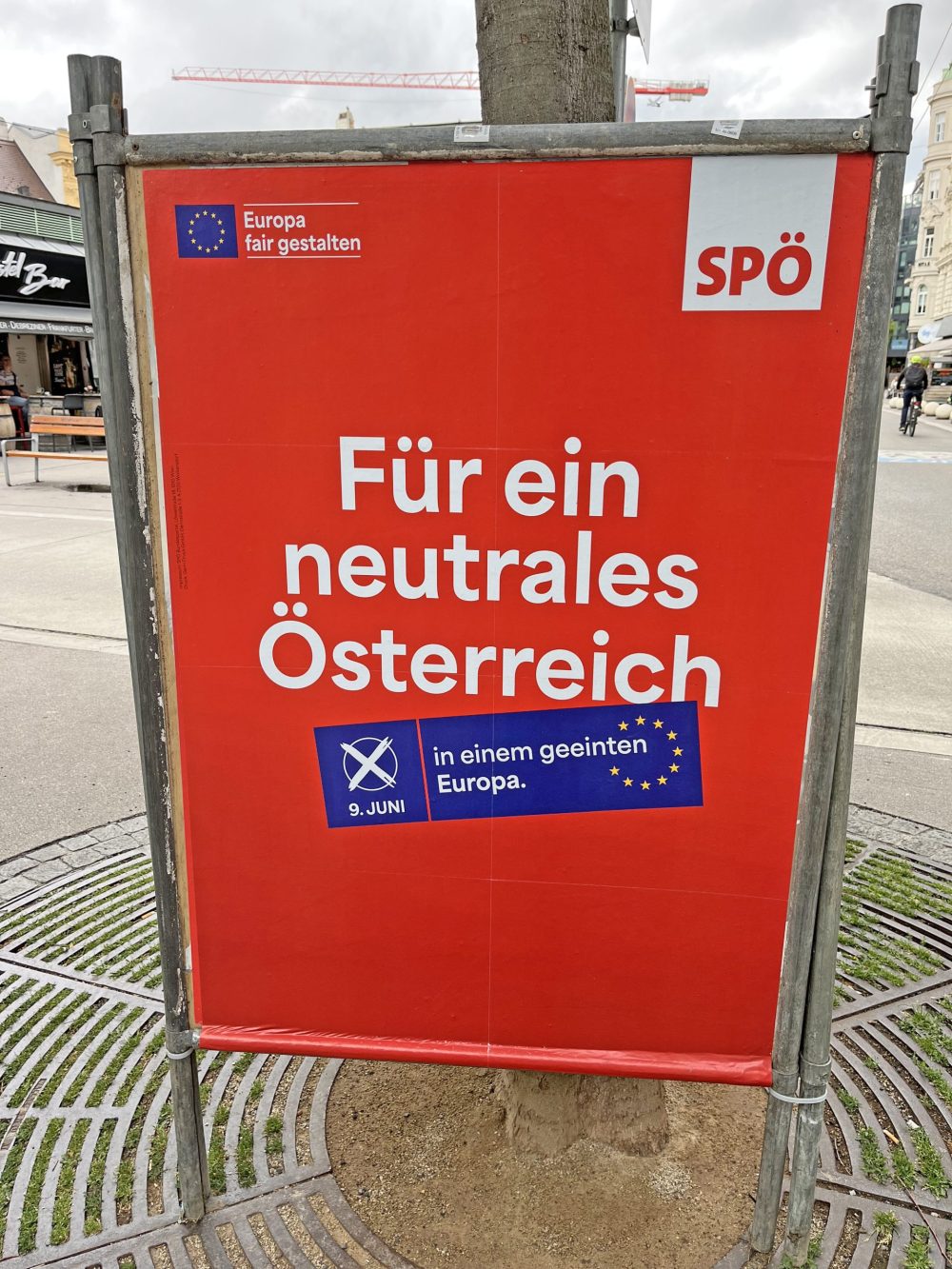
Cold War nostalgia is not a concept for the future of Europe.
This assumption is wrong for two reasons. Firstly, there is no evidence that ending support for Ukraine would actually bring peace. The opposite is more likely. Putin and his propagandists state quite clearly that they want to occupy the entire territory of Ukraine and, in doing so, wipe out everything that is Ukrainian. A heralded genocide cannot bring peace. Secondly, Moscow’s propagandists also say they have an appetite for countries like Moldova or Estonia, Latvia, and Lithuania (the three Baltic states). Some even talk about Russian tanks marching as far as Berlin.
False Isolationist Perspective
However, it is also wrong to rename the European Union peace project as a European Union war project simply because the European Union, its member states, NATO, and other states are providing aid to Ukraine to prevent it from being overrun by the Russian soldiery.
The mistake made here is turning an isolationist view of the European Union into its actual and sole characteristic. It is true that the idea of Europe as a peace project within the European Union has hitherto related to its member states. It was an inward-looking view. Even during the wars of the war criminal Slobodan Milošević against the other peoples of the former Yugoslavia, it became clear that this inward-looking view does not necessarily have an external impact on the entire European continent. Milošević did not care about the EU’s appeals; ultimately, it was the USA that brought about the end of the Serbian wars of expansion with a NATO operation it led. Individual EU countries supported this action, but the EU as such could only contribute afterwards with financial means for reconstruction.
The European Union’s External Perspective
This does not mean, however, that the European Union has always had only an inward-looking, let alone an isolationist, view. The admission of new members to this community, which ultimately constituted the high appeal of the then European Economic Community and later the European Community, was clearly a foreign policy action, even if today’s EU is still far from a genuine European foreign policy.
The goal of extending the zone of freedom, the rule of law, democracy, and the market economy to other European countries by admitting new members became a recipe for success. Ultimately, the EFTA countries (with exceptions) also sought a path into the EU. The Central European countries of the former Eastern Bloc had the same goal. And this core characteristic of the EU (freedom, rule of law, democracy, and market economy) continues to be highly attractive, which is why many countries have defined EU accession as a political goal.
The EU’s economic policy was also directed towards an external perspective from the outset. Trade agreements with other world regions were intended to increase prosperity on both sides and bring legal certainty to the export industry. International arbitration courts—independent, treaty-based courts that do not rely on the politically changeable legal situation in individual countries—have proven themselves in this task.
Bureaucratic Nationalism
The fact is, however, that this foreign policy orientation of the EU has been increasingly torpedoed by the member states. One only has to think of the various blockades regarding the admission of new countries, or the start of accession negotiations; think of the haggling over visa liberalisation for the citizens of Kosovo, or the blockades regarding the signing of the trade agreement with the Mercosur states.
In most EU member states, a peculiar new, power-political, bureaucratic nationalism has spread, which continues to nurture the illusion of its own size or sovereignty. In many cases, however, the blocking attitude is motivated by something even more profound: the interests of individual groups that have domestic influence within the party spectrum.
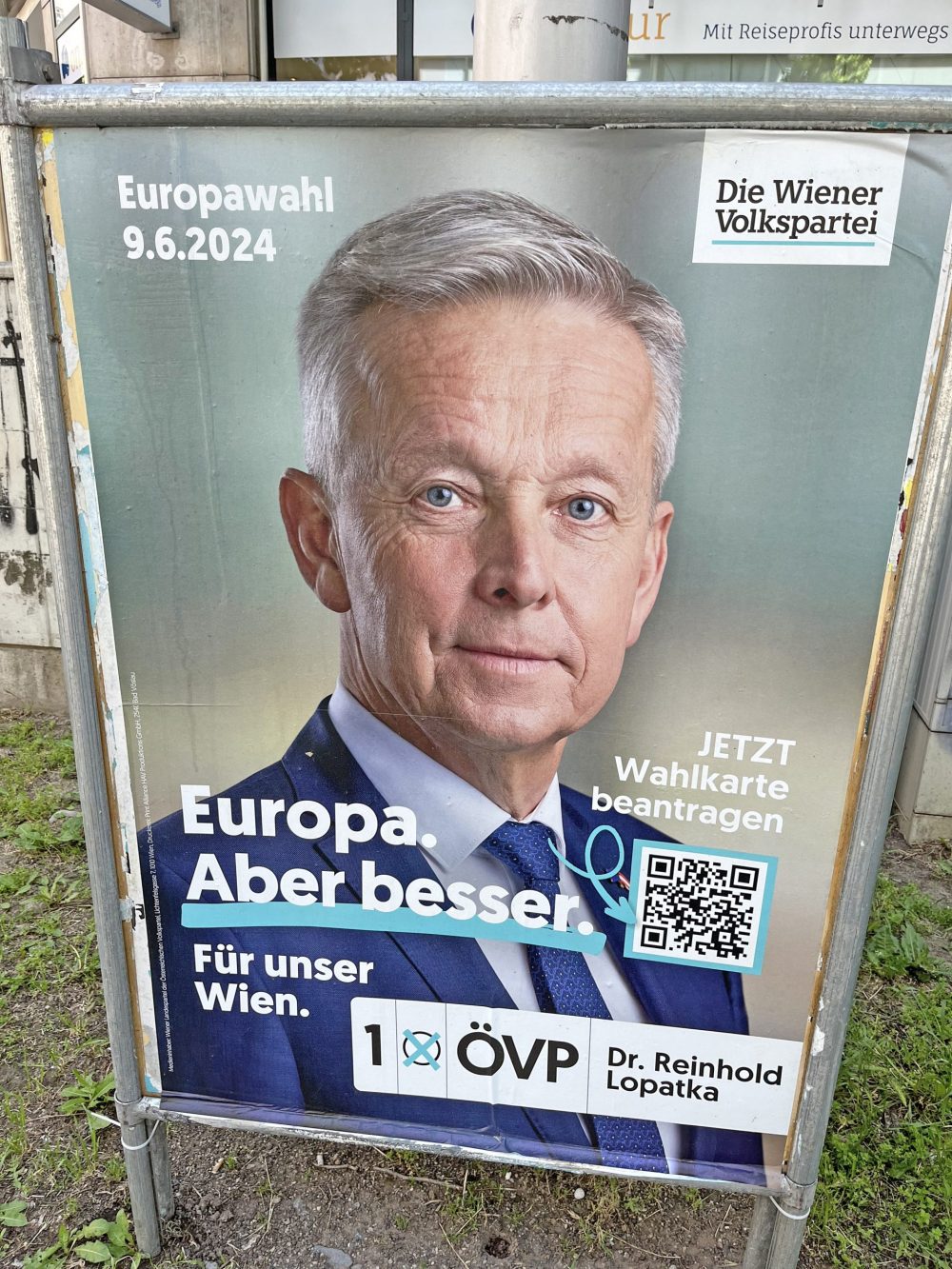
Yes, quite. But where is the concept for a European foreign and security policy?
Added to this is a tendency towards bureaucratisation, which is rooted on the one hand in the natural laws of bureaucratisation (anything already regulated at a smaller level is regulated again at a higher level during a merger, as described by Ludwig von Mises), and on the other hand in the efforts of many national bureaucracies to further tighten EU regulations at the national level (Austria being an example). It should not go unmentioned that many of these regulations were lobbied for by industry and its associations themselves, because individual sectors were able to gain advantages as a result.
These developments are supplemented by a narrative—cultivated not only by parties speculating on the end of the EU or wishing to reduce the EU to pure intergovernmental cooperation—that the EU is only an economic community, was founded as such, and should therefore limit itself to that. The mere fact that at the beginning of European integration, industries vital to warfare were placed under a common authority argues against this interpretation. A political dimension was implied. The Treaties of Rome speak of an “ever closer union” (without defining exactly what is meant by this). The development of a European Defence Community, which then failed due to the French veto, also argues against reducing the EU to a mere economic community.
The EU was always more than just a Single Market
The many instances of national protectionism that fragment the Single Market show that many member states have not even understood the importance of the EU as an economic community. However, the expansion of the Single Market, massive deregulation, and a clear commitment to trade agreements will be enormously important for the further development of the EU if it wants to continue to play a role as a business location on the world stage. It is this business location that creates prosperity, and thus the prerequisites for having political weight.
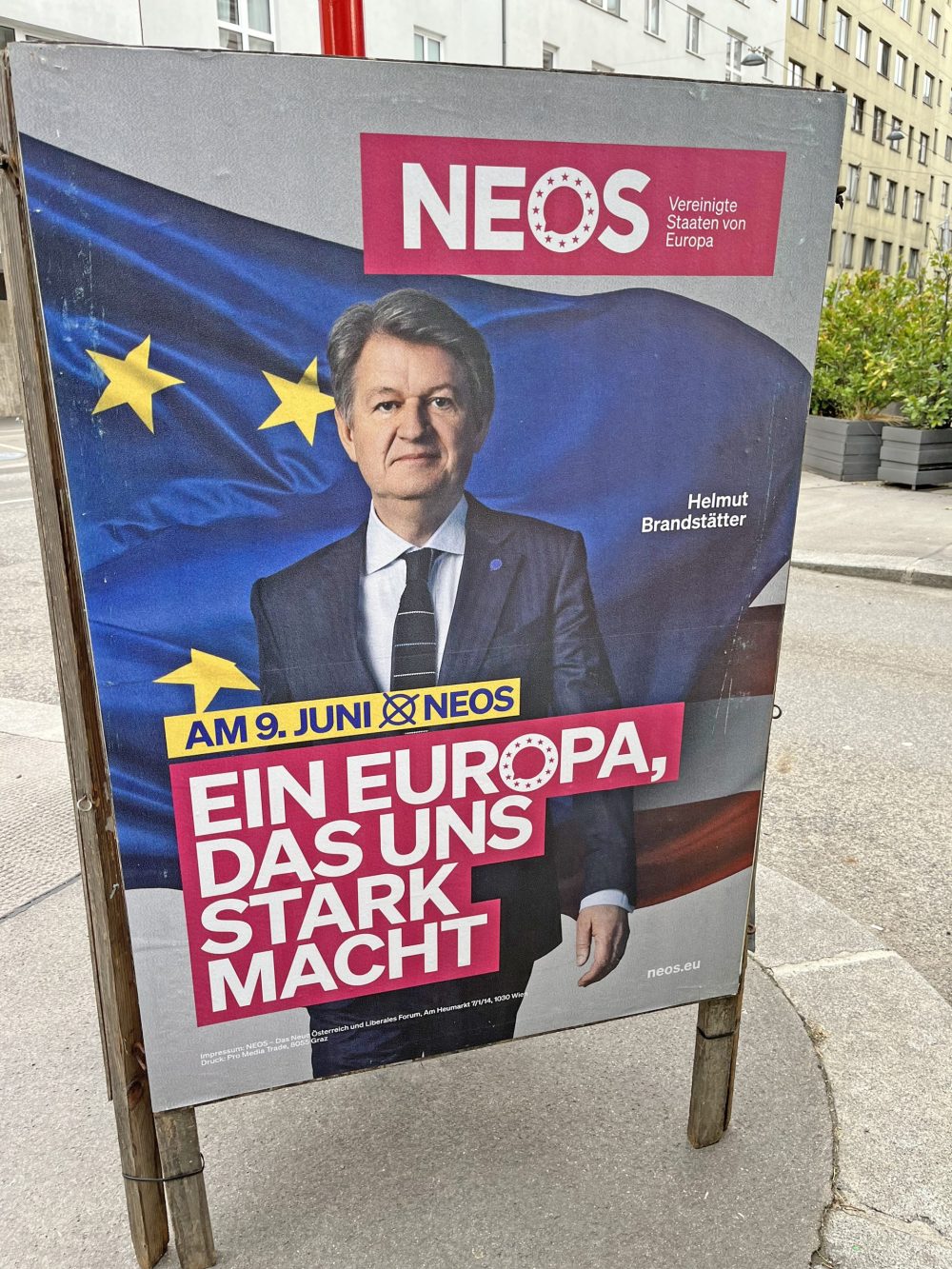
Richard Coudenhove-Kalergi, the founder of the Paneuropean Union, was already speaking of the United States of Europe.
Political weight, in turn, can only be achieved through a genuine European foreign and security policy. That we are far from this is shown, among other things, by the individual national interests that have so far prevented the EU from defining a clear goal for Russia’s war against Ukraine (see also the article “Welcome to Putingrad”). Not even the grand promises to supply artillery ammunition to Ukraine were kept, simply because the orders were not placed with the production companies. The fact that Ukraine is having to retreat at various sections of the front today is a logical consequence of this policy.
Europe’s Future is Decided in Ukraine
In European politics and in the politics of the European Union member states, the realisation must prevail that the future of Europe is being decided in this war: if the EU countries support Ukraine so massively that it can push the invaders out of the country, then Europe—with Ukraine as a member state that is then a strong bulwark against Russian imperialism—will be able to develop further, and the EU will still be able to play a political and economic role; if Russia wins this war, Europe will be confronted with further attacks from Moscow and will have played out its role on the stage of world politics—Europe would then be degraded to a vassal of a Beijing-Moscow axis.
Developments in China and Africa
The Russian war of annihilation against Ukraine is only one of the foreign and security policy challenges. China is pursuing a policy aimed at extending the control system of its totalitarian system to other regions of the world. Beijing also states this clearly and unequivocally.
On the African continent, European countries are in retreat. Russia and China are spreading or have already established themselves there. They support dictatorial regimes there to gain access to raw materials; they do not care about the development of these countries. This, in turn, forces people to emigrate, which then manifests as immigration in EU countries. Without a foreign and security policy orientation, it will only be possible to react to this with cosmetic actions such as the redistribution of migrants. But the problem will not be solved.
Important Topics Missing from the Election Campaign
In the election campaign for the European elections, there has been no mention of these challenges so far. Instead—this assessment refers to Austria—there is either agitation against the EU (i.e. celebrating one’s own vassalage to Russia) or heads are buried in the sand with neutrality fantasies. At least two parties are using slogans about a strong Europe; only one small party dares to speak of the goal of a European army and the United States of Europe in this context.
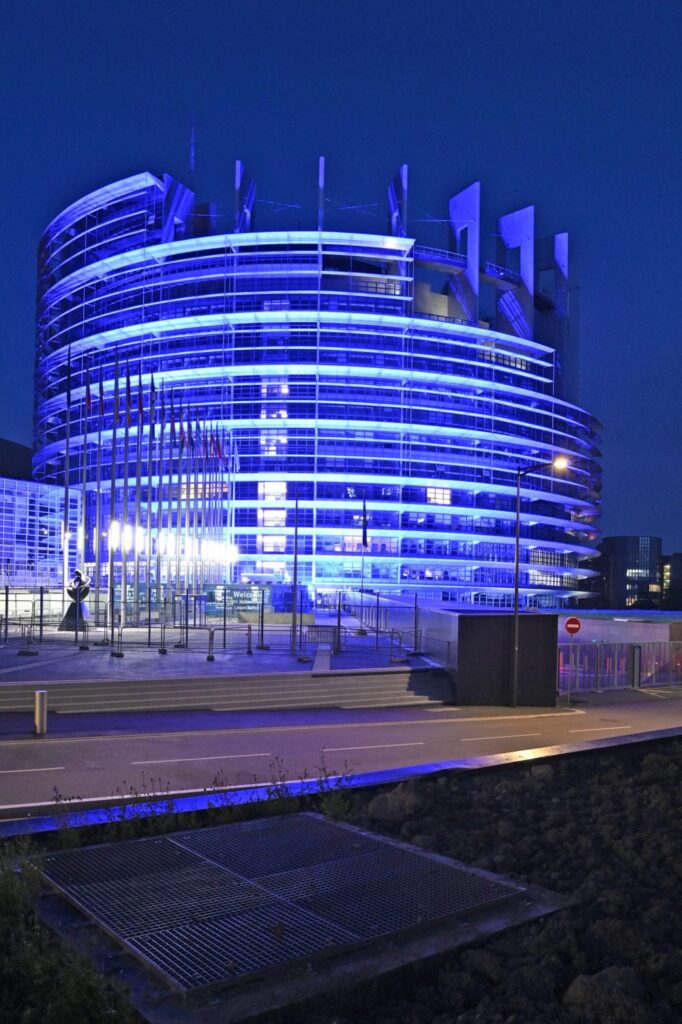
Featured image: The plenary building of the European representative body in Strasbourg. © European Parliament.
As a co-legislator at EU level, the European Parliament plays an important role in the correct further development of the European Union. Pictured is the plenary building of the European representative body in Strasbourg.



