Europe means reconciliation. Now it’s Serbia and Kosovo’s turn!
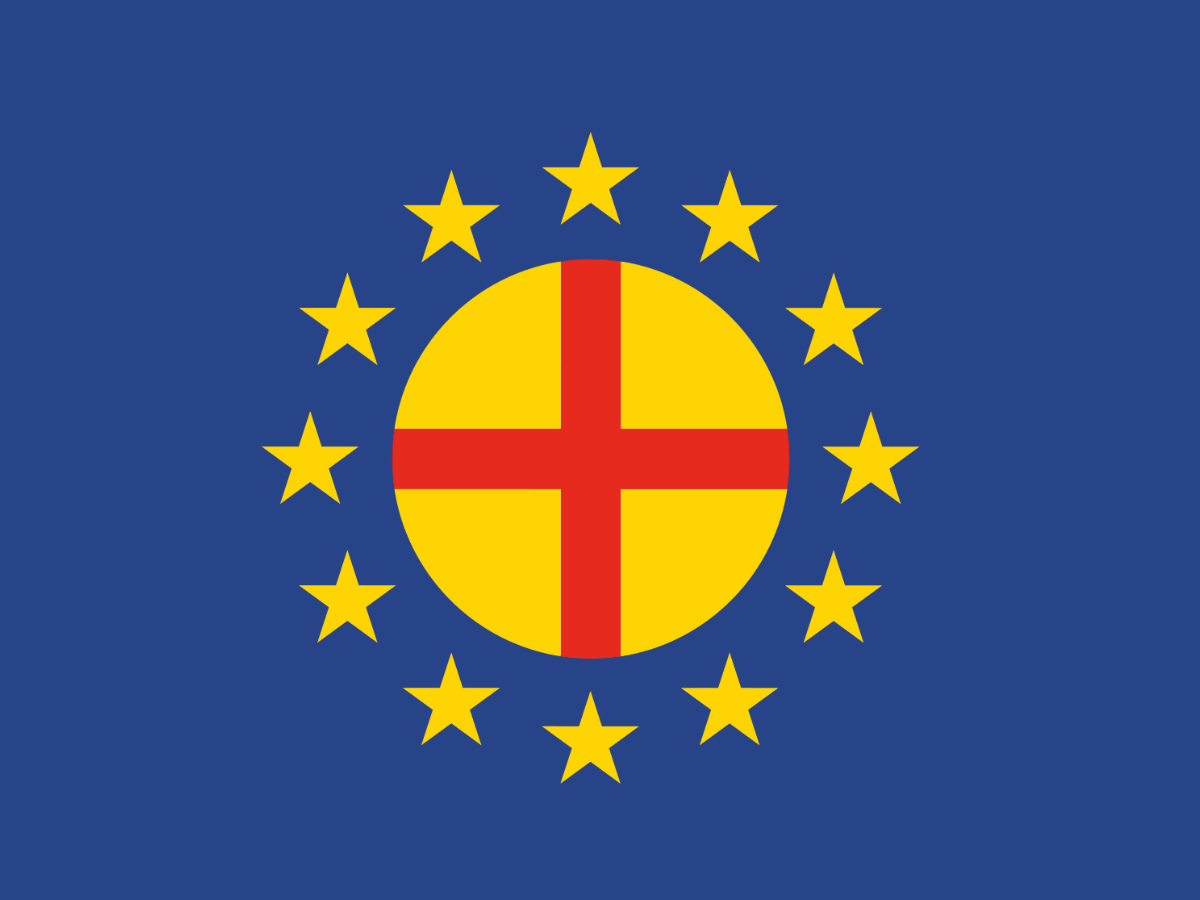
If there is one success story after the Second World War, it is the reconciliation of former enemies. The focus is now on the Balkans.
A commentary by Stefan Haböck, International Officer of the Paneuropa Movement Austria
When Helmut Kohl recently passed away, memories were stirred of the time when, as German Chancellor, he played a decisive role in shaping European politics. Beyond the usual eulogies for a great politician who served his country for decades, one image of Helmut Kohl, the honorary citizen of Europe, will surely remain in lasting memory.
An Image That Went Around the World and Made History
On 22 June 1984, for the 40th commemoration of the Battle of Verdun, French President François Mitterrand and German Chancellor Kohl stood before the Douaumont ossuary. Verdun was not the abyss to hell; it was hell itself. A massacre unparalleled in the bloody history of Franco-German relations. Europe – in its worst form. Suddenly, unexpectedly for all present, Mitterrand and Kohl shook hands. This gesture, in the face of the victims of the Second World War’s slaughter, made it definitively clear: there are no longer any hereditary enemies. There are only friends.
Reconciliation. The Foundation of the European Union.
Reconciliation. This word, alongside peace, stands like no other for modern Europe. Manifested also, but not exclusively, in the European Union. Not only the commitment to work well together in the future is crucial here, but the admission: Yes, we have committed terrible deeds. We forgive our neighbours. We apologise to the victims, and we commemorate with respect, doing everything in our power to ensure that such things never happen again.
Fourteen years later, in 1998, the official war began between the Serbian armed forces of the Federal Republic of Yugoslavia and the Kosovo Liberation Army (KLA). At that time, Yugoslavia was led by the socialist dictator Slobodan Milošević.
After the independence of Slovenia and Croatia, and the creation of the entities of Bosnia and Herzegovina with the Serbian part, Republika Srpska, as stipulated in the Dayton Agreement in 1995, the conflict focused on the Albanian part – Kosovo. In 2000, Milošević had to yield to domestic pressure and resign. In 2001, he was arrested and extradited to the International Criminal Tribunal in The Hague.
From Radical to Serbia’s Beacon of Hope – Aleksandar Vučić
During this period, 1998–2000, one man served as Serbian Minister of Information who is today considered by European politics to be a beacon of hope for Serbia’s EU accession: Aleksandar Vučić. He turned away from the Serbian Radical Party (an extremist, nationalist party in Serbia) and became chairman of the Serbian Progressive Party (SNS). His goal: to lead Serbia into the EU. For many, the transformation from a member of the Radicals and a minister in the Marjanović government came quickly. Too quickly?
The fact is: under Vučić, the SNS negotiated initial agreements with the EU and Kosovo regarding the status of the Republic, which has been independent since 2008. Amidst nationalist rhetoric from high-ranking Serbian politicians, especially President Nikolić, there were nevertheless signals of openness. However, a sad low point was the dispatch of a train adorned with nationalist slogans from Belgrade towards Pristina, the capital of Kosovo – coupled with Nikolić’s threat to send in the Serbian army.
This week, Vučić, now President of Serbia, an EU candidate country, penned an article in a newspaper in which he stressed that Serbia and its citizens finally needed an internal dialogue about the relationship with Kosovo and that one must face realities instead of continuing to bury one’s head in the sand. Of course, not a word about recognising Kosovo – but one must consider the significance of such words from the President.
Serbia – Stable, Yet Internally Divided
The environment in Serbia is challenging. While economic development is positive, Serbia is certainly the most stable non-EU member in the Balkans. Nevertheless, the wounds of Yugoslavia’s disintegration still gape. Be it because the dream of Greater Serbia was bloodily buried, or because there are also victims to mourn. In any war, civilians always suffer the most. Furthermore, there is a traditionally positive relationship with Russia, certainly also influenced by Orthodoxy. However, the future must be called the EU. A debate about the country’s relationship with Europe and with Russia is necessary. Opinions are divided on the issue of EU sanctions imposed on Russian politicians, oligarchs, military personnel, and technology companies involved in the annexation of Crimea.
Therefore, when the leading politicians of Serbia and Kosovo meet in Brussels to negotiate agreements together, it is more than just a normal meeting between heads of state and government. One must consider: here is Vučić, Milošević’s Minister of Information; there is Hashim Thaçi, President of Kosovo and former leader of the KLA. War separated them both; Europe now compels them to dialogue.
Reconciliation is a Duty on the Path to Europe
There will be no other option for Serbia and Kosovo but to approach each other and shake hands. Disputes belong at the negotiating table, where common solutions must be found. If the political groups of both countries internalise this, then much is possible.
In my opinion, however, the most important criterion is not economic stability. Or judicial reform. Or the fight against corruption. These are issues that must be vigorously pursued every day and without which progress is impossible.
No, the most important hurdle that the politicians and citizens of both countries must overcome is reconciliation.
It is in the hands of the governments and parliaments of both countries to confront what has happened, to come to terms with history, to seek common ground, to extend a hand, and to walk together towards Europe. This path is hard, sad, and painful. The suffering is still omnipresent. Men and brothers who did not return home from the war. Homeland that was destroyed. Nevertheless: it must be done. All provocations must cease and be condemned.
Imagine, for dreaming is allowed, that in a few years we will see images from Račak or Srebrenica. Where the representatives of the countries of former Yugoslavia honestly commemorate the victims. And shake hands, as Kohl and Mitterrand once did.



