Europe Needs Open Internal Borders
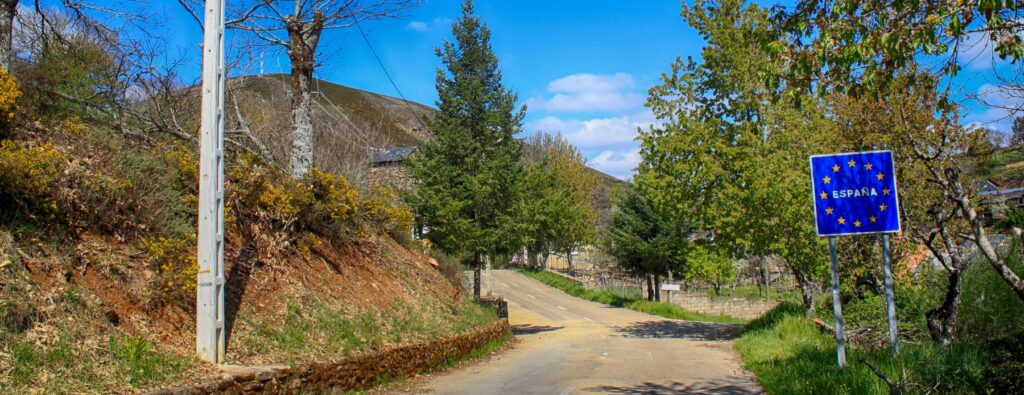
As vital as internal security is, open internal borders within the European Union are equally essential. A commentary by our President, Karl von Habsburg.
It sounds very tempting. Europe faces a massive problem with overwhelming migration from non-European cultures. Logically, this creates problems on various levels. So, here is the simple solution for a complicated problem: let us close the borders of individual states in Europe. Because, so the argument goes, this would restore security.
In doing so, we are repeating in the realm of security policy exactly what was done 90 years ago in economic policy. Because Europe after the First World War was fragmented into small states (and a few large countries), and large economic areas were destroyed by customs borders, every one of these small states faced economic problems. It was thought these could be solved by erecting customs barriers to keep out foreign goods (which only a few years earlier had been domestic and thus part of the internal market) and to give the domestic economy breathing room. Because people refused to recognise the fallacy for what it was, more and more countries resorted to such isolationist policies, which produced exactly the opposite of what was actually hoped for. The sensible thing would have been to abolish customs borders and enable a European single market. The result of this flawed (but tempting) policy is well known.
Undoubtedly, in a crisis situation (and in the summer of 2015, such a crisis was created by wrong political decisions), it can be appropriate to take emergency measures. However, an emergency measure is only ever useful for a short period of time.
The four fundamental freedoms of the European Union—effectively the core of a European constitution since the Treaty of Rome in 1957—were intended to avoid precisely this enticing, fundamental error of the interwar period. A Single Market requires open internal borders. Anyone viewing the world from Vienna or even Innsbruck will quickly realise that several closed borders within a radius of just 100 kilometres represent a massive obstacle to economic development, economic cooperation, and free trade. Yet these are the very prerequisites for the development that creates the prosperity that some now seek to secure by closing borders. A fallacy.
Therefore, the implementation of the idea of the Schengen Area is also of enormous importance for Europe. The expansion of the Schengen Area to include those EU countries that do not yet belong to it—and which, like Croatia, Bulgaria, and Romania, wish to join—is a political goal to be achieved in the short term, which must under no circumstances be sacrificed on the altar of head-in-the-sand populism.
Necessary for this, of course, is the common border protection already demanded when the Schengen Treaty was created. Border protection must become a European competence (and must not be offloaded onto the respective border countries in the spirit of the NIMBY principle). Incidentally, this has been prevented until now by exactly those Interior Ministers (and their governments) who now believe they can solve the problem with national border closures—a problem they helped create by preventing European border protection.
It is time that we start learning from history!

© Katharina Schiffl
Karl von Habsburg is President of the Paneuropa Movement Austria and Vice-President of the Paneuropean Union. This commentary also appears on his website.
Cover image: By M.Peinado from Alcalá de Henares, España – 007422 – España-Portugal, CC BY 2.0, https://commons.wikimedia.org/w/index.php?curid=26519154



