Germany: AfD, Armageddon and Apocalypse
The AfD’s strong performance – unsurprising, yet shocking to many – dominates the post-election discourse in Germany. Despite the resulting uncertainty, there is no reason to panic. Instead, a mixture of prudence and courage is required. An analysis by Clemens Schneider.
Different perspectives on the election outcome
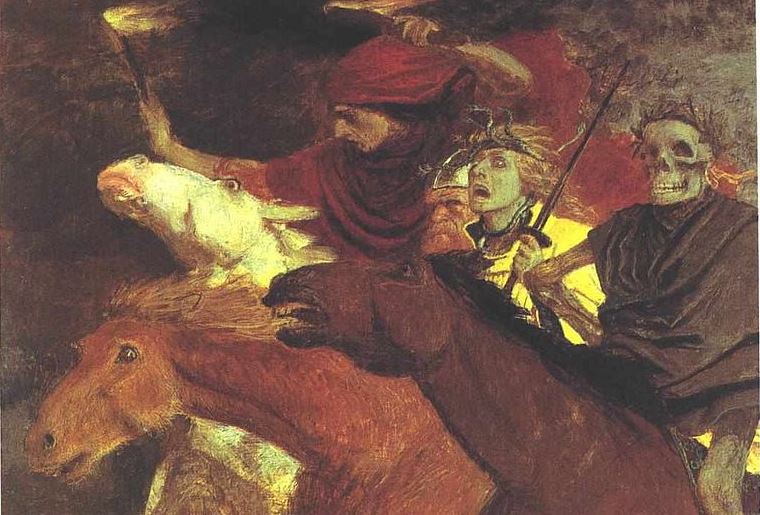
On Sunday evening in Berlin, one might have thought Armageddon – the biblical final battle – was imminent. Angry hordes of protesters gathered outside the building where the AfD held its election party. Around a hundred MPs from the CDU, CSU, and SPD had to vacate their seats. All three parties had suffered the worst election results in their history. The CSU lost a fifth of its voters, while the AfD achieved its best West German result in Bavaria.
Combined, the two parties on the far right and far left achieved results between 15.5 per cent in Schleswig-Holstein and 43.1 per cent in Saxony. More than one in five voters cast their ballot for a party that has either justified shoot-to-kill orders in its past or would like to see them in the future. (It should be noted here that Die Linke, despite a criminally neglected reckoning with its past, is generally moderate and pragmatic in its East German state associations and certainly poses no threat to the free democratic order there.) That is one perspective.
On the other hand, the result can be interpreted quite differently. The previous Grand Coalition made decisions that led to over a million refugees and asylum seekers entering Germany in the last two years. This was a decision criticised by the Greens and FDP in detail, but hardly in principle, and supported by part of Die Linke. Despite this exceptional situation, only about four million voters gave their voice to the only party that took a clear stance against this measure.
The other 42 million may desire better organised and sometimes more restrictive policies on this issue, but they did not want to send a clear signal against it. This is remarkable. This does not even account for the fact that the AfD certainly attracted many pure protest votes. One can certainly debate how wise it is to express protest against the political establishment by voting for a party whose representatives want to ‘dispose of’ German citizens in Anatolia, want the ‘achievements’ of Wehrmacht soldiers to be honoured, and even deny the Holocaust. However, it is also clear that not every AfD voter would agree with such statements.
Orientation problems for the future government
The election was, in any case, a wake-up call. Even if there are signs that the AfD will continue to be mainly occupied with tearing itself apart and trying to contain the completely deranged within its own ranks – voter dissatisfaction would not disappear even if the AfD were to be tossed out of the Bundestag at the end of the legislative period, completely tattered. This election was an apocalypse in the truest sense of the word, as the Greek word actually means revelation. What was revealed was dissatisfaction with current policies. And not just through the votes for the AfD. The gains of the other smaller parties also speak a clear language. The SPD lost 380,000 votes to the Greens, 430,000 to Die Linke, and 450,000 to the FDP, which even managed to pull 1.35 million votes from the CDU camp.
It will take quite a while before a coalition government is formed. It will not be easy for this new government to do something about the dissatisfaction. Especially not if it becomes a ‘Jamaica’ coalition, involving two parties that are sociologically and atmospherically at a maximum distance from the classic AfD voter. The first difficulty will be identifying the actual causes of the dissatisfaction: Germany is currently doing better economically than almost ever before in history; unemployment continues to fall. The areas where the AfD is strongest generally have the lowest proportions of migrants and refugees, with the exception of a few West German areas like Gelsenkirchen or Heilbronn.
That leaves internal security as probably the only political field in Germany that is currently somewhat fragile, though by no means as much as AfD politicians suggest. Yet even if the coalition were to take action here – the effects of a changed policy would likely only become clearly visible in a few years. Added to this is the restraint of the FDP and Greens in this area, and the fact that many related issues do not fall under federal jurisdiction at all.
Drawbridges and final battles
In a remarkable article in the Economist last year titled ‘Drawbridges up’, the thesis was put forward that political conflicts today no longer run between right and left, but between open and closed. Recent elections in Western countries suggest this thesis is valid. Trump and Corbyn, Wagenknecht and Gauland, regardless of their location on the political spectrum, stand for raised drawbridges. Their message is shaped by apocalyptic scenarios: they present themselves as leaders of the decisive battle against exploiters or foreigners. If one engages with these images and seeks an open pitched battle, like the anti-AfD protesters on Sunday evening in Berlin, one confirms this interpretation. The AfD’s election results are not an apocalypse in the sense of the end of the world, but literally a revelation.
(Text continues below the image.)

Trump, Wagenknecht, Corbyn, Gauland: Their political system of playing on end-time fears differs surprisingly little at its core.
Olaf Kosinsky/Skillshare.eu
The answer to this revelation is unfortunately less easy to give than the answers populist parties have to offer, from ‘close the borders’ to ‘more redistribution’. First, one should not be led astray and must under no circumstances engage in the game that ‘anti-establishment’ parties would like to play. This only deepens divisions and severs threads of communication. It is also advisable to sharpen one’s own political profiles. It can be quite useful for the dynamics of a coalition government if it does not appear as a monolithic block. The Chancellor will have to rethink her ‘muddling through’ approach, which has been quite successful over the last twelve years. The gains of the small parties show that clear positions are desired. One should not confuse the necessity of compromise, which is always essential in democracies, with substantive uniformity. Compromises arise precisely because wishes and ideas are formulated clearly and distinctly.
We can do this!
Finally, one should think very carefully about how to counter the problem of dissatisfaction sustainably. It may be worth considering not to expect the solution from the political leaders in Berlin. We already expect far too much from high-level politics. This is precisely one of the causes of the rise of populists. However, the main burden of problem-solving lies locally: with mayors and police chiefs, with headteachers and local editors, with football coaches and social workers. High-level politics must ensure it does not stab these people in the back; it must stand by them where appropriate; and above all, it must trust them to fulfil this task. For at the root of many problems lies the unfulfillable claim of politics to be able to answer the big questions, while small problems are often pushed aside unresolved.
The coming years will be exciting for Germany. The politicians just elected to the Bundestag must, above all, show courage and prudence. Not least the courage to admit that they are neither responsible for nor capable of solving all problems. And the prudence not to be pushed into end-time scenarios, however attractive it may seem to clearly identify the ‘good’ and the ‘evil’. The incoming government should not attempt a ‘grand design’ to restore social unity. It should focus on mastering the concrete political challenges it will face. It has more than enough to do with that. Anger, resentment, disappointment, lack of perspective, and fear, on the other hand, can only be mitigated and reduced by the people in Deggendorf and Bautzen, in Duisburg and Berlin-Marzahn, who work to ensure that people can have hope again. The people who do this have always been the greatest heroes of history. They are the ones who have repeatedly prevented Armageddon. They will manage it this time too.
Clemens Schneider, born in 1980, is the managing director of the independent think tank Prometheus Institute in Berlin. In addition to his work for Prometheus and his lecturing activities, he is writing a doctoral thesis on the English historian Lord Acton and his understanding of liberty.



