Job or Office – Party or Country
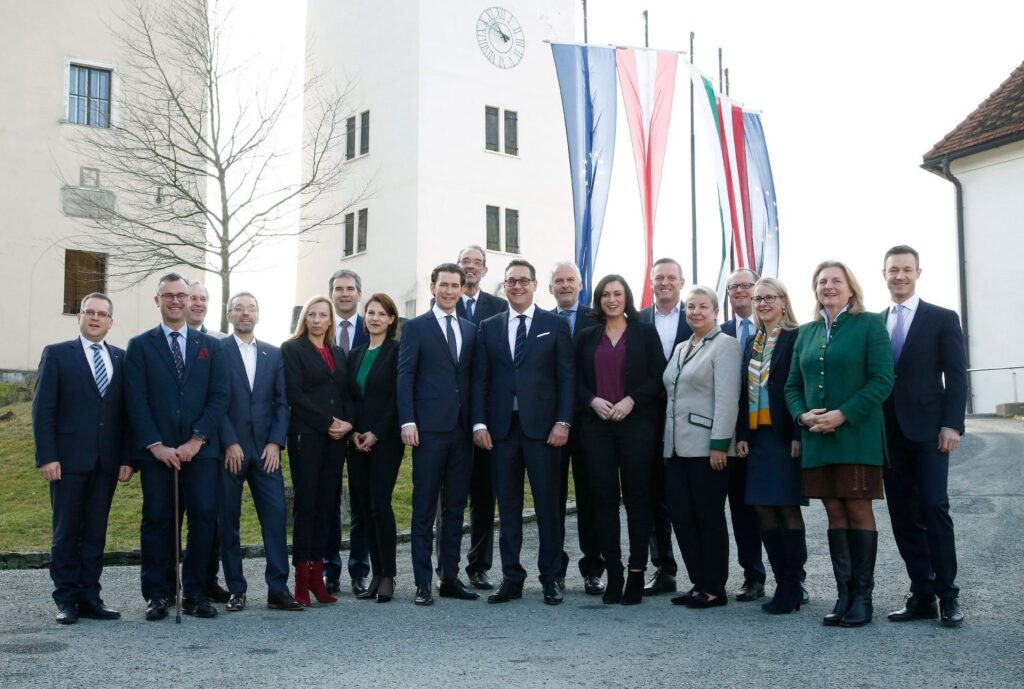
When ministers are mentioned, they are always assigned to a party. Yet, as members of the government, they should serve the country and not the party. A commentary by Karl von Habsburg.
The magazine ‘Cercle Diplomatique’ once asked Foreign Minister Karin Kneissl about her strengths in the job of Foreign Minister. The Minister replied: ‘This is not a job, but an office, and that is a huge difference. An office is a service to the public; a job is something you might have done during your studies to earn money.’
Anyone who closely follows media reports on the appearances and activities of government members will notice that for years, ministers have always been named alongside their party. One reads of the ÖVP Economic Minister and the FPÖ Interior Minister. It seems that ministers who do not belong to a party can no longer exist. Despite not being a member of a party, the aforementioned Minister Karin Kneissl is then turned into the FPÖ Foreign Minister.
Now, it is a fact that parties stand for election, and these parties then send their candidates into ministerial offices. Once there, however, they should no longer serve the party, but the country, and above all the citizens of the country. Minister also comes from the Latin term ‘ministrare’, meaning to serve. A ministerial office is a service, not a reign.
For whatever reason party affiliation has become established in ministerial offices—whether enforced by party PR strategists or invented by journalists—it is a description (and this is the honest part) of the state of current politics, even if there are exceptions.
A correction of this habit by the media, by omitting the party affiliation when naming ministers, would not yet change the situation itself, but it would be a significant and daily food for thought regarding what a ministerial office means. After all, people do speak of the responsibility of the media.
The article originally appeared on the site of Karl von Habsburg.
Photo: BKA Dragan Tatic



