Kosovo at a Crossroads: How to Deal with its Neighbour?
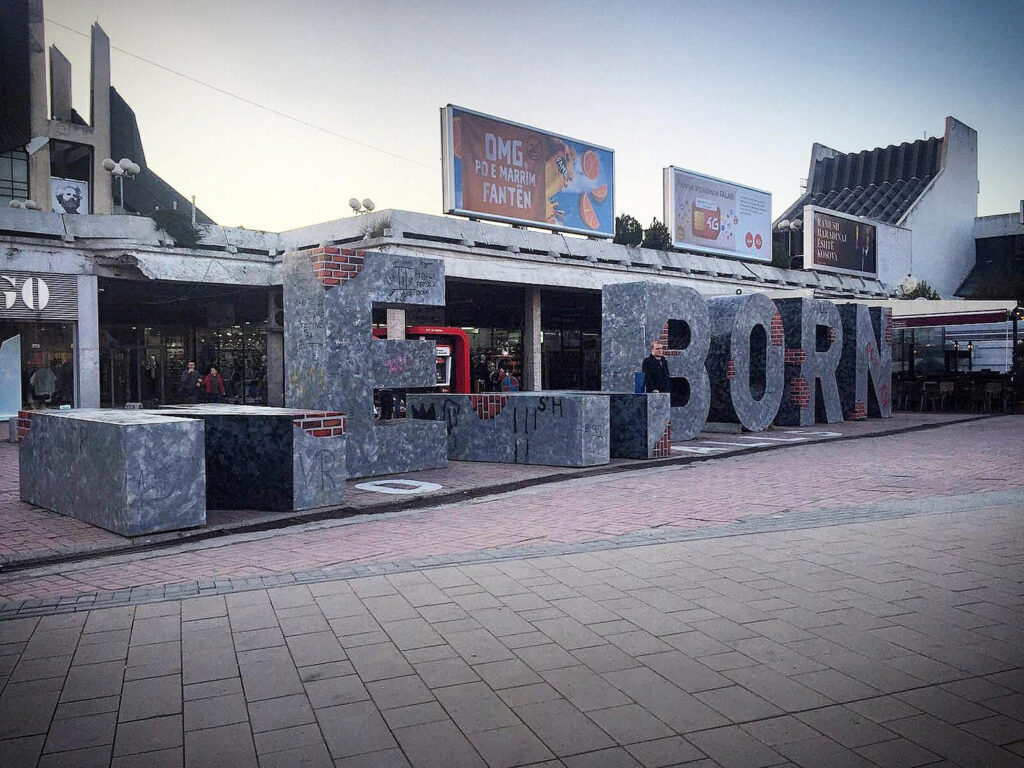
Will a resurgence of former Kosovo Liberation Army (KLA) leaders in Kosovo’s political life lead the country away from Europe and its neighbours? A commentary by Stefan Haböck, International Officer of the Paneuropa Movement Austria.
Europe’s youngest country faces a decision: will a tougher stance against neighbouring Serbia lead the country away from Europe, as some observers suspect?
In the parliamentary elections on 11 June 2017, an alliance of PDK (emerged from the KLA), NISMA, and AAK secured a majority with around 34 per cent of the vote – but it is dependent on coalition partners. The opposition Vetëvendosje gained just under 27 per cent, while the conservative LDK, previously a government partner, achieved around 26 per cent of the votes. Voter turnout was rather low at 42.5%.
The leader of the PDK is Kadri Veseli, former head of the intelligence service. The top candidate for the AAK is Ramush Haradinaj – former Prime Minister, indicted by the UN Tribunal for war crimes in ex-Yugoslavia and acquitted in 2008 and 2012 (when the trial was partially repeated). The LDK, the party of freedom hero and symbol of peaceful resistance Ibrahim Rugova, is declining.
Background: Independent in 2008, formerly oppressed
In 2008, Kosovo, the last country of former Yugoslavia to do so, declared independence from Serbia. Montenegro had already peacefully separated from its union with Serbia in 2006. This was essentially a logical consequence of the Serbian regime’s repression of ethnic Albanians in Yugoslavia from the 1980s onwards, and the revocation of its autonomous status in 1987. To this day, Serbs consider the Field of Blackbirds (near Pristina) a national monument: in 1389, an army of Balkan peoples was defeated here by the Ottomans.
The brutal Milošević regime plunged the Balkans into bloody wars in the 1990s and committed massacres with allied militias. Srebrenica stands as a synonym for the dictator’s atrocities. From the mid-1990s, the KLA (Kosovo Liberation Army) led the military struggle for independence on the side of the Kosovo Albanians. From 1999, Hashim Thaçi led the KLA. Today, he is the country’s President and comes from the PDK. However, the symbol of the peaceful struggle for independence is Ibrahim Rugova, Kosovo’s first President. He founded the LDK, which has been losing significant support for years.
Internal Tensions – External Influences
Kosovo, with Europe’s youngest population, has faced major challenges for years: unemployment is high, and the country is politically divided. The Serbian minority in northern Kosovo demands autonomy, and the implementation of the agreed solution regarding the demarcation line with Montenegro has so far failed in the Pristina parliament. Corruption is rife. An international peacekeeping force (KFOR) maintains peace in the country, tolerated by Serbia because KFOR officially does not communicate Kosovo as an independent state.
The influence of foreign powers is growing: Turkish corporations have bought infrastructure such as the airport and are investing. Saudi Arabia finances mosques. Both lead to the threat of radical Islamic forces. The USA, through its military influence among others, is a strong factor in the country, which one day wishes to join the EU. Russia, via Serbia and the Republika Srpska in Bosnia, holds a political lever in the Balkans. This mélange of anti-European power-political interests poses challenges for both the country and Brussels.
The constant conflict with Serbia, fuelled by provocations from nationalist politicians, hangs over everything. A recent peak in the conflict was a train adorned with Serbian nationalist slogans, accompanied by threats to send the army into Kosovo if necessary. The crux of the matter: Serbia is a candidate for accession to the European Union. The country will likely be led into the EU by President Vučić – a former Minister of Information under Slobodan Milošević. Vučić has set the country on a pro-EU course and is a trusted interlocutor for Brussels.
Hope for Europe as a Guiding Star in Kosovo
The outcome of the election in Kosovo and the strengthening of forces around the three former KLA leaders, as well as the nationalists of VV (Vetëvendosje), raise concerns about whether the country will abandon its pro-European course. But: unlike many other elections in European countries, ‘the EU’ is not even up for a vote. This is because all political forces in the country are considered pro-European. All parties and movements have committed themselves to rapprochement with the EU. There is no anti-European party in Kosovo.
What is up for a vote is the – very cool and tense – relationship with Serbia: most Kosovan politicians have announced their intention to take a tougher stance against Serbia. How the Serbian minority will react to these statements remains unclear. Serbian President Vučić recently announced his desire to rationally discuss Serbia’s relationship with Kosovo. To what extent he can – and wants to – rein in Serbian nationalists is questionable.
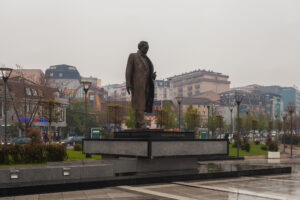
Monument to Ibrahim Rugova, first President of free Kosovo. Rugova was awarded, among other honours, the “Coudenhove-Kalergi European Prize”. (c) Diego Delso, delso.photo, License CC-BY-SA
The EU will – and must – not abandon Kosovo. The country is deeply integrated into the Western Balkans strategy. Together with Serbia, North Macedonia, Albania, Montenegro, and Bosnia and Herzegovina, work is underway on a common market and a common security structure. However, it is clear that Serbia, as an accession candidate, holds a strong status.
Conclusion: It Must Be Peaceful
Despite all understandable mistrust and the conflict-ridden history between Serbia and Kosovo: friend-foe thinking and constant mutual provocation by nationalists and radicals must have no place in Europe.
Kosovo and Serbia must, and this is an unalterable necessity, find a professional form of cooperation. Whether politicians who stood against each other on the battlefield two decades ago can achieve this is questionable. Even if the war has not long been over, the country must look forward.
With an awareness of history, the only path can be: a united, rule-of-law, democratic Europe in peace, security, and prosperity. Both Vučić and the Kosovan leadership around President Thaçi and the likely next Prime Minister Haradinaj also desire this for their states. Together with their neighbour?
Europe Bears Responsibility
Europe holds leverage over the future Kosovan government, regardless of its composition: visa liberalisation. After Georgia, and since 11 June 2017, Ukraine, have gained visa-free travel to the European Union, Kosovo remains the only country for which visa requirements to the EU still exist. A harsh blow for Kosovans. One must not forget: while Kosovans need a visa to travel to the EU, they can enter Turkey visa-free. Given the political developments there, the EU must do everything to avoid losing the population in Kosovo.
And: with a Yugoslav passport, everyone could travel through Europe without problems – that this should now not be possible with a Kosovan passport is met with incomprehension by many Kosovans. A turning away from Europe, especially by the younger generation, could prove fatal. For Kosovo, the Balkans, and: Europe.



