Lenin was already speaking of “useful idiots”
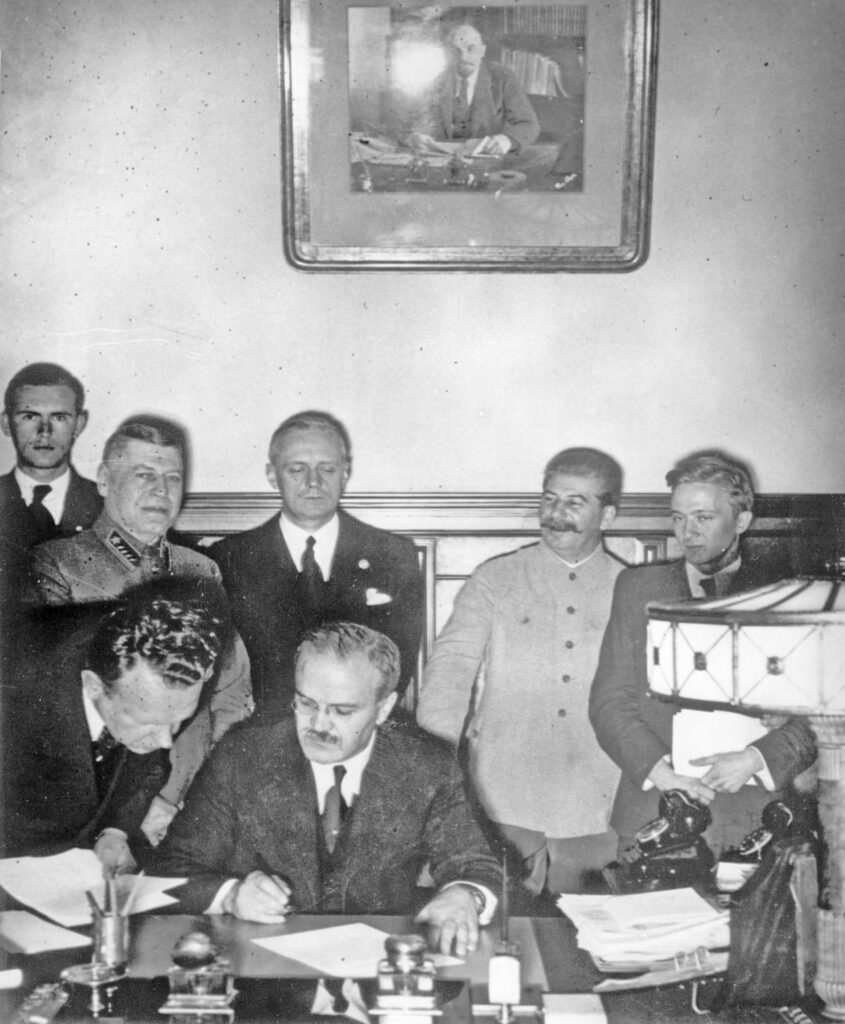
The masking of Marxist-Leninists as “anti-fascist-democratic forces” was an idea of Stalin’s that Ramelow is now applying in Thuringia, while the SED spirit is being revived within his party. This was evidenced by the strategy conference in Kassel on 1 March 2020, where discussions were held on whether to “shoot the one percent of the rich” or merely enslave them. By Ludwig Bayer.
Things were bizarre at the Russian “Comintern School” attended by the young Austrian Wolfgang Leonhard eight decades ago. The abbreviation “Comintern” referred to the Communist International. Leonhard’s mother was a fanatical Viennese Communist; his father served as a Soviet diplomat in Stalin’s service. The task of the “Comintern School” was to train young political cadres for deployment in countries outside the Soviet Union. Ultimately, the entire planet was to be blessed with Marxism-Leninism.
Wolfgang Leonhard later recalled the helpless attempt of his communist teachers to explain the meaning of life to their obedient pupils. A match was struck. The Red educators and their protégés watched as the stick burnt down, the flame grew smaller, and finally went out. This is how the senseless life of non-communist people proceeds, a Stalinist teacher lectured. The fighters for a better communist world, on the other hand, were filled with meaning, for Marxist-Leninists acted in accordance with the “law of history”, according to which humanity progresses step by step – until it finds happiness, fulfilment, and perfection in the victorious communist society.
STALIN HOPED FOR THE WITHDRAWAL OF THE AMERICANS
Leonhard sat in a Soviet military aircraft that landed in Frankfurt an der Oder in April 1945 (shortly before Hitler’s suicide). The mission of the “Walter Ulbricht Group” on board that plane was determined by Stalin: it was to prepare for the establishment of communist rule in Germany. The first step was to build a new administration in the Soviet occupation zone in eastern Germany with collaborators willing to take orders; later, this system was to be extended to the whole of Germany – following the withdrawal of the Americans from Europe, for which Stalin hoped.
With this pan-German objective in mind, Stalin ordered that the Communists should not declare themselves openly at first, but should say, for propagandistic and tactical reasons, that they were “anti-fascist-democratic forces”. This would make it easier to recruit adaptable people who would allow themselves to be controlled by Communists. Even the name KPD was sacrificed. Following the joining of several Social Democratic collaborators such as Otto Grotewohl, the solemn founding of a new party took place: the Socialist Unity Party of Germany (SED).
PROPAGANDISTIC RENAMING
In truth, it was merely the renaming of the KPD to the SED. The SED ruled dictatorially until March 1990. In that month, the first free elections were held in the GDR. The SED received 18 per cent and stepped down. Egon Krenz was the SED’s security chief at the time and wanted to prevent the Communists’ loss of power, using tanks if necessary. But Europe’s supreme Communist, Mikhail Gorbachev, whistled Krenz back. The tanks remained in the barracks, and a massacre accepted by the SED was struck from the agenda. Gorbachev could not stand the sight of blood.
The tactical-propagandistic renamings continued. Since Helmut Kohl failed to ban the SED, it lives on to this day. It was similar to the shedding of a snake’s skin: just as the KPD had become the SED, the next change of the company sign took place under Gregor Gysi – from SED to PDS (Party of Democratic Socialism). The old snake writhed under the new skin. In a court case concerning the SED’s party assets, Gysi emphasised under oath that the PDS is identical to the SED and therefore rightly claimed the treasure of the GDR Communists.
THE ROLE OF PARTIES IN THE SO-CALLED GDR
A prominent defector from the SPD, Oskar Lafontaine, provided the occasion to rename the party once more: the PDS became the party “Die Linke” (The Left). Its most successful representative is Bodo Ramelow, who now governs in Thuringia together with the SPD, the Greens, and de facto also the CDU. It must be known that the East CDU was founded on Stalin’s orders because it suited his pan-German plans to present factions in the GDR’s sham parliament (“Volkskammer”) that bore similar names to real parties in the free West, for example, “Christian Democrats of the GDR” or “Liberal Democrats”. GDR subjects were even allowed to join such sham parties, which were practically controlled by the SED, and listen to propaganda speeches claiming that the values of Christianity were consistent with the goals of Marxism-Leninism.
ANGELA MERKEL AND THE “LESSER EVIL”
Angela Merkel grew up in this GDR system. It shapes her. Today, she believes the greater danger in Thuringia comes from the right. Ramelow’s party KPD/SED/PDS/Linke appears to her as the “lesser evil”. Part of the background to this moral portrait is the observation that in 1990, all members of the East CDU automatically became members of the Christian Democratic Union in free, reunified Germany. Shortly before the fall of the Berlin Wall in 1989, Honecker’s successor Egon Krenz moved a motion in the “Volkskammer” to approve the brutal action of the Chinese Communists against oppositionists in Beijing’s Tiananmen Square. The deputies of the East CDU voted in cosy harmony with the Stalinist SED. The aim was to deter the opposition in the GDR. The Thuringian CDU representatives sat firmly in the boat of the Stalin epigones.
How many more people would have died at Stalin’s hand if he had lived longer? This question is highly topical, as the Russian Communist leader Zyuganov, who has been in office since 1993 and has been re-elected several times, is thinking aloud. He regrets that Stalin did not live longer. A few more years under Stalin, says Zyuganov, would have been enough to “clean up the cosmopolitans”. When Joseph Stalin spoke disparagingly of “cosmopolitans”, he always meant the Jews. Zyuganov knows this, of course. His statement swims on waves of Russian anti-Semitism. When Zyuganov hates the “cosmopolitans”, wants to “clean up” among them, and invokes the name of his idol Stalin in this context, it means in plain language: the first post-Soviet leader of Russia’s Communists is thinking of a revival of Stalin’s methods. A deadly serious threat.
STALIN’S PLAN FOR THE EXTERMINATION OF THE JEWS
The historian Yehuda Bauer is aware of this. He is one of the scientific pillars of the Yad Vashem memorial in Jerusalem. On 13 November 2002, he spoke in Berlin at the Claims Conference. In his lecture, he pointed to a triple danger: from National Socialism, from Stalinist Communism, and from Islamist Jihadism. The exile of Jews to Siberia, planned by Stalin and set in motion in the last months of his life, took place “clearly under conditions that would have caused mass death. Radical Islamism, it must be sharply emphasised, speaks the language of genocide to the Jews, just as the Nazis did – and the Communists under Stalin. (…) We have learned that when people believe in an ideology and drum it into themselves and others constantly, they really want to put what they say into practice.”
In the final years of his life, Stalin decided on changes of course. He emphasised the role of the Soviet state, giving it more weight relative to the party. And he shifted the political emphasis towards the nation. Deviating from Marx and Lenin, Stalin taught that the nation could not be explained by its “socio-economic base”. It formed an independent entity. In 1952, in a keynote speech, Stalin called on his followers throughout the world to recognise the importance of the nation and to make national questions the subject of political initiatives. At the same time, Stalin’s tone sharpened against the Jews, whom he described as “rootless cosmopolitans” and potential traitors. In the final phase of his life, Stalin had numerous doctors and intellectuals of Jewish origin shot. He accused them of “conspiracies”. In the Lexicon of Genocides by the Bremen scholar Gunnar Heinsohn, the following note on Stalin is found on page 312: “Democide plans continue without interruption. Even in the month of his death, he is occupied with plans for the extermination of the Jews of the Soviet Union.”
THE UNTILLED BLOOD-RED FIELD OF GENOCIDE
The Russian-Jewish Germanist Efim Etkind wrote: “But on 5 March 1953, Stalin died. The Jewish people of the Soviet Union were saved for the time being”. Etkind contributed the foreword to the documentation “Red Book: Stalin and the Jews” by Arno Lustiger. This book would “force readers in the West to understand that Soviet communist crimes against the Jews are a different kind of Shoah”. Deportations to Siberia and the mass shootings of Jews ordered by Stalin in August 1952 apparently formed the first act of a “rolling Red Holocaust” (Etkind).
Stalin had agitprop articles published to set the tone. One example: on 28 January 1949, the party newspaper Pravda used, alongside the usual term “rootless cosmopolitans”, the term “parasites” borrowed from National Socialist propaganda.
THE FEIGNED INNOCENCE OF THE COMMUNISTS
Like no other person, Stalin’s daughter Svetlana experienced the dictator at close quarters. She concluded: “His anti-Semitism definitely stemmed from the long-standing struggle with Trotsky and his followers and had gradually transformed from a political hatred into a feeling of racial hatred against all Jews without exception”. (Svetlana Alliluyeva: The First Year, Vienna 1969, p. 141). Professional coming to terms with the past has done little to till this blood-red field of genocide. This makes it easier for the Communists and their followers to stylise themselves as persecuted innocents and to look for allies under the protective roof of “anti-fascism”.
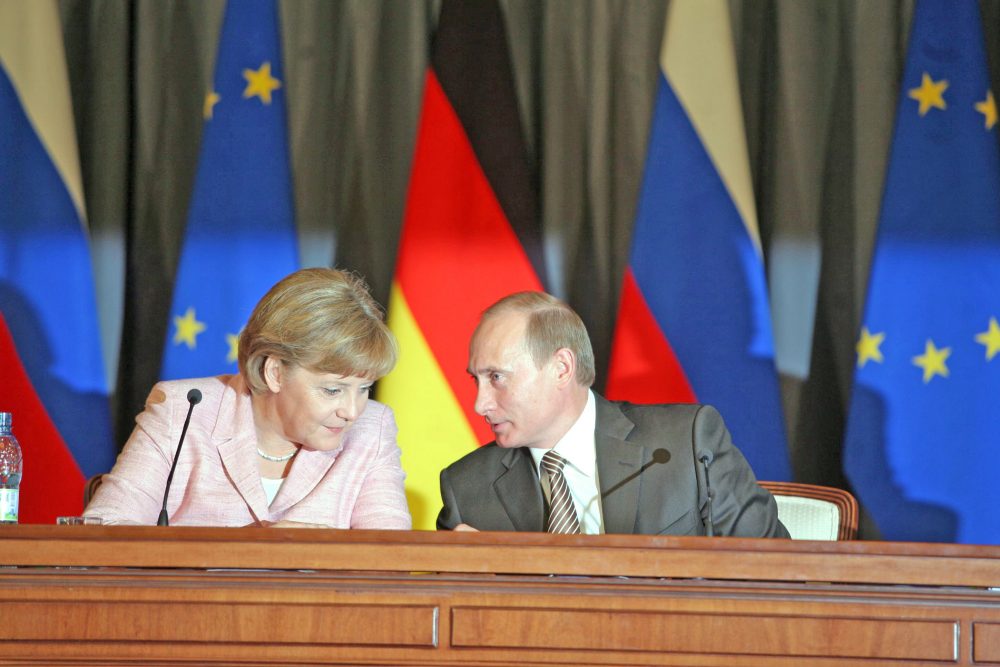
With the policy in Thuringia, the CDU has abandoned the policy of equidistance under pressure from Chancellor Angela Merkel (pictured with Russian President Vladimir Putin). © Fyodor Savintsev EC 2007
The Left’s historical amnesia is part of its strategy and tactics. The goal is the preservation and expansion of power and influence. The communist past of half of Europe is not being subjected to sufficient scrutiny by either the Germans or the Russians. The Berlin Republic is more interested in brown spots on its own waistcoat. And today’s Russia under Putin has made peace with the Red past. The appeal to the honour and glory of Russian history – including loud Red Army hero-worship – is once again in vogue. The Soviet era is being glossed over in Putin’s Russia. Yet Lenin, who denied the “rats and blowflies of the bourgeoisie” the right to life, occupies a prominent place with four million dead in the aforementioned “Lexicon of Genocides”. In the overall balance of politically caused mass murders – genocides and democides – three perpetrators rank even ahead of Lenin: Stalin, Mao, and Hitler (who, according to Heinsohn, occupy the top places of shame worldwide in that order).
THE END OF EQUIDISTANCE
This brings the arc back to the Germans. When the Federal Republic of Germany was created in 1949, the majority was intent on protecting freedom and democracy from both Nazis and Communists. There was a broad consensus: political groups on the extreme fringes – both left and right – should be avoided. For the CDU, which was originally shaped by the Rhineland and West Germany, it was always clear that one keeps the same distance from the KPD/SED/PDS/Linke as from the right-wing AfD and its predecessors. This basic rule of equal distance (equidistance towards the Left and the Right) has only now been broken in Thuringia. The Left, the Greens, and the SPD have agreed on a so-called “stability mechanism” with the CDU in Erfurt. This means selective cooperation just below the threshold of a coalition. A breaking of a taboo.
Thus, the Left Party leader Katja Kipping triumphs: “The agreement in Thuringia has historical dimensions – with it, the equidistance practised by the CDU is effectively finished. That the CDU is finally correcting the exclusion of leftist ideas is good news for the anti-fascist consensus”. Around the time of this victory report, a comrade of Katja Kipping’s dropped the mask at a strategy meeting of her party in Kassel and said openly what many in her political milieu think. She asked what it meant “if we shoot the one percent of the rich”. There was laughter and applause. According to figures from Kipping’s party, this concerns 690,000 supposedly rich people in Germany whose throats the Left wants to jump at. However, as Kipping’s co-chairman Bernd Riexinger emphasised literally on 1 March 2020: “We don’t shoot, we already use them for useful work”. Again, there was applause, with the long-serving party members who were already there under Honecker envisioning what they know from the time of communist sole rule: concentration camp imprisonment with forced labour. These forceful slogans can be heard in the original sound on YouTube.
The KPD/SED/PDS/Linke senses a new dawn. At the same time, what party comrades previously only dared to think in secret is coming to light. This damages their reputation (much like the Ibiza video in Austria scares away voters). The safe haven is the strategy they have been pursuing since 1945, when they transformed themselves into “anti-fascist-democratic forces”. Their dark-red core remained largely the same, but outwardly the CP was at times as adaptable as a chameleon.
With the term “anti-fascist”, it fishes for cooperation partners from other camps – people who were once characterised by Lenin as “useful idiots”. This phenomenon is so old that the founding generation of the Soviet Union already had it in their toolbox. It was called the “Popular Front” back then. The explosive case of Thuringia shows that there are also “useful idiots” in the Merkel CDU.
The featured image shows Joseph Stalin signing the Hitler-Stalin Pact. © Associated Press 1930 Source EC-Audiovisual Service



