Lessons from History
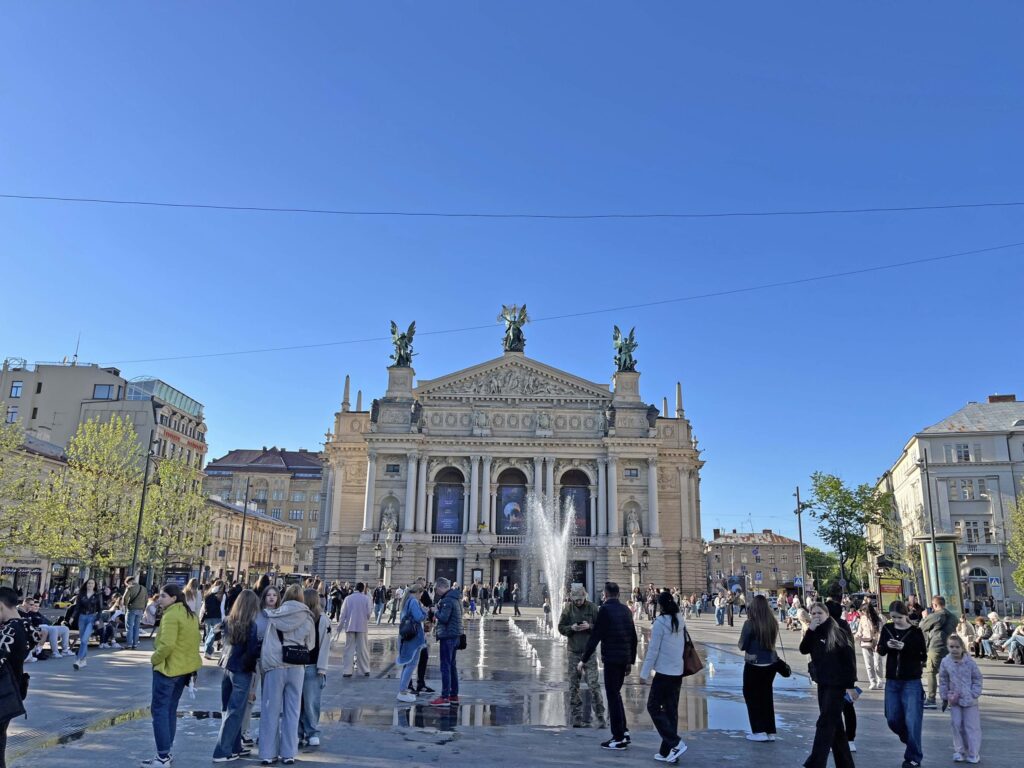
What significance does the Habsburg legacy hold for the future of the European Union? A high-level event took place at the Catholic University in Lviv, accompanied by further discussions on Paneuropa and European integration. By Rainhard Kloucek
Officially, Cafe Wien in Lviv (Lemberg, Galicia, Ukraine) opens at 09:00. The door is already open, so the author enters the cafe half a minute before (it is located in the same building as the Hotel Wien). The waitress offers a friendly good morning, asks for the order, then suddenly turns away, crosses herself, and gazes devoutly towards the street. It is exactly 09:00. On the street, traffic comes to a standstill. Several drivers get out and stand solemnly beside their cars. A gong is heard, striking every second. After one minute, life resumes. The guest at Cafe Wien can enjoy their breakfast.
A Tyrant’s War of Annihilation
There is war in Ukraine. To be precise: it is a war against Ukraine, started by a megalomaniac tyrant in Moscow who dreams of rebuilding the Soviet Empire and leading Russia to new imperialist greatness. To achieve this, he must, among other things, crush Ukraine. He denies its right to exist, just as he denies that of the Ukrainians themselves. The war clearly bears genocidal traits. Reports published shortly after the visit to Lviv regarding the cruel death by torture of a Ukrainian journalist who fell into Russian hands are just one of many proofs of the inhuman brutality of the Moscow regime.
The Fiendish Brutality of Moscow’s Torturers
Eyes gouged out, hyoid bone broken—these are just two examples from the report on the journalist’s death by torture. Anyone who knows where the hyoid bone is located can roughly imagine the fiendish brutality that drives Moscow’s torturers.
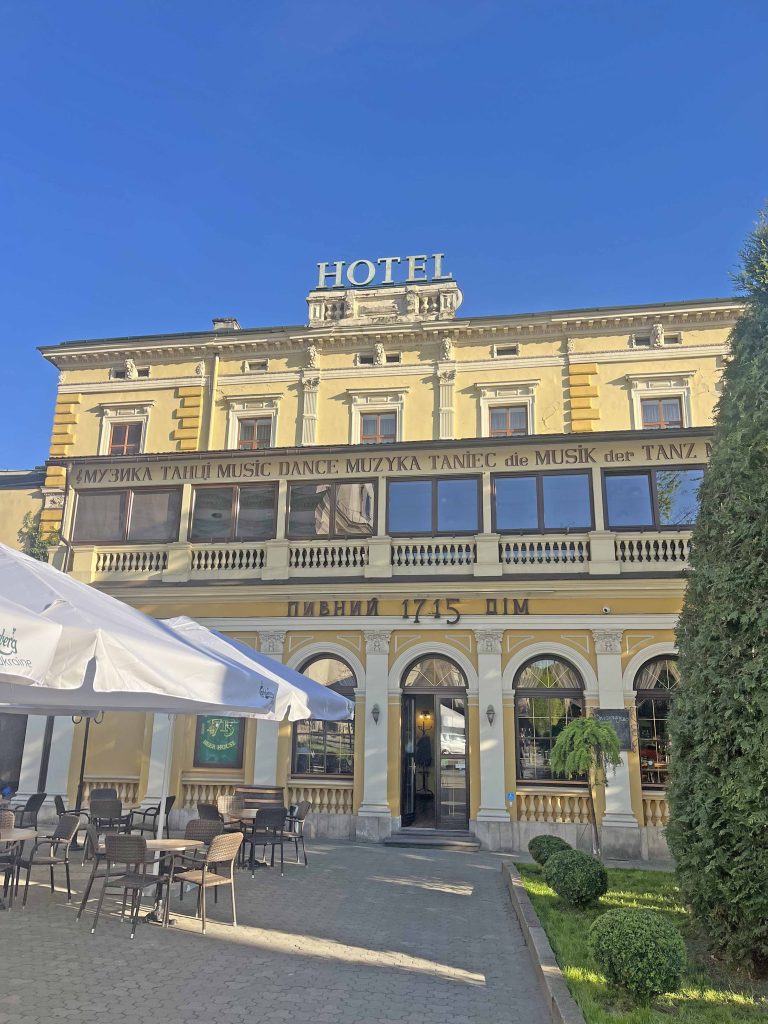
Hotel and Cafe Wien in the city centre of Lviv (Lemberg).
In Lviv, you don’t notice the war at first. The shops are open, the restaurants are full, the fountains in front of the Opera House are working, street musicians play in the square, there is a lot of traffic, and the university is operating normally. However, when you pass by churches, you notice that there is either a funeral service taking place, one has just ended, or one is being prepared. The presence of personnel in uniform is evidence that a defender of Ukraine is being laid to rest. In public squares, you see photos of fallen defenders.
A Book as Motivation for a Discussion
A few years ago, the Dutch journalist Caroline de Gruyter published a book: ‘The Habsburg Empire – Inspiration for Europe?’. As a correspondent, she spent several years in Vienna, lived near Schönbrunn, and wrote a book based on her many encounters with Habsburg traces in Vienna. As a European correspondent, she followed the politics of Otto von Habsburg and attempted in the book to bridge the gap between what the Habsburg Empire once was and what the European Union could or should become.
The aforementioned book was, in turn, the inspiration for an event in Lviv at the local Catholic University—a private university with an excellent reputation. ‘Habsburg Legacy and the Future of the European Union’. Alongside Caroline de Gruyter, the Ukrainian historian Yaroslav Hrytsak and the author were invited to this discussion. The discussion was moderated by University Professor Iryna Starovoyt.
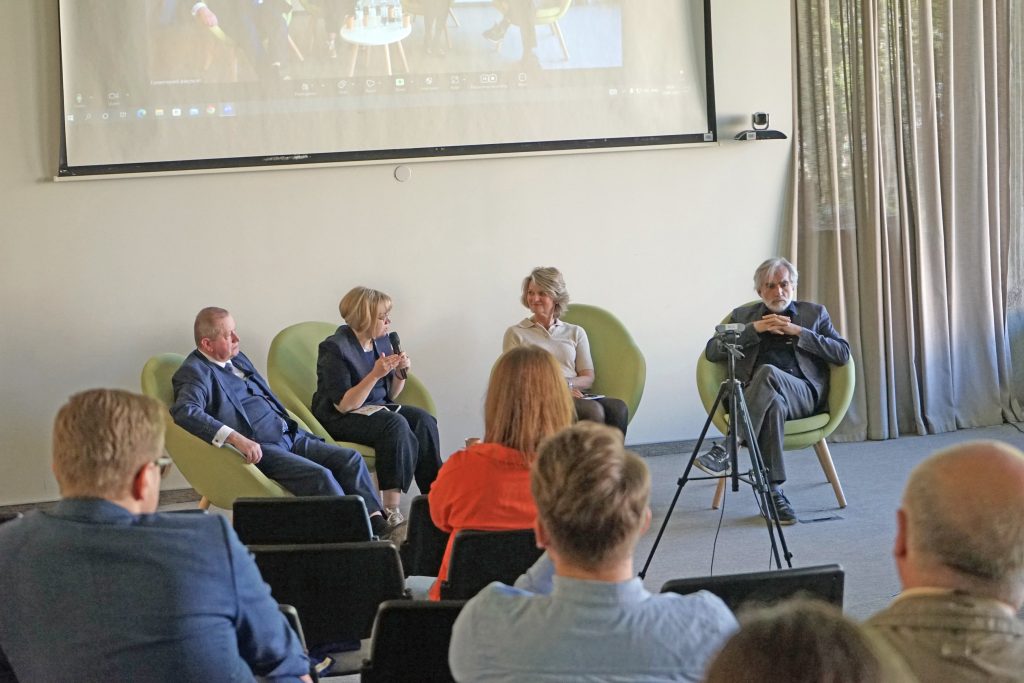
What does the Habsburg legacy mean for the future of the European Union? The Dutch journalist Caroline de Gruyter (second from right) wrote a book on this question following her time as a correspondent in Vienna, which in turn motivated a discussion on the subject at the Catholic University in Lviv, Ukraine. Speakers included the Ukrainian historian Yaroslav Hrytsak (right) and the President of the Paneuropa Movement Austria, Rainhard Kloucek, moderated by Iryna Starovoyt.
The moderator mentioned she had prepared 49 questions. After the fourth question, she remarked that she needn’t have prepared so many, as the discussion had long since taken on its own dynamic.
Learning from History
No nostalgia—this was one of the core statements of the discussion. History is history and should therefore be left to historians to evaluate, and under no circumstances be used to justify any claims—this was, of course, an allusion to Putin’s claim to Ukraine.
However, and here too the discussion partners were in agreement, lessons can be drawn from history; therefore, lessons for the further functioning of the European Union can be drawn from the history of the Habsburg Empire.
Supranational Order and the Nation State
For the Habsburg Empire was a supranational order with many peoples and nations. While the Habsburg Empire was replaced by the nation state (several nation states), today’s EU is based on a foundation by nation states. The Habsburg Monarchy had a decentralised order; the EU also has a decentralised order and supranational institutions.
Decentralised Order Allows Unity in Diversity
This decentralised order allows for a unity in diversity, which also characterises the EU. However, a common foreign and security policy, such as existed in the Habsburg Monarchy, would likely also strengthen the European Union.
The event was supported by, among others, the Austrian Embassy in Kyiv (Ambassador Arad Benkö was one of the initiators; he is now Chief of Staff to Foreign Minister Beate Meinl-Reisinger) and by the OeAD, the Agency for Education and Internationalisation, which also includes the cooperation office in Lviv.
The Paneuropa Idea and European Integration
This cooperation office, based at the university in Lviv, organised a discussion with international relations students on the topic: ‘Paneuropa – from the idea of European integration to its realisation’.
The discussion covered the origins of the Paneuropa Union and the geopolitical approach of this concept, as well as the realpolitik integration of Europe after the Second World War.
A special role in the lecture was played by the overcoming of the Iron Curtain, through which European integration was to be open to all European countries. Ukraine was long excluded from this possibility, but now plays a decisive role, because the fate of a free Europe will also be decided in the defensive struggle against the Russian invasion of annihilation.
The Young Generation Must Shape the Future
Although the discussion with the young students started slowly, it became very lively and exciting. For the young Ukrainians, it was clear that it would also be up to them how the country continues to develop and how it makes its way into the European Union.
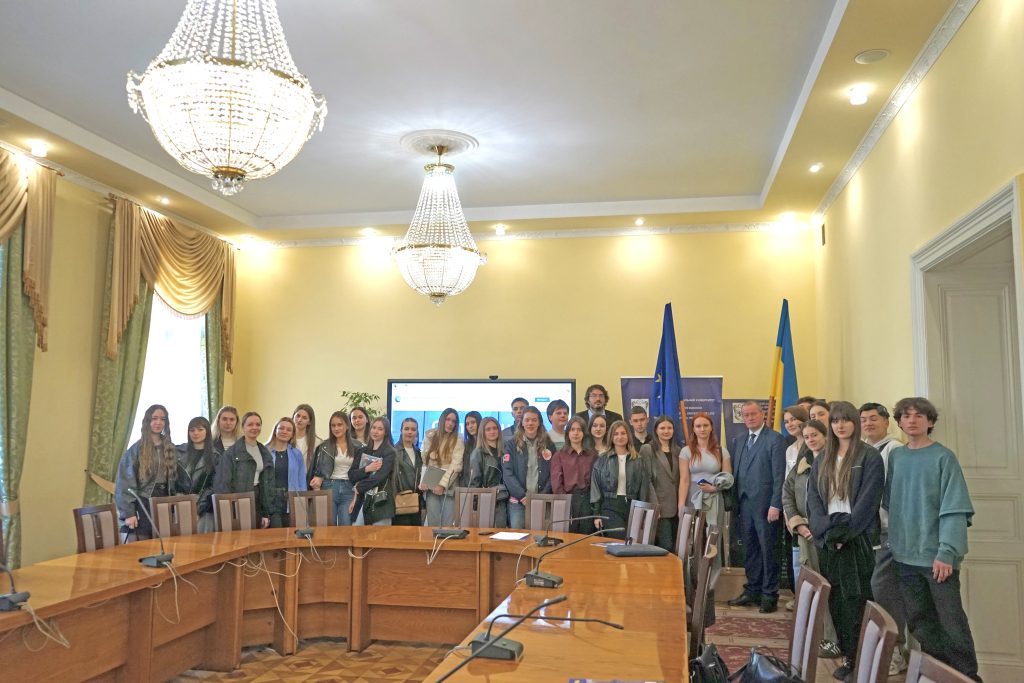
A discussion event with international relations students at the University of Lviv focused on European integration in general, the situation in Ukraine specifically, and the Paneuropa idea fundamentally.
Many expressed the wish to later contribute to European integration themselves through diplomacy and international organisations. The lecturer eventually had to point out that the lecture hall had to be vacated as the next event was beginning.
The events concluded with a lecture on Paneuropa at Lyceum 8. The school’s director, Oksana Kurska, had established initial contact with Paneuropa during a study trip to Austria in the autumn of the previous year and now invited directors (female directors were present) from several schools to a conversation about the idea of Paneuropa and European integration.
In conversation with Ukrainian Paneuropeans, the author was also able to discuss further projects for Paneuropa in Ukraine. These include an exhibition about Otto von Habsburg, who led the Paneuropa Union for 30 years, and an associated series of events throughout Ukraine on Paneuropa, European integration, and the necessity of a European foreign and security policy.
Featured image: The city’s Opera House. In the busy square in the city centre, one hardly notices Russia’s war against Ukraine. The fountains are working, life goes on, the shops are open. However, the city, located in the far west of Ukraine, has also been attacked with Russian missiles. People were killed in these attacks.



