Montenegro: Two Years After the Coup
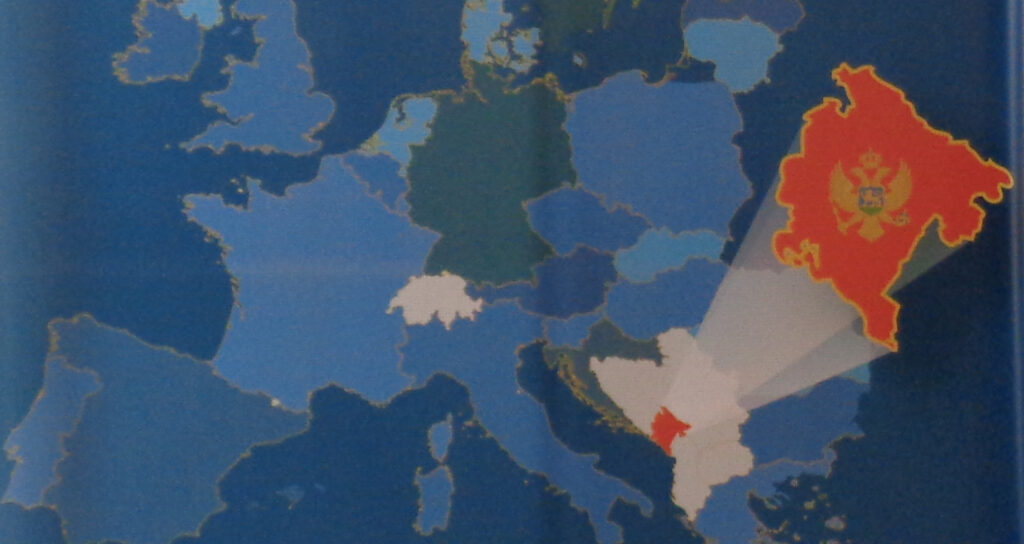
Two years ago, Russia attempted to carry out a coup d’état in Montenegro. The West needs a clear policy towards Russia, with sanctions for such violations. A commentary by Karl von Habsburg.
We are constantly told by the self-righteous moralists that we must understand Russia when it feels encircled, as NATO and the EU slowly approach its borders like the “Fog of Terror”. On the other hand, these same people continuously warn us of democratic deficits and human rights violations. So the question must be allowed: which is it to be? Do states like Ukraine, Georgia, or indeed Montenegro have the right to determine their own future, or do we sacrifice them in anticipatory obedience on the altar of a Russian policy of the “Near Abroad”, and thus to the sphere of influence of an autocratic system that certainly does not share our ideals of freedom and human rights?
Exactly two years ago, Russia showed us its idea of democracy. On 16 October 2016, parliamentary elections were held in Montenegro. On that day, Prime Minister Milo Djukanovic announced that a group of 20 Serbian citizens had been arrested the previous day, having planned a coup for election day, and not least his assassination. The aim was to storm parliament in fake police uniforms, spread chaos, and establish a government led by the “Democratic Front”, a clearly pro-Russian, anti-NATO alliance. For most international media, this story sounded too “Balkan”, and they gave it no credence and consequently no coverage.
It was only when the Serbian police arrested two Russian citizens on 24 October, who were in possession of Montenegrin special police uniforms, weapons, means of communication, and money worth €122,000, that more attention began to be paid to the matter. Even then, the whole action was blamed on radical Russian nationalists. It was only when it became known that one of the Russian organisers of the foiled coup was Eduard Shishmakov, the former deputy Russian military attaché at the embassy in Warsaw, that the full extent of this Russian intervention became known.
And yet, little attention was paid to it. The Western media hardly reported on it; it did not fit their image of appeasement towards Russia in the style of a Chamberlain or Daladier.
After the collapse of the Soviet empire, the European successor states had the choice of either following Russia’s call and continuing to live with a planned economy and a state party, or adopting the Western model of a free market economy and democracy in the Western sense. Much to Russia’s pain, most chose the latter. The talk of a secret agreement between Genscher and Gorbachev regarding a renunciation of the eastward expansion of NATO and the EU is mere gossip. Agreements of this magnitude are always recorded in writing. Moreover, it would be unacceptable for representatives of Germany and Russia to make such far-reaching decisions for other sovereign third-party states without their involvement.
But here also lies a responsibility of the West. When such grave interventions in European states occur—such as an attempted coup and the attempted assassination of the Prime Minister, but also the Skripal attacks or the shooting down of a commercial airliner in recent months—then we must show our true colours. The West must also say clearly to a state like Russia: actions have consequences! Anyone who attacks our values here must expect profound sanctions. We will not simply return to business as usual!
The article originally appeared on the website of Karl von Habsburg.



