Our Partner Russia?
Russia’s recent attacks against Ukraine once again demonstrate Moscow’s aggressive potential. A commentary by Karl von Habsburg.
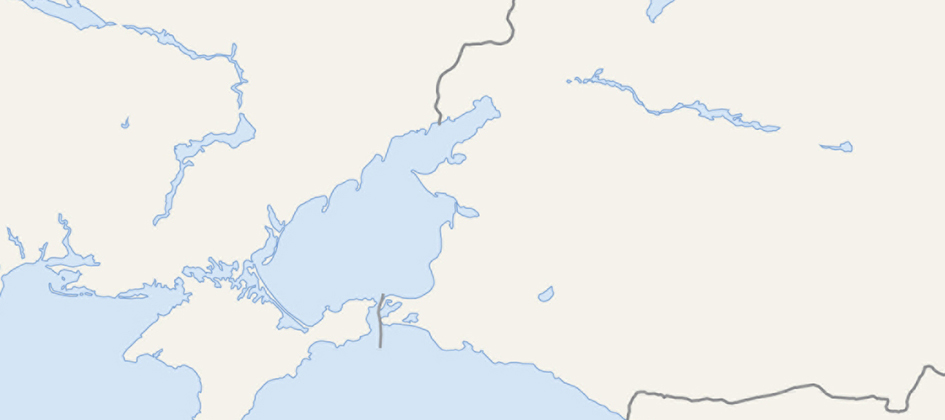
For many observers, it was not a question of if, but when Russia would escalate its aggression in the conflict with Ukraine. The situation in the Sea of Azov has been tense for some time. In recent weeks and months, there have been repeated dangerous tensions and harassment from the Russian side against Ukrainian merchant ships, as well as against the Ukrainian navy (which consists of only a few boats). Most recently, Russia blocked passage with a cargo ship positioned across the strait. The Kerch Strait connects the Sea of Azov with the Black Sea. Moscow has built a bridge over the strait to the annexed Crimean Peninsula. The occupation of the peninsula and its subsequent annexation by Russia are increasingly proving to be an attack by Moscow on the Ukrainian coast, including the vital port city of Mariupol.
The city was already under heavy bombardment at the beginning of Russia’s war of conquest in eastern Ukraine. Only massive interventions by Western countries, with subsequent measures against Russia’s political leadership, halted the Russian advance. Now, Moscow appears to be tightening the noose around the region once again.
The situation is dangerous for several reasons. The Russian population is increasingly losing trust in President Putin’s policies. However, the propaganda of the Putin regime still manages to maintain a fear among the populace of Russia being encircled by the West. This unsustainable thesis is also championed in Western countries by so-called Putin sympathisers. With this fear in the background, it seems logical for the Kremlin leadership to want to distract from domestic problems with belligerent manoeuvres against Ukraine and the West.
Under Vladimir Putin, Russia has modernised its military. For years, large-scale exercises have practised rapid advances into and through neighbouring countries – in other words, a war of aggression. The Russian military today is significantly stronger compared to NATO countries than the Red Army was in the final phase of the Soviet Union. Furthermore, the public no longer has an awareness of the consequences of war. Apart from military personnel and their families, as well as the families of soldiers who fell or were wounded in Chechnya, Russia itself – much like most European countries – no longer has an active memory of war. None of the many wars Moscow has waged since the end of the Soviet Union reached Russian territory itself.
Given the upcoming elections (presidential and parliamentary) in Ukraine in 2019, Moscow’s aggression could, of course, lead to certain forces attempting to exploit the situation for their own propaganda.
To all those Western politicians who, in recent years, have spoken of normalising relations with Moscow, who have tried to create an impression of normality through active diplomatic visits, the question must now be posed: how do we deal with Moscow’s renewed aggression? Evidently, all the friendly words from President Putin and his government were merely diversionary tactics. Appeasement will not make Moscow cease its aggression. A clear strategy that shows no weakness is required. For Putin skilfully exploits every Western weakness.
Next Friday’s article will address the question: How credible is Europe, or rather, the EU?
The article originally appeared on Karl von Habsburg‘s website.
Copyright image: European Union 2016. The image shows the strait near the Crimean Peninsula, which separates the Sea of Azov (north) from the Black Sea.



