Parliaments: The Symbol of European Democracy
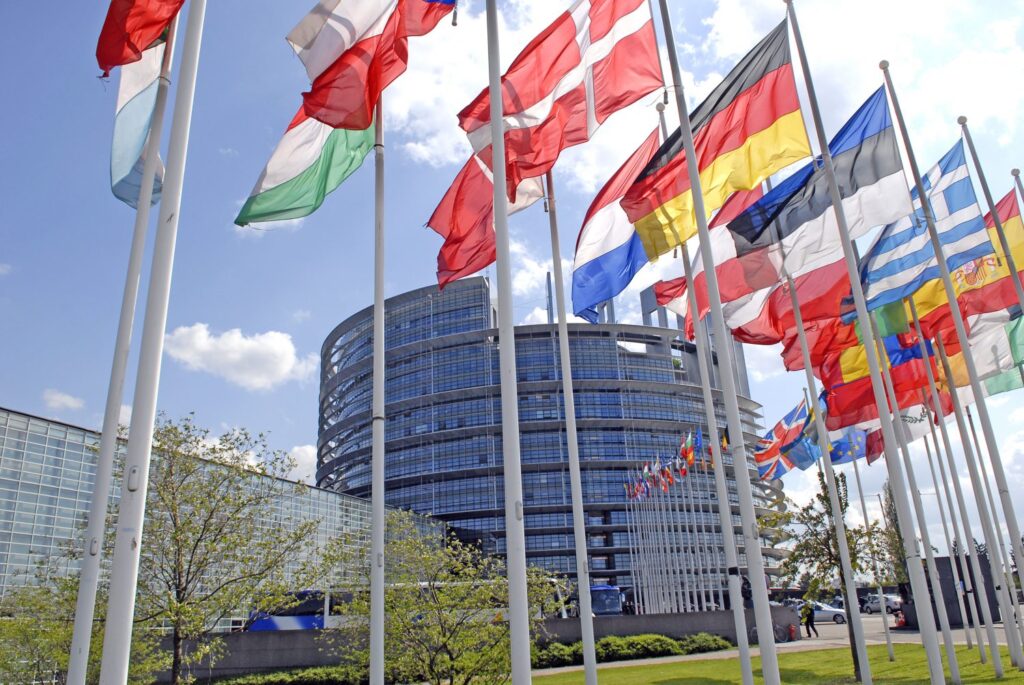
The European Parliament is the only directly elected institution of the European Union. This fact is a thorn in the side of many. Anyone who seeks to weaken or abolish the European Parliament weakens democratic co-decision-making, the regions, the directly elected representative, and subsidiarity. A commentary by Stefan Haböck, International Officer of the Paneuropean Movement Austria.
Directly elected representatives from hundreds of European regions make decisions on European issues. With its increased power and decision-making competence, especially since the Treaty of Lisbon in 2009, the Parliament stands on an equal footing with governments. This makes intergovernmental agreements between governments more difficult. Representatives directly accountable to their constituencies now participate in negotiations. This gives regions more influence than they often have at a national level.
The Uniqueness of the European Parliament Stems from the EU’s Structure
The absence of a ‘European government’ and the unique legislative process (trilogue) mean that MEPs are not divided into ‘government factions’ and opposition. There are no fixed majorities. The individual MEP is further strengthened by the absence of party discipline.
The Strength of MEPs Lies in Their Willingness to Compromise
The mix of hundreds of European regions, states of varying sizes, hundreds of parties, the absence of party discipline, the lack of government and opposition, and the role of the MEP as rapporteur or coordinator demonstrates that the work in Strasbourg and Brussels primarily demands a willingness to compromise.
Nothing can be ‘forced through’. One can express their opinion, but must always keep in mind the diverse geographical, regional, sociological, or political backgrounds of their colleagues. It is not the strongest from the largest country who wins, but the one who manages to negotiate a majority and possesses integrity.
Democracy Always Involves Compromises
Compromises have a bad reputation. Completely undeservedly so. Within government constellations at a national level, compromises must be made, just as they are in local councils. If one person truly decided alone, without involving or hearing other opinions, it would be a dictatorship. Europe has experienced this form often enough. It must never happen again.
Compromises arise from an exchange of opinions based on respect. This is where an MEP can exert their greatest influence: by listening to arguments, weighing them up, and persuading others.
Europe’s Most Transparent Parliament
The European Parliament can claim not only to be the European Union’s sole directly elected institution. It is also the most transparent. Committee meetings and plenary sessions are public and broadcast live. Papers and documents that are debated and voted on are published online. It is possible for visitors to sit in on and listen to committee meetings and plenary sessions directly. Voting results and roll-call votes are accessible to citizens.
Linguistic Diversity is Part of European Culture
And another unique feature supports transparency: MEPs have the right to speak in their mother tongue, citizens can submit enquiries in all 24 official EU languages and have the right to receive a response in their language. Here, transparency meets the nurturing of linguistic diversity in Europe. The use of 24 languages naturally comes at the cost of a large staff of interpreters. However, linguistic diversity is one of Europe’s greatest treasures. Europeans can and should be proud of this, and it must certainly be preserved. Again, this counters national chauvinism that would claim one language is more important than another: monolingualism would not only be a great loss, but de facto the abolition of our European culture.
© Featured image: European Parliament



