Reopen internal borders, protect external borders
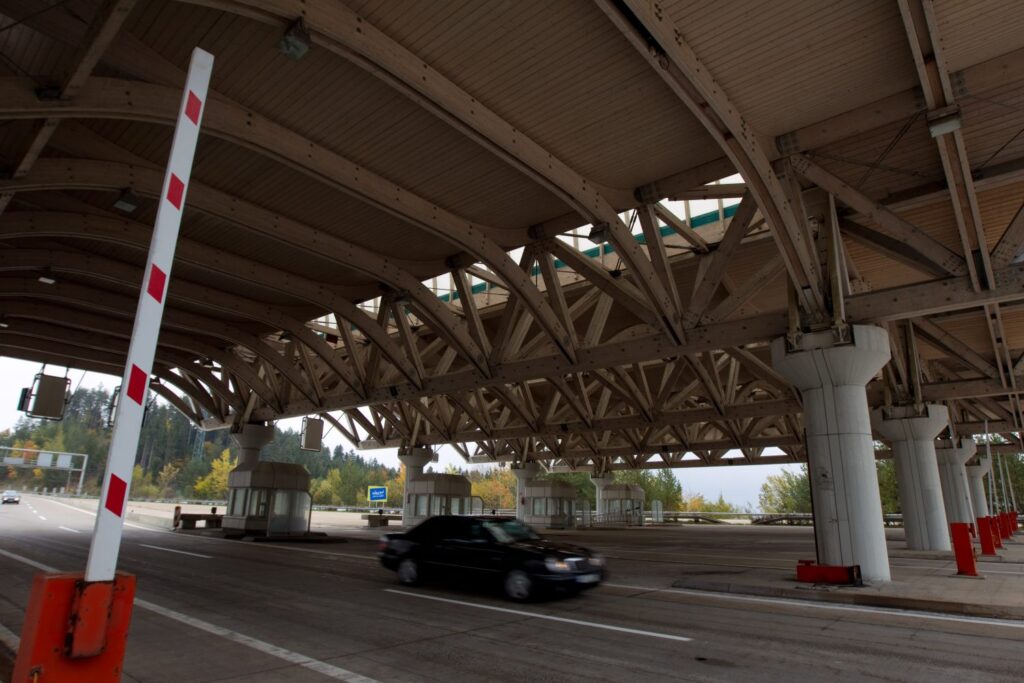
National unilateralism continues to lead to border controls within the Schengen Area and prevents the establishment of a common European border guard. A commentary by Karl von Habsburg.
At the beginning of February, the Presidium of the Paneuropa Movement Austria adopted a position paper for the 2019 European elections. One of the demands is the creation of a European border guard and the reopening of internal borders. ‘Europe for Europeans’ was already one of Paneuropa’s demands in the early stages of the organisation, back in the 1920s. While a Central European could once travel between Czernowitz and Sarajevo without further border controls, the fragmentation of Central Europe led to the creation of small-scale borders that restricted not only the freedom of movement of citizens but also the exchange of goods in the Central European economic area. The parochial, protectionist policy of isolation brought no solutions to problems, but only exacerbated them.
Fundamental freedoms and the single market
In the process of early European integration after the Second World War (until 1989 only in Western Europe), the four fundamental freedoms were first decided upon and the creation of a single market agreed, before the Schengen Agreement was used in 1985 to begin dismantling border controls within the Schengen states. The first step was taken, but by the second step, parochial national sensitivities triumphed once again. Although controls at internal borders were abolished, common border protection was prevented by the nation states. Yet it would only have been logical to take this second step as well, as otherwise the respective burden of external border protection would rest on those countries located at the external border of the Schengen Area. And every head of government likely hoped for a swift expansion of this Schengen Area so that others would have to bear the burden of protection.
When refugees flooded primarily into Austria and Germany during the wars started by Slobodan Milosevic in South-Eastern Europe, neither Italy nor Spain was interested in a common border guard. When Spain then became the gateway for migrants from Africa, Germany in turn saw no reason for a communal border guard. The problem was kicked down the road until it became impossible to ignore in 2015. Hungary was scolded for border controls at the external border until Germany eventually introduced border controls with Austria. Consequently, Austria began border controls with Hungary and Slovenia, which have been repeatedly extended ever since. The exception became the rule, which is why the Commission also suggested that these internal border controls should now be ended.
False reports by national egoists
So-called anti-Europeans, nationalists, and populists dared to spread the bold false report that the EU had failed in border protection, and governments formed from so-called pro-European parties clung to national border controls. Propaganda triumphed over political reason and integrity.
The claim that the EU failed in border control was then even linked to the demand that the EU must not be given any competences for border protection at all, that this must remain a national competence. One must truly reflect on this populist nonsense. If the EU has no competence in protecting external borders (and all those who spread the above nonsense also want to prevent the EU from gaining such competence), it cannot fail in doing so. It is the nation states that have failed (at whose level, according to the spreaders of nonsense, the competence should remain), precisely because they failed to create communal border protection in time with the creation of the Schengen Area.
Back to protectionism?
The fact that precisely those countries that criticise an alleged failure of the EU are preventing the establishment of a truly European border guard is one of the regrettable consequences of a national egoism that harms Europe just as much as a series of protectionist measures that have been implemented step by step under the buzzword of a social Europe.
Organising European border protection within a newly created institution of interior ministers, as some government politicians from various states are now demanding, is no real solution. It merely shifts the problem from one institution to another; national and populist blockades cannot be prevented this way.
For some, it is only about money
It would be a logical and sensible implementation of the principle of subsidiarity to organise border protection at a European level, to locate the competence for it within the EU Commission, and to provide the necessary funds from the EU budget. But this is probably where one of the points of resistance lies. Member states do not want to pay higher EU contributions, a problem further exacerbated by Brexit. At the same time, however, a number of EU countries do not want to forgo their permanent subsidisation. If one wants to finance a new task within a static budget, a conflict of interest arises regarding redistribution.
As understandable as this conflict of interest may be, it is equally harmful. For small-scale internal borders contradict the four fundamental freedoms—precisely those measures anchored in the Treaties of Rome to avoid falling back into the mistakes of the interwar period. All those who believe they are fit for the future within the nation state and through mere cooperation between nation states should think about that.
Until the European elections on 26 May, I will, in my capacity as President of the Paneuropa Movement Austria, comment on individual points from the Paneuropa Movement’s position paper.
The article originally appeared on the website of Karl von Habsburg.
© Featured image: European Union 2011



