Russia, China, and Ideology
China and Russia are architects of alternative realms of reality. Ideology becomes a tool of power. However, the methods of the two powers differ. By Anna Pattermann
What is ideology – a matter of faith or a weapon? In a world where words can trigger wars and narratives can shift entire realities, this question suddenly becomes acutely relevant.
The authoritarian great powers China and Russia are no longer merely adversaries on a geopolitical level – they are architects of alternative realms of reality, where ideology acts as a strategic instrument. No dialogue, no argument, but a tool of power.
Hannah Arendt once formulated it thus: “Ideology is not conviction through equality, but a substitute for authority through pre-structure.” It is precisely in this sense that ideology confronts us today in the digital information space: not as an invitation to discourse, but as an architecture of obedience, control, and systematic reality-shaping.
In this article, I want to ask the question: Are China’s and Russia’s FIMI (Foreign Information Manipulation and Interference) strategies truly identical? Or do fundamental differences emerge – in objective, form, and ideological foundation? Because anyone who lumps all authoritarian systems together misunderstands the strategic diversity and underestimates the dangers for Europe.
To protect our democracies, we must understand the language of attack – and it does not begin with the first disinformation post, but with the ideological foundation upon which it stands.
China’s Strategy: Order Through Ideology
In China, ideology is not a superstructure – it is infrastructure. Xi Jinping’s concept of the “Overall National Security Outlook” anchors ideological control not only in political discourse but at the core of the state. It is not merely about what is thought – but that everyone thinks in the same ideological rhythm (cf. Blanchette 2020: 2–4).
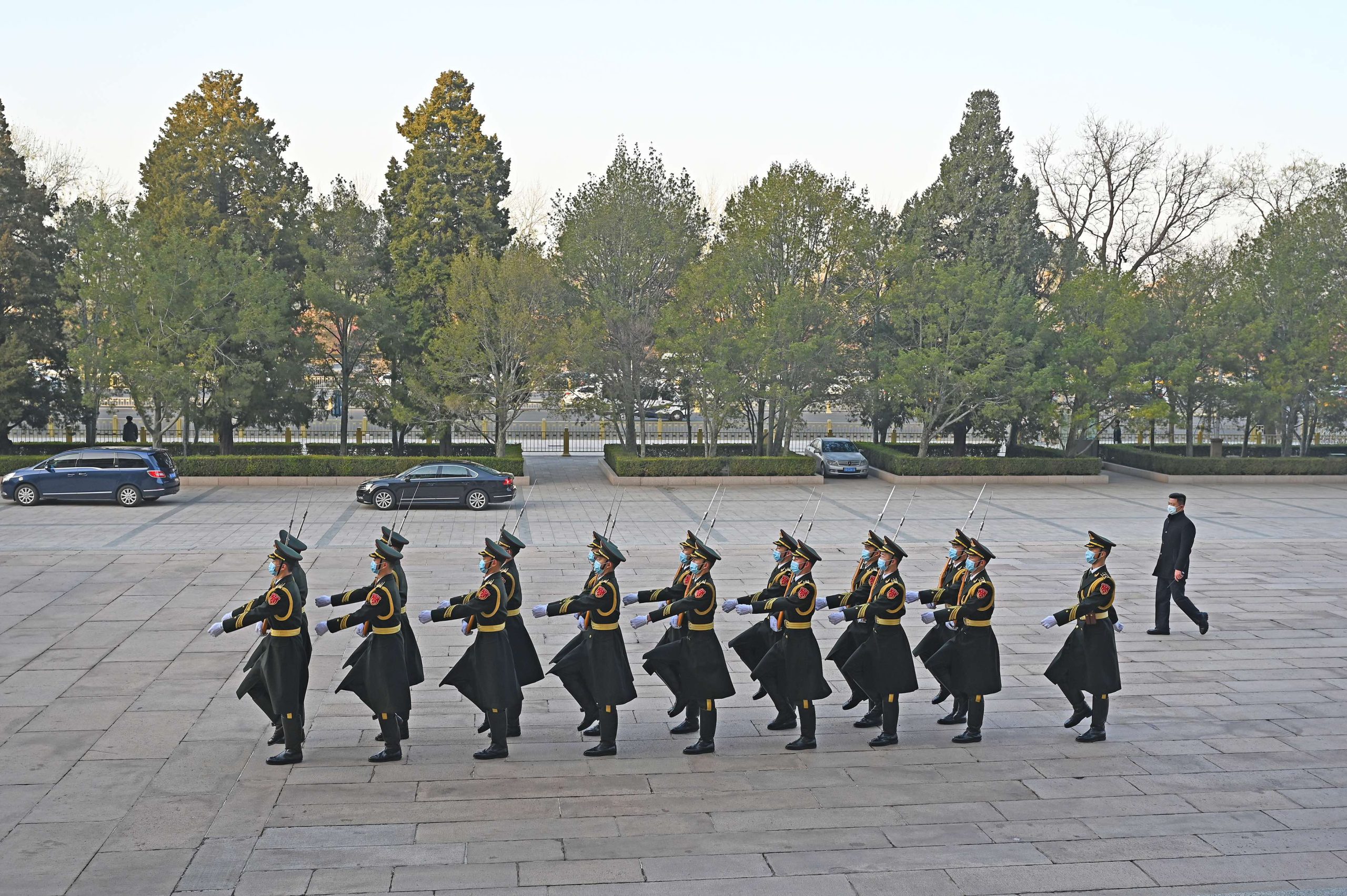
For China, ideology is infrastructure. It’s not just about everyone thinking the same thing, but also about them thinking in the same ideological rhythm. The photo shows Chinese soldiers exercising.
Ideological security becomes a prerequisite for political stability, a defence line against perceived “Western influences”, but above all, a filter through which the world and reality are to be perceived. Terms such as democracy, human rights, or freedom of expression are not considered universal principles, but rather “discourse traps” intended to undermine the ideological balance (ibid.: 6–8).
What sounds like rhetoric is, in reality, systemically thought out. The Chinese leadership measures ideological security by three criteria:
1. Whether the ruling ideology fulfils its social mobilisation function.
2. Whether the majority identifies with it.
3. Whether the state can effectively control it and defend it against disturbances (cf. ibid.: 4–5). Ideology thus becomes a political early warning system – and a weapon at the same time.
Internationally, this is reflected in initiatives such as the Global Development Initiative (GDI), the Global Security Initiative (GSI), or the Global Civilization Initiative (GCI). What is presented here under the guise of “common development” or “civilisational diversity” is a well-packaged questioning of Western values and models. China’s message is clear: Your democracy is not without alternatives. Our system is just as legitimate – perhaps even more stable (cf. L2, Slides: 18).
This form of ideological “soft power” export is no coincidence. It serves to consolidate alliances, create dependencies, and ultimately promote a world order in which authoritarian stability represents an equivalent model to liberal democracy. In doing so, China acts less loudly than Russia – but strategically no less effectively.
Russia’s Strategy: Confusion Instead of Consensus
If China’s ideology seeks to establish order, then Russia’s information policy thrives on the opposite: on confusion, decomposition, and the deliberate dissolution of clarity. Moscow’s strategy does not rely on a coherent worldview, but on emotional resonance, national myths, and playing with ambiguity – an information war without solid ground.
Unlike in China, where the party attempts to systematically control ideology, Russia’s approach is more diffuse – and precisely for that reason, effective. According to Greene and Robertson, Putin’s power is based not only on repression but on co-construction: a shared myth between state and society, fed by collective memory, pride, resentment, and fear (Greene & Robertson 2019: 2–3).
This is exemplified by the annexation of Crimea, which was legitimised not through political arguments, but through collective euphoria. It was not reason, but emotion that was appealed to. Not the truth, but the story that “feels” best (ibid.: 9–10).
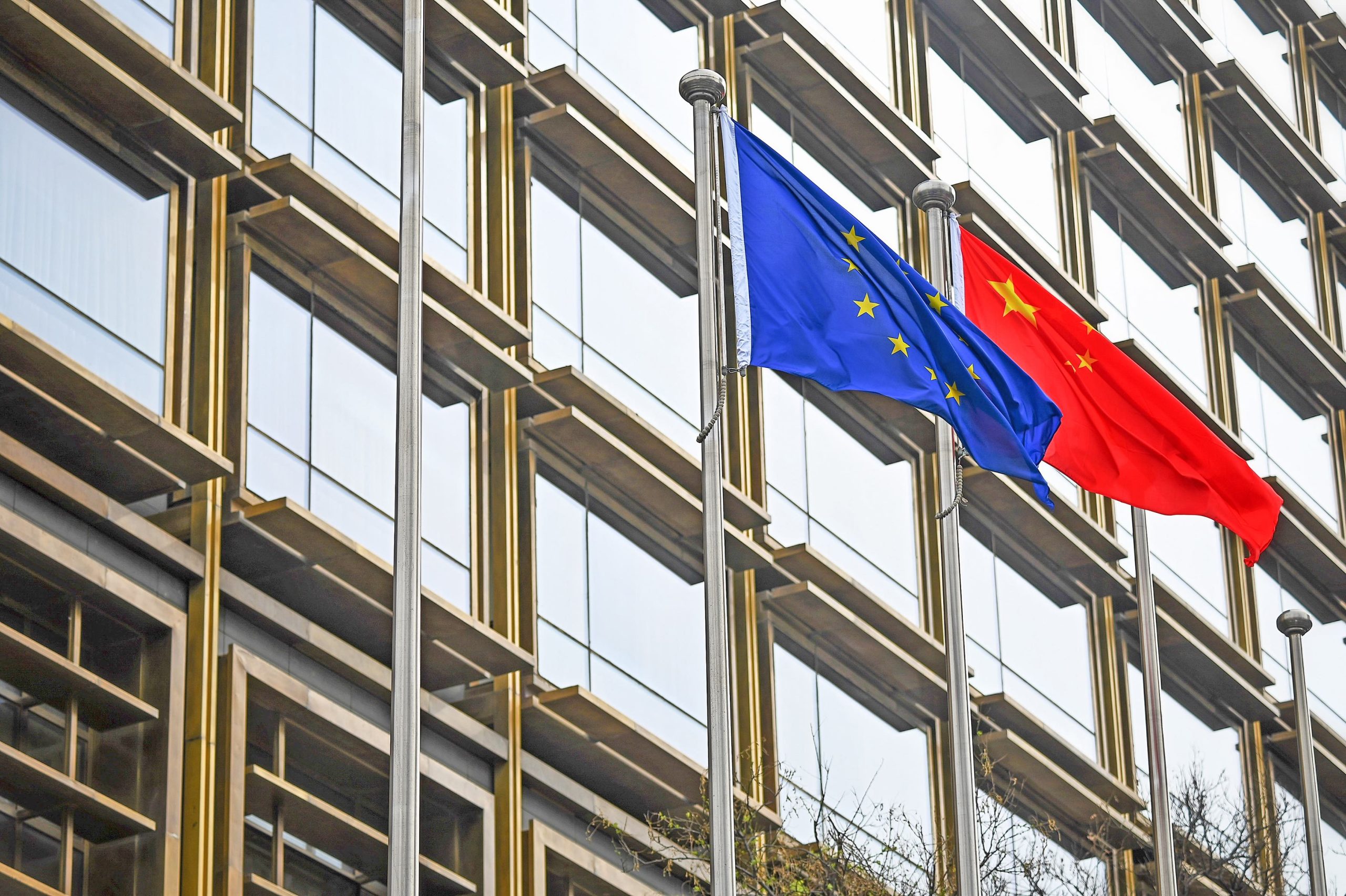
What unites China and Russia (the image on the left shows the EU flag next to the Chinese flag) is the endeavour to undermine the rules-based order and the Western way of life based on democracy and freedom.
Russia’s FIMI (Foreign Information Manipulation and Interference) strategy therefore does not follow an ideological export programme like China’s. Instead, it operates through ambiguity, cynicism, and disruption. Media outlets like RT or Sputnik do not convey an alternative worldview – they sow doubt, foster contradictions, and undermine trust in liberal institutions. The goal is not consensus, but loss of control – on the part of democracies.
This strategic vagueness is no accident, but a deliberate technique. The Russian military expert Gregory Tulchinsky speaks in this context of the “implicit nature” of actors in information wars – they often appear only as interpretation, as rumour or narrative (Fridman 2017: 66). This makes the discourse about information manipulation itself part of the manipulation. Everything is true – and at the same time nothing.
Ofer Fridman calls this phenomenon “strategic ambiguity” – a state in which truth, deception, and interpretation can no longer be separated (ibid.: 67). In this grey area, Russia can frame any criticism as a Western conspiracy and any counter-narrative as “enemy propaganda”. The target audience is often not the West, but its own population: the constant narrative of a besieged Russia creates internal cohesion through external threat (ibid.: 81).
Order versus Dissolution
While China builds legitimacy, Russia deconstructs that of others. One order seeks approval – the other aims for disorientation. Both systems use ideology – but with diametrically opposed means.
Two Faces of Information Power
China and Russia share the goal of challenging the liberal world order – yet the means by which they operate differ fundamentally. Both strategically employ ideology, but they follow two opposing logics: China strives for ideological coherence. It wants to establish an alternative model to liberal democracy – one based on stability, national sovereignty, and cultural distinctiveness. Ideology is thereby made measurable, integrated into security strategies, and globally disseminated through international programmes such as GDI, GSI, and GCI. It is a model with a claim to universal validity – only without the universal values that we defend in Europe.
Russia, however, aims not for construction, but for disintegration. There is no Russian societal blueprint for the world – only doubt about the Western one. Ideology here is not a system, but a mood. Not a code, but a fight. The instruments are emotion, ambiguity, and a kind of state-orchestrated loss of control. While China wants to strengthen trust in itself, Russia wants to destroy the trust of others (cf. Fridman 2017; Greene & Robertson 2019).
Consequences for Europe’s Strategic Resilience
This difference is not only theoretically significant – it has consequences for Europe’s strategic resilience. Anyone who focuses solely on Russian disinformation misunderstands the long-term effectiveness of the Chinese model. Conversely, anyone who underestimates the complexity of Russian manipulation methods remains vulnerable to their insidious power.
Both systems do not operate outside Europe – they speak into our discourses, connecting with dissatisfaction, doubt, and crises of values. And precisely here, ideology – in Arendt’s sense – becomes a dangerous substitute for authority: not legitimised by consent, but by perceived lack of alternatives.
Information Spaces Become Battlefields
In a time when information spaces are becoming battlefields, ideological vigilance is not an intellectual luxury – it is a survival strategy. We must recognise that the threat to our democracies does not always begin with violence – it often begins with stories. Stories that sound plausible. Stories that promise order. Or freedom. Or pride.
Whether these stories come from Beijing or Moscow – they pursue different paths, yet they aim for the same thing: the erosion point of our convictions.
Therefore, it is more necessary than ever today not only to examine what is being said – but why it is being said. And what worldview is being delivered between the lines.
References and Literature
Blanchette, Jude (2020): Ideological Security as National Security: China’s Political Discourse under Xi Jinping. Washington, D.C.: Center for Strategic and International Studies (CSIS), China Power Project.
Insisa, Aurelio (2024–2025): Authoritarian Playbook: China’s Narratives. Lecture slides, module “Authoritarian Playbook – Strategic Communications in the 21st Century”, Istituto Affari Internazionali, Rome.
Greene, Samuel / Robertson, Graeme (2019): Putin vs. the People. The Perilous Politics of a Divided Russia. New Haven, CT: Yale University Press.
Fridman, Ofer (2017): The Russian Perspective on Information Warfare: Conceptual Roots and Political Context. In: Defence Strategic Communications, 2(1), pp. 61–86.
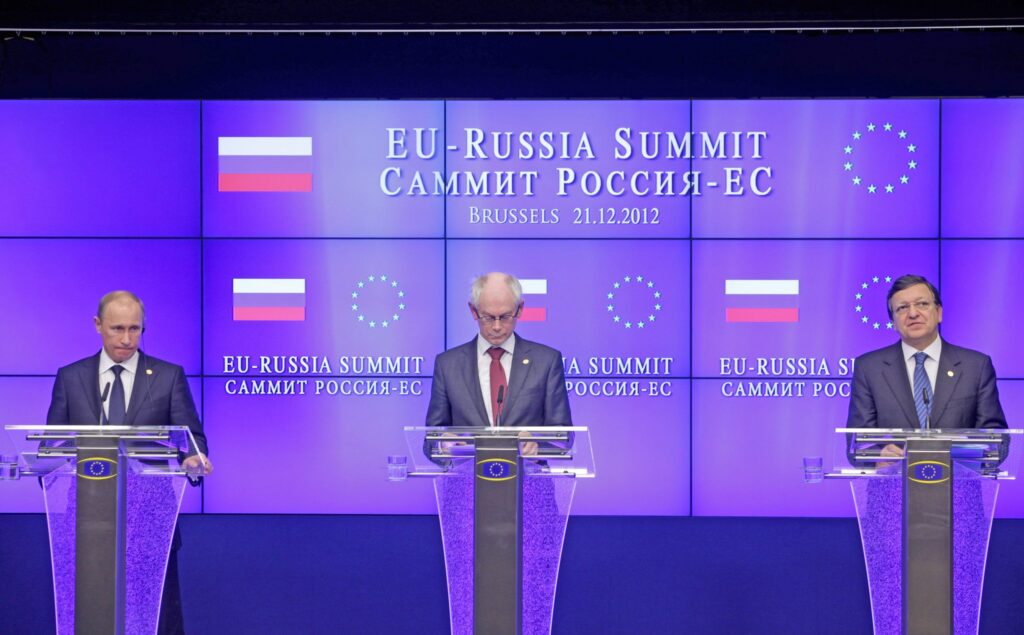
Feature image: The image above shows a high-level meeting between the EU and Russia, proving that efforts were indeed made to integrate Russia into international structures and that it was treated as an equal.
c Images: European Union 2022 Etienne Ansotte, 2023 Dati Bendo



