Serbia needs change
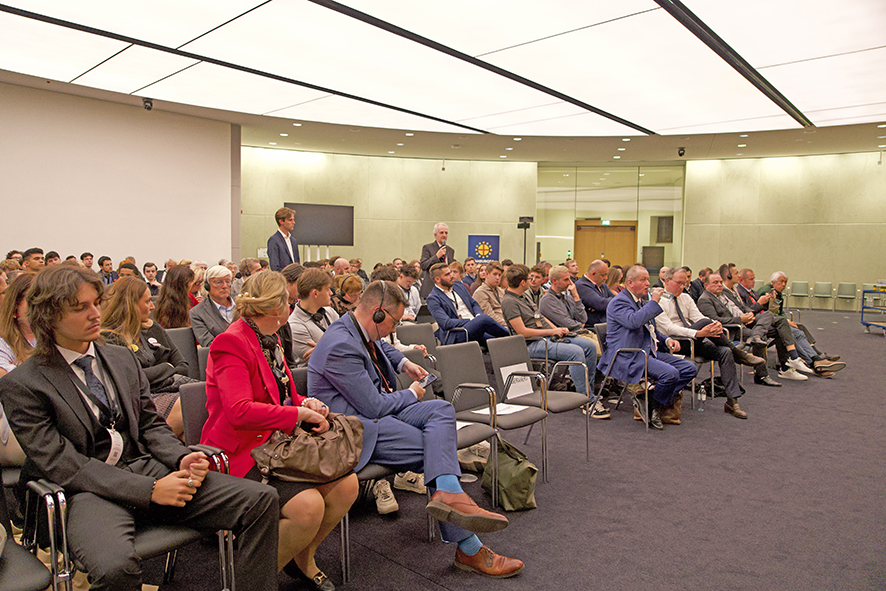
Serbia is an EU candidate country. However, negotiations are progressing very slowly. This is not only due to the EU, but above all to the political situation in the country. For months, there have been protests against the government under President Aleksandar Vučić, who rules authoritatively. Corruption is rampant. The Vučić system, however, is vehemently resisting new elections.
“Enlargement is the most important geostrategic instrument the European Union has.” With this statement, Foreign Minister Beate Meinl-Reisinger made it clear that the European Union still needs several further developments before it achieves strategic capability in foreign policy, but that enlargement policy has been the EU’s most important foreign policy instrument to date. This clear commitment to EU enlargement, which is not very popular in Austria, was embedded in a discussion event organised by the Paneuropa Movement Austria in cooperation with the NEOS parliamentary club in the Parliament in Vienna.
“Serbia’s Path into the European Union” was the title of the event. A path that has now lasted for about 20 years, but in which there has been little progress so far. This is not only due to the European Union, but in this specific case also to the politics in Serbia.
Aleksandar Vučić is the strongman there. He began his career under the war criminal Slobodan Milošević. At the European level, his party belongs to the European People’s Party. Vučić rules authoritatively. For months, students have now been protesting against his policies. The trigger was the collapse of a railway station in which people lost their lives. Corruption in the construction industry is being blamed for this catastrophe.
Yet the regime’s reaction is one of toughness against the protesters. Nothing is changing in the system. Corruption is rampant.
There is no vacuum in geopolitics
In her introductory speech, Foreign Minister Beate Meinl-Reisinger underlined the importance of the enlargement of the European Union. In the case of the admission of the Western Balkan countries, it is less about enlargement and more about closing a hole on the map. “There is no vacuum in geopolitics,” said the Minister. If Europe does not look after the region, others will.
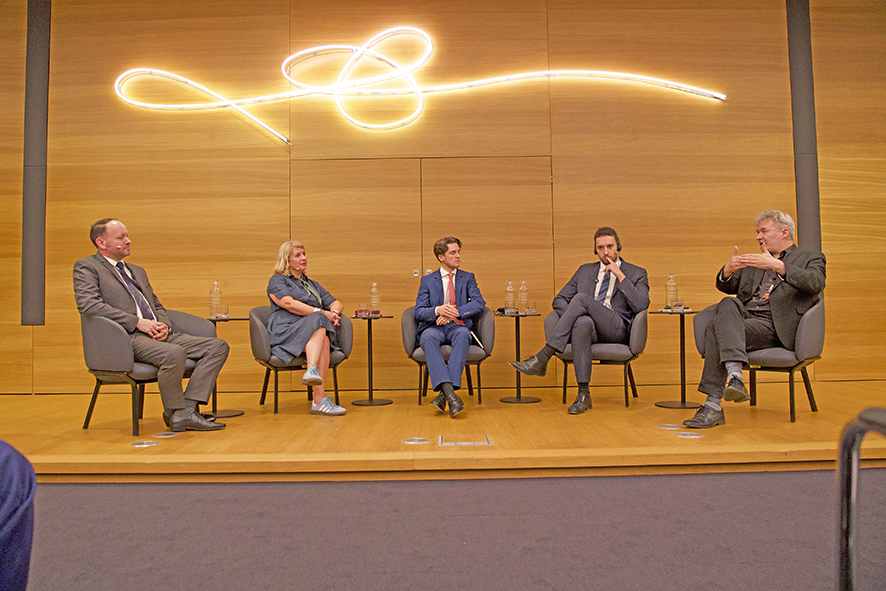
A high-level panel discussed the political situation in Serbia: From left: Markus Kaiser, Friedrich Naumann Foundation; Armina Galijaš, Assistant Professor in Graz, currently Zurich; Andreas Grassl, moderator, journalist; Pavle Grbović, member of the Serbian Parliament (from the liberal opposition party Pokret slobodnih građana, PSG, in English: Movement of Free Citizens) and Michael Martens, Southeast Europe correspondent for the Frankfurter Allgemeine Zeitung (FAZ).
Even if the long history between Serbia and Austria has been complex in many areas, the integration of the country into the EU is a “matter close to her heart”.
For Austria itself, EU enlargement has been a success story so far. Exports to these countries have tripled, creating jobs and prosperity in Austria. Austrian companies are also among the most important investors in the Western Balkan countries.
Legal certainty and the rule of law
Companies need legal certainty for their investments. Therefore, reforms in the rule of law are also crucial. The countries themselves benefit from this in turn, which increases their growth opportunities. Serbia must implement reforms particularly in the areas of the rule of law, democracy, and freedom of expression.
For the Austrian Foreign Minister, it is also about overcoming nationalism and the question of security. “We must export stability, otherwise we import instability,” she said, underlining the importance of EU accession for the stability of a country and the region. A principle that also applies to Ukraine.
In Europe, there is clearly a longing for peace, for a Europe without border controls. Bilateral issues, according to Meinl-Reisinger, should not lead to permanent blockades in enlargement policy.
Systemic change in politics is necessary
NEOS club chairman Yannick Shetty emphasised the necessity of a systemic change in Serbian politics with the phrase: “Those who do not protect the rule of law must not hope for tolerance.”
The President of the Paneuropa Movement Austria, Rainhard Kloucek, had already emphasised the principle “Paneuropa is all of Europe” in his opening speech, making it clear that every European country has the right to participate in European integration.
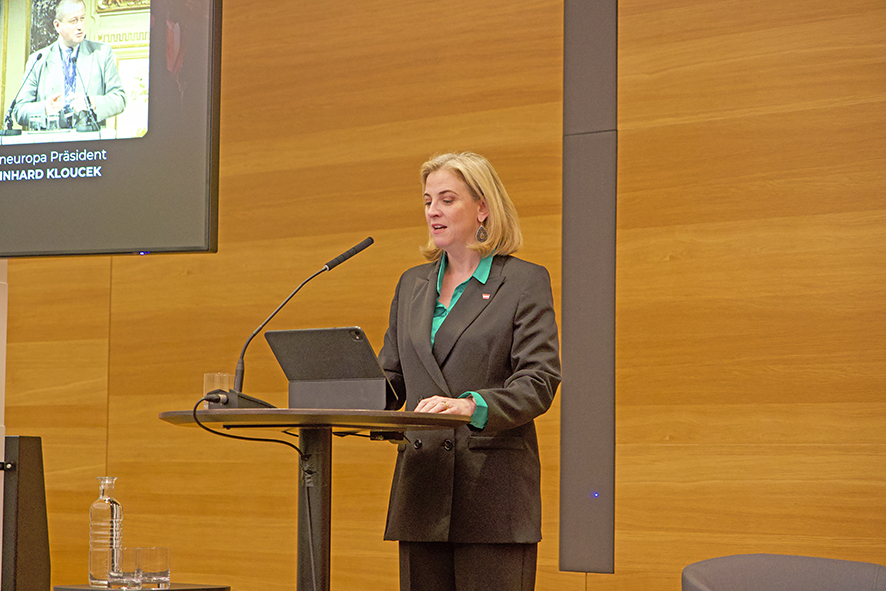
A clear commitment to the admission of the countries of the so-called Western Balkans into the European Union came from Foreign Minister Beate Meinl-Reisinger. “Enlargement is the most important geostrategic instrument the European Union has,” she stated, in order to point to a necessary “strategic capability in foreign and security policy”. Austria in particular has profited massively from EU enlargement to date.
Moderated by the blogger Andreas Grassl, known primarily for his TikTok and YouTube contributions, the situation in Serbia was discussed by university professor Armina Galijaš (Graz, currently Zurich), who originally comes from Bosnia and Herzegovina, the Southeast Europe correspondent for the Frankfurter Allgemeine Zeitung (FAZ) Michael Martens, Markus Kaiser from the Friedrich Naumann Foundation, and the Serbian opposition politician Pavle Grbović from the party Pokret slobodnih građana (PSG, in English: Movement of Free Citizens). The President’s policies, the assessment of the protest movement, and the path to the EU were at the centre of the discussion.
Another 100 years for negotiations
Using a numerical example from Montenegro, which can be applied similarly to Serbia, Michael Martens underlined the very sluggish EU accession process: if negotiations and the closing of chapters were to continue at the current pace, the negotiation process would be completed in the year 2127. The EU currently offers no perspective for the people, and Serbia itself has also made significant backward steps in its political development.
People have lost trust
Pavle Grbović expressed similar scepticism. Only a third of Serbians support the path to the EU. According to his interpretation, the people of his homeland have lost trust that the path will lead to an end. However, it is also clear to him that no one in Serbia wants the path to China. “Those who support the path to the EU,” said the opposition politician, “also need the support of the EU.”
In contrast to the 2013/2014 protest movement in Ukraine (Revolution of Dignity), no European flags are to be seen at the protests in Serbia. A fact that university professor Armina Galijaš by no means wants to interpret as negative. For her, this does not necessarily mean a rejection of the EU. In any case, it deprives Aleksandar Vučić of the opportunity to claim that this is a so-called colour revolution—a protest movement controlled from the outside.
Markus Kaiser described the situation in Serbia and the perception of reality with an example of the violent actions of Serbian gangs in Kosovo when a Kosovar policeman was killed. While everyone who consumed foreign media was already informed about the fighting, nothing appeared in the Serbian news. It was not until the evening news that Vučić explained that Serbs had been killed. The next day, the magazines were full of stories about the killed irregulars, including human-interest stories about their families. One could no longer speak of fake news here, Kaiser emphasised, but must describe it as a “fake reality”.
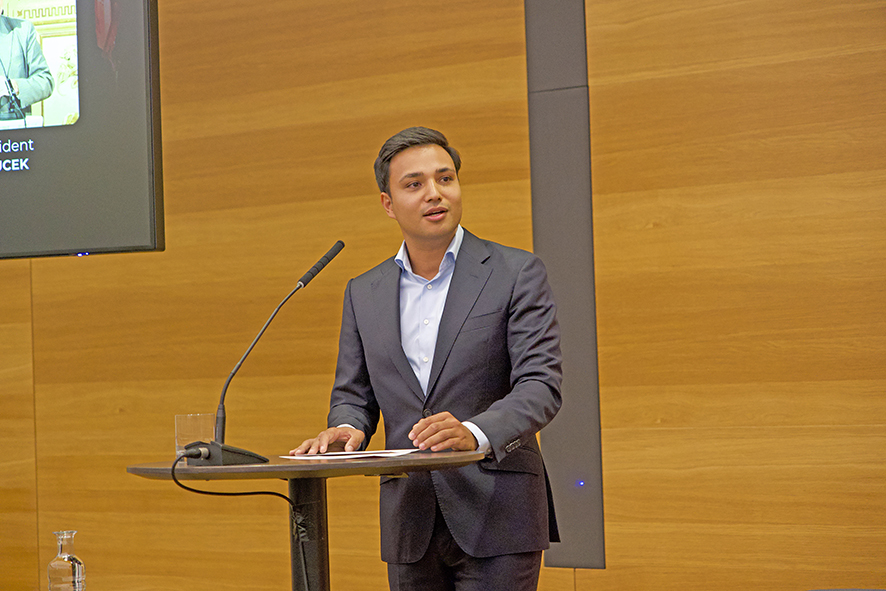
NEOS club chairman Yannick Shetty emphasised in his welcoming speech the necessity of a systemic change in Serbian politics with the phrase: “Those who do not protect the rule of law must not hope for tolerance.”
Exactly how the protest movement is to be assessed could not be finally clarified. Michael Martens referred to a rally on 28 June this year, Vidovdan (St Vitus Day), in which the speeches were strongly nationalistic. However, one could not say clearly whether it was a purely nationalistic movement based on that alone.
It also could not be said that the opposition would emerge as the winner in new elections, as Pavle Grbović and his party are demanding. The protest movement wants to run with its own list. However, no one yet knows who the people are who would stand on this list.
What is the government’s power base?
Characteristic of Serbia’s political system is President Vučić’s power base. Armina Galijaš describes it as a clientelist system. Vučić’s party places partisans in important positions in the state, from which they live well. In a population of about seven million, Vučić’s party has 700,000 to 800,000 members. Anyone who needs something goes to a party member; corresponding voting behaviour is then the quid pro quo. In addition, as Michael Martens reports, people are brought in from the Republika Srpska in Bosnia and Herzegovina for local elections, for example, who then vote using false addresses.
Pavle Grbović reported on party colleagues who were placed under house arrest under the pretext of insurrection. Here, too, clear signals are needed from the EU. His message was clear: Serbia needs political change.
Change must occur through elections
Asked whether this could also come about through a violent overthrow, he emphasised that he and his party advocate for a democratic change. The reforms would also benefit the citizens. They should have a choice again. That would also be the best price for the Serbs.
He described Vučić’s dalliance with Serbia as a danger to the country.
© Photos: Laurin Sausgruber



