The Luhansk Coup
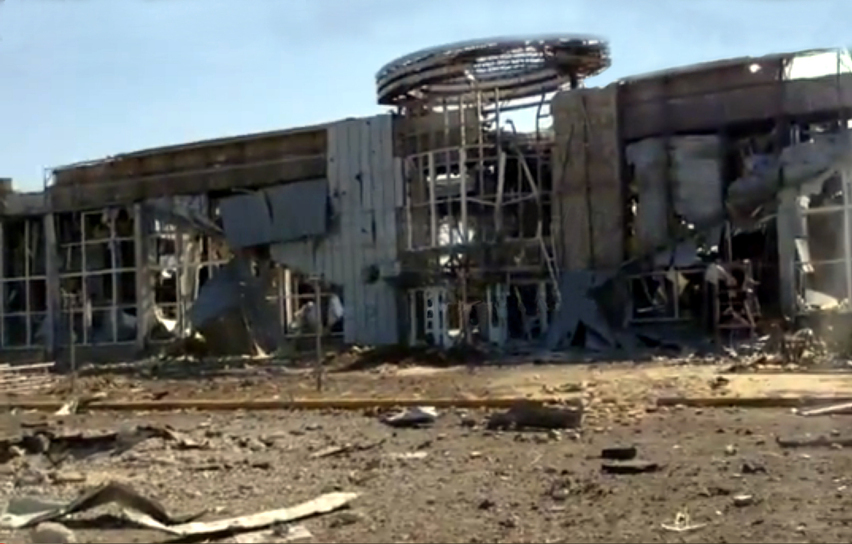
Recently, the months-long tensions within the artificially created ‘people’s republics’ in the east culminated. Already last year, there had been tensions in Luhansk when Oleg Anashchenko, the ‘defence minister’, was killed by an explosive device in his car. Now, it was not just an assassination attempt, but military actions between the separatists. A report by Elias Kindl, member of the Presidium of Paneuropa Youth Austria.
On 21 November, in the late afternoon, a convoy of military vehicles was observed moving from Donetsk to Luhansk. By the early morning of 22 November, uniformed soldiers without insignia were already seen occupying key points in the city of Luhansk. Currently, all signs indicate that these are troops of the ‘interior minister’ Igor Kornet, who was dismissed on Monday, occupying the city centre. Igor Kornet hails from Luhansk and studied in the GDR. Since the collapse of the USSR, Kornet has been a Ukrainian citizen and served in the police until he became ‘interior minister’. Kornet is thus a ‘local hero’, just like his opponent Igor Plotnitsky, the head of the Luhansk People’s Republic. Plotnitsky also served as a soldier in the USSR and then became a businessman until 2014. After that, he held various positions in the Luhansk People’s Republic.
The animosity between the two has been more or less open since last year. Plotnitsky narrowly survived a car bomb last year. He shared this fate with separatist leader Pavel Dryomov, who was killed in an attack. In May 2015, rebel commander Aleksey Mozgovoy was also killed in an attack on his car. Since the attempted assassination of Plotnitsky, the relationship between the leader of the ‘people’s republic’ and its ‘interior minister’ has been more than strained. Kornet is very influential in Luhansk and can be sure of the support of the security services.
Parallel to the troop movements, both adversaries released videos and statements. Kornet claims that his dismissal is merely a rumour and that his troops have arrested Ukrainian saboteurs. This contradicts Plotnitsky, who stated that Kornet no longer holds office. No one knows who is right in this pariah state. According to recent developments, 10 people close to Plotnitsky have been arrested, while leaflets are being distributed in Luhansk mobilising against the ‘fascist’ Donetsk Republic and Russian forces to defend Plotnitsky.
Russian Influence
What is clear, however, is that Russia plays a central role in this conflict. After the annexation of Crimea in March 2014, separatists in Donbas embroiled the Ukrainian army in a bloody conflict. Without Russian support, neither ‘republic’ could ever have broken away from Ukraine. According to the Russian newspaper «RBK», citing Kremlin sources, the Kremlin supports Kornet in the power struggle in Luhansk. Moscow considers him more predictable than the sometimes erratic Plotnitsky. Officially, the Kremlin remains reserved. Yet, there appear to be troop movements on the borders, with Russian military forces heading towards Luhansk.
The Author: Elias Kindl is a board member of Paneuropa Youth Austria. The political scientist specialises particularly in Ukraine.
(Image: The ruins of Luhansk International Airport. By newsanna – https://www.youtube.com/watch?v=0k0TDh3tOf4 (Creative Commons Attribution), CC BY 3.0, https://commons.wikimedia.org/w/index.php?curid=35150826 )



