The significance that Europe deserves
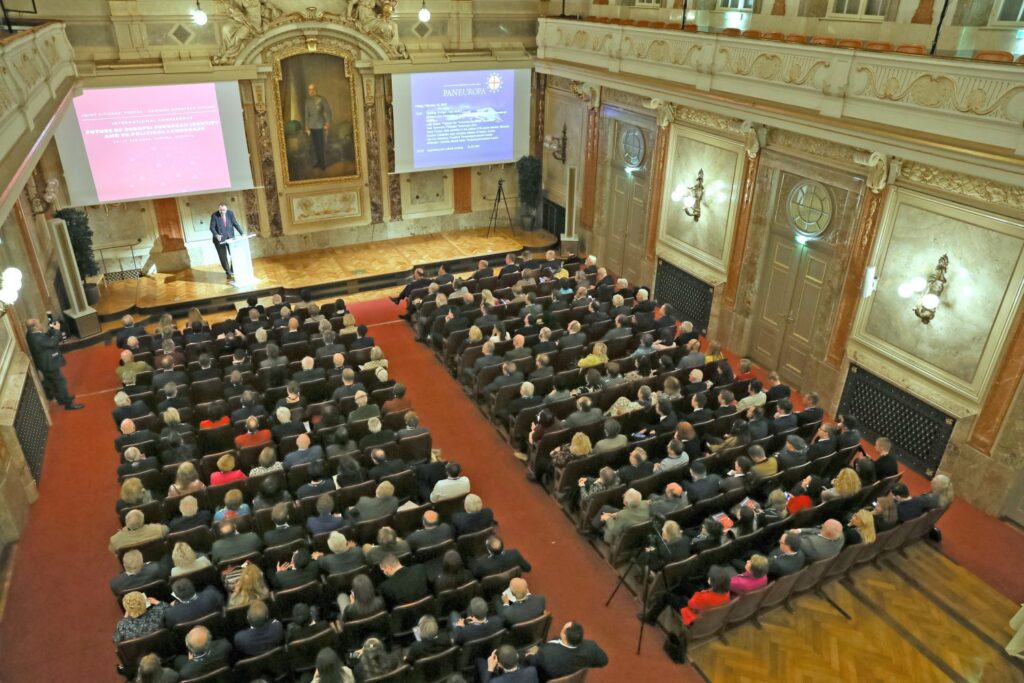
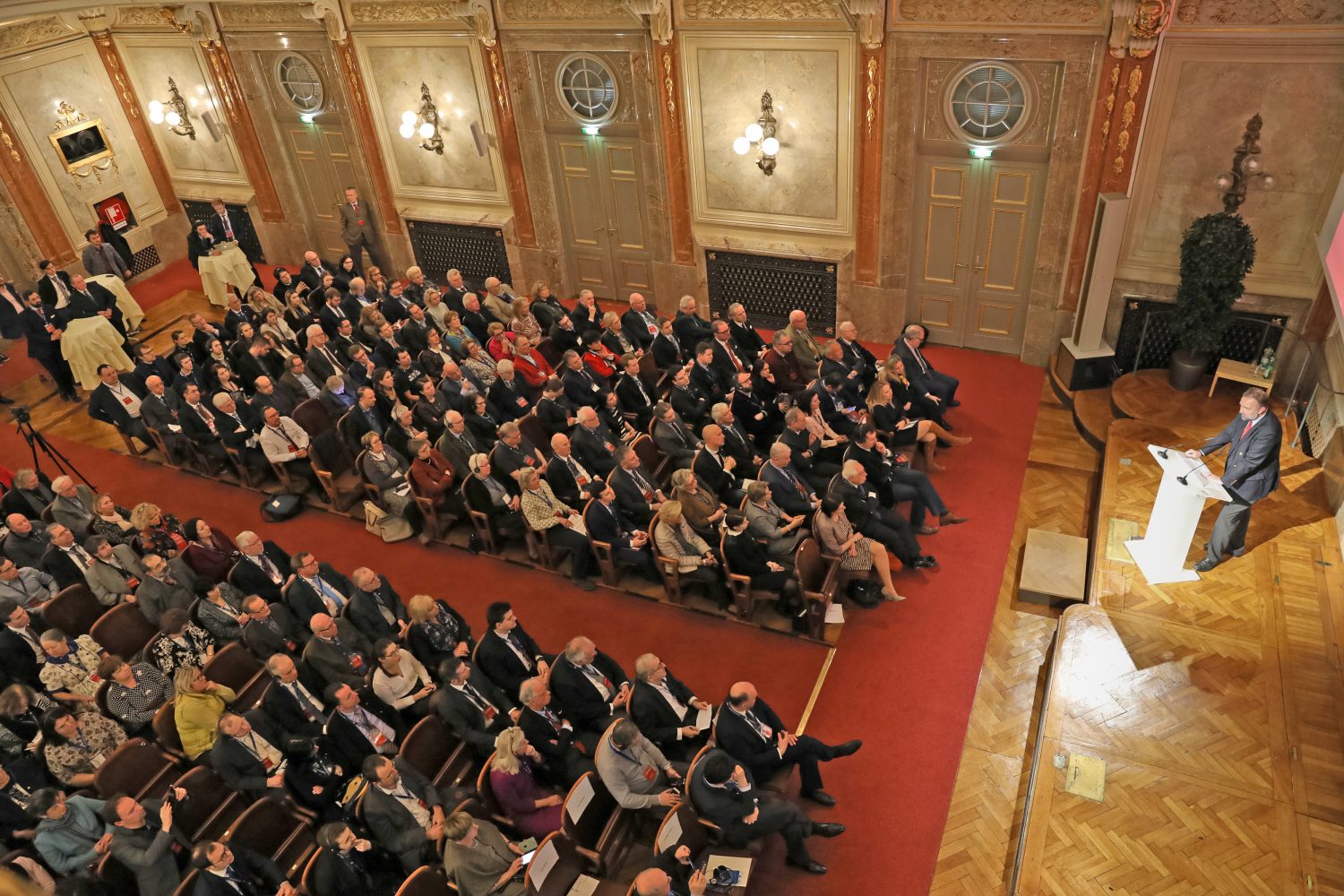
In his speech at the Paneuropa Conference in Vienna on 16 February 2019, Karl von Habsburg advocates for a strengthening of the EU’s foreign and security policy, for rapid EU enlargement, and against the paternalistic welfare state.
Dear State Secretary, may I first address a few words to you, because as a former Salzburg MP it naturally gives me great pleasure to see someone standing for office with such European enthusiasm, with such passion for our common continent, who already brings all the European experience of the last six months during the Council Presidency into this enthusiasm, and is still enthusiastic. That is not something to be taken for granted. I would first like to tell you that I am particularly grateful that you are here with us this evening, and that I am especially pleased that you are standing for Salzburg. I am also convinced that you will then make yourself available for the Committee on Legal Affairs. I was also a member of the Committee on Legal Affairs in the European Parliament, and at that time I was still able to take part in very interesting and amusing third readings, which you are spared today. They always dragged on for days and nights; we were practically locked in until an appropriate regulation was reached. But I know how fascinating the work is, and I am truly delighted that you are taking up this activity and are now carrying this torch forward for Salzburg, continuing to drive the European spirit forward with great vigour. Thank you very much for being here.
… There follow a few words addressed to Alain Terrenoire in French, and to Laris Gaiser in English, which are not printed here. …
Ladies and gentlemen! I would like to pick up on the words of Laris Gaiser, because he said it is important for him to go back to the roots. I believe that if we go back to the roots of Europe, it is something that will describe our image of Europe as a whole. There are very few people left who witnessed the founding of this European Community, who witnessed what the actual roots were after two European civil wars, after two great world wars. This European community, this community of European states, is not first and foremost an economic community, a community that only serves prosperity. It is a community that is naturally built on an idea of peace. It is a community that grew out of conflict, whose fundamental idea was to overcome the hereditary enmity in Europe between France and Germany, to create treaties to Europeanise those things that were of the greatest importance to both states—energy, steel, and everything related to them—and thus prevent a war in the future. This was already done with the thought of exporting this successful concept—for it was a successful concept—to the whole of Europe, in order to actually create this united Europe.
Area of freedom, security and justice
It is always important to remember that the roots of Europe were the roots of the concept of security. Of course, the founding fathers of the European Community had a political community and also an economic community in mind. But they knew exactly that they could not start with the political community or the security community because, of course, the situation of what was then the largest country, Germany, directly after the Second World War was not one from which a political community could have been created. So they said to themselves: Good, we will start with the economic elements, and if the economy cooperates accordingly, then politics and security will follow accordingly. If we look at the institutions today, we see that they were right. The institutions followed, the institutions work.
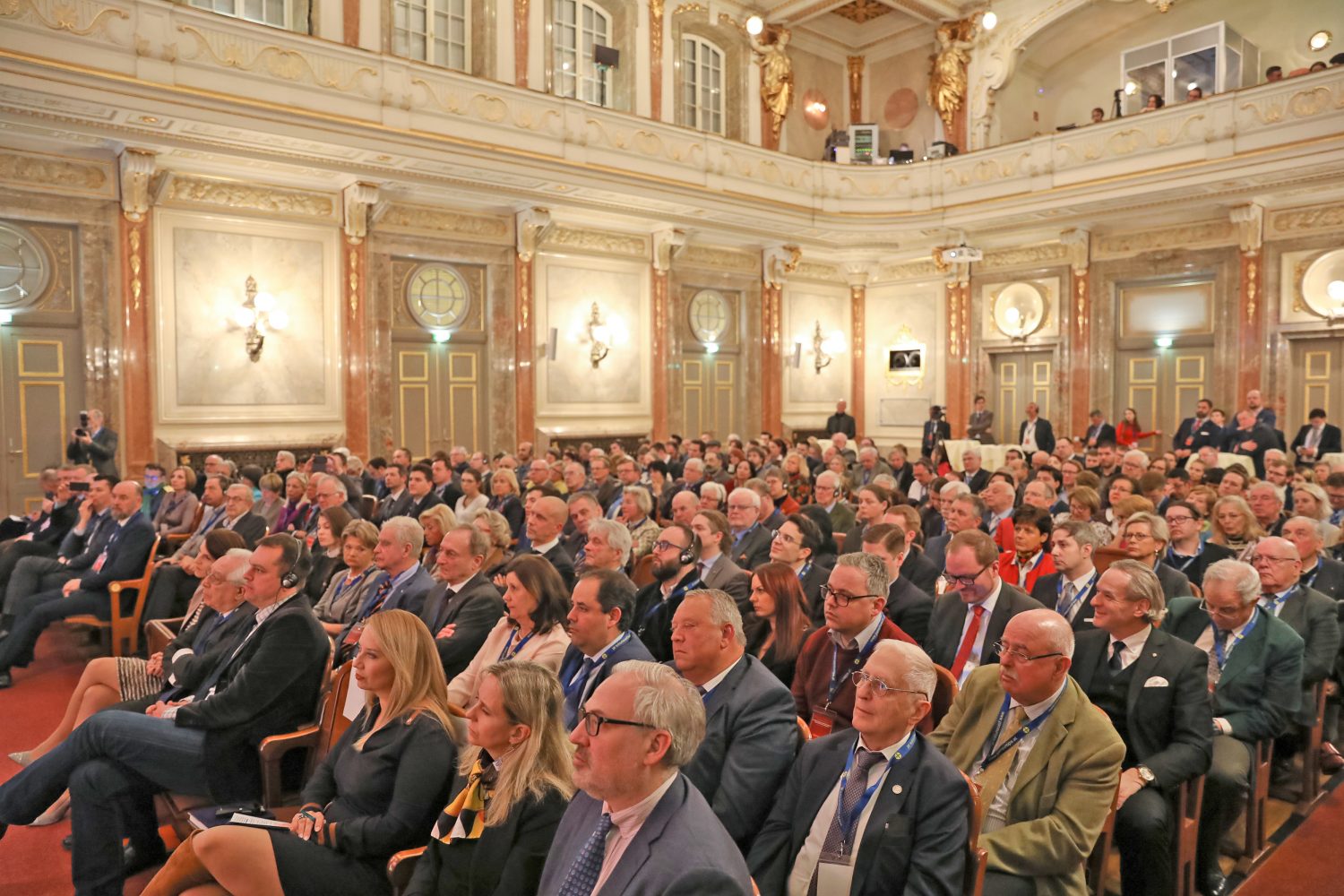
At the beginning of the idea of European integration stood the intention to create an area of freedom, security and justice. This is the basis for Europe. European security policy stood as the foundation at the beginning of European integration. Security policy is, of course, a comprehensive term that is not only to be seen in military terms. It also includes, for example, foreign policy. Every European country today has a right to participate in European integration and thus also to seek accession to the European Union. For this, certain criteria must be met, as we know. I do not wish to equate Europe with the European Union. Undoubtedly, Europe is larger than today’s European Union. No reasonable person would deny that Ukraine, Kosovo or Macedonia are European countries, even if they do not yet belong to the European Union today.
Paneuropa is the whole of Europe
But if we speak of a European Union, then this Union should actually be European. It should therefore encompass the whole of Europe. And for this, it is necessary to open up a certain perspective of accession to all European countries that do not yet belong to the European Union today. There are many Ukrainian friends with us today, including you, Mr Ambassador. The Ukrainians, for example, made one thing very clear with their Revolution of Dignity: namely, that they have chosen the European option. Viktor Yanukovych (former President of Ukraine, note) announced and promised the European path, but then took the path towards Russia. The Ukrainians rose up against this. The European option is a motivation for the Ukrainians to carry out reforms. And they know very well that they are not making these reforms for the European Union, but for themselves. Ukraine is currently in the Neighbourhood Policy, which, however, excludes accession to the European Union. It defines a neighbourhood. Therefore, it must naturally be our goal to improve this Neighbourhood Policy towards Ukraine into a concrete enlargement policy within this European mindset.
I believe it is necessary to see this in context. Previous speakers have already mentioned several times today that the last two or three days have been very full of specific political events. Whether it was a botched vote in London, or the calling of new elections in Spain this morning, but something that perhaps not too many people saw was the meeting that took place today at noon between Mr Lukashenko (President of Belarus, note) and Mr Putin, and the statements made there. Lukashenko practically threw himself on the floor before Putin and said that nothing stands in the way of the unification of our countries and we can bring about unification at any time if this is desired by Russia. We should say relatively clearly that this in all probability does not correspond to the real opinion of the citizens of Belarus. This region naturally acquires an unstable character because a policy is introduced here that is undoubtedly not made for the citizens. Here, Lukashenko was probably just as mistaken as Yanukovych when he promised the path to Europe and took the path to Russia. One thing must be credited to Mr Yanukovych. In his relatively short time as President, he was so busy personally stealing Ukrainian state property—which he later took with him to Russia in many helicopters when he had to flee the country—that he could not build up much in the way of political perspectives in the meantime.
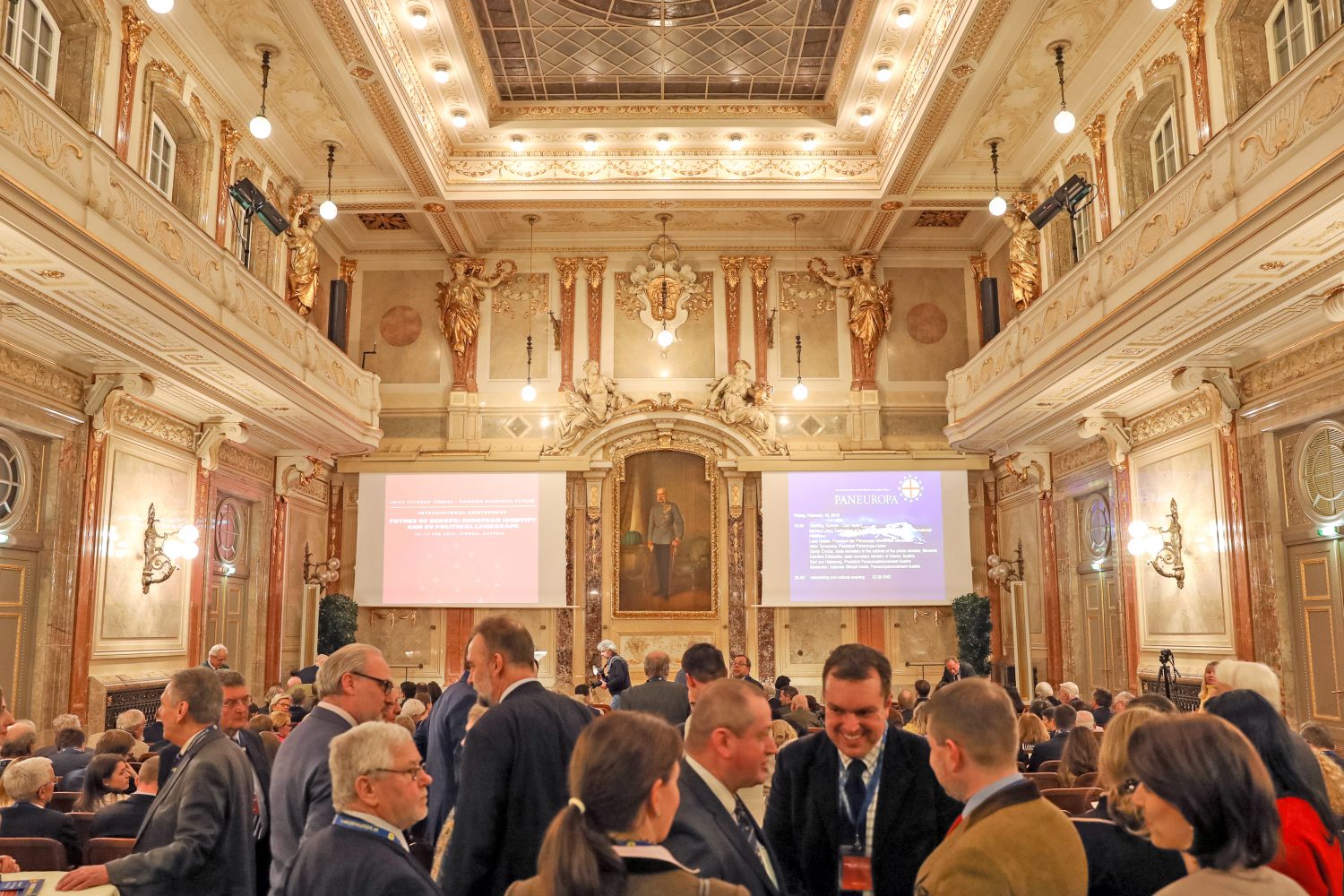
From an Austrian perspective, it is easy for us to talk about these countries. One must always imagine the geographical dimensions. If I go to the western border of Austria today, to Liechtenstein, and go the same distance to the east as I go from here in Vienna to Liechtenstein, then I am in Ukraine. And if I go the same distance that leads west to Liechtenstein to the south-east, then I am right in the middle of an area of states that, unfortunately, are still a kind of white spot on a map. Countries that are surrounded by the European Union and that require our special attention. I am thinking here of the countries of Albania, Bosnia-Herzegovina, Kosovo, Macedonia, Montenegro and Serbia. In 2003, these countries were promised accession in Thessaloniki, only for the issue to be put on the back burner. This, however, created a vacuum into which other powers have penetrated. You all know the stories of certain developments. I am thinking here above all of areas in Bosnia-Herzegovina where mosques suddenly appeared everywhere that undoubtedly have nothing to do with the correct Islamic history of this country, but were instead Wahhabi-funded mosques, whereby the places where these mosques stood were often bought up at the same time. This is exactly where one sees how such forces can push into such a vacuum. Perhaps you also heard how about a year ago the Prime Minister of Kosovo, Ramush Haradinaj, said that under Skanderbeg the Albanians had already defeated the Turks once. That was, of course, a rhetorical reaction to the very direct Turkish influence on schools in his country.
And you may also remember that not even three years ago, during the elections in Montenegro, there was an assassination attempt which we now know was carried out to murder the Prime Minister, to move Montenegro away from its European line and bring it more onto a line in the interest of Russia. Today, of course, we also know who the respective assassins were. They were all officers of the Russian military intelligence service, the GRU. The leader at the time was the former Russian military attaché at the embassy in Warsaw. He orchestrated the whole thing with various henchmen.
All three of these examples, and there would of course be many more, have direct effects on the security situation of Austria, but also of the European Union. Politics is a dynamic process, and the world is changing. If Europe does not act, then other powers simply push into this void.
Costs of enlargement versus costs of instability
The objection is often raised here that enlargement is too expensive; it costs something. This is, however, an immensely one-dimensional view that ignores essential aspects. Even if one only considers the economic side and the costs, one must consider what the costs of a zone of instability—think of the three examples mentioned—would actually be. The higher the democratic and rule-of-law standards are, the better it is for Europe, the more attractive it becomes to invest in a region and thus create prosperity. The politicians of the countries of South-Eastern Europe also know that they are not making the reforms for the EU, but for their own countries.
But I would also like to briefly touch upon the term Central Europe and fill this term with some life. The signs of this Central European cultural area, which is a historically grown cultural area, are truly visible to anyone who wants to see them. Central Europe is a key to the separation of Europe into East and West that still exists in many minds as a result of the former Iron Curtain. Central Europe is not a concept of the nation state; it cannot be defined via nation states either, but is based on regions; it is based on a concept that was formerly also referred to as the idea of the Reich. This has nothing to do with an empire, but actually stands as a term for a supranational order, under the principle of subsidiarity.
I believe at this point it is also important that we remember that this year the 30th anniversary of the Paneuropean Picnic is being celebrated. This Paneuropean Picnic was the first time that a group of citizens from East Germany, from the GDR, could come from Hungary to Austria and flee to freedom for the first time through an opened Iron Curtain. There will certainly be some celebrations for this, and I believe it is important that we also say here that this Paneuropean Picnic embodies a whole series of important messages—it embodied them then, but also embodies them today. I believe one of the most important messages is one of the slogans of Paneuropa, namely “Paneuropa is the whole of Europe”. This means that the countries beyond an artificial curtain, if they are European, also belong to it. We only need to look at the nearest borders to the east, and we see what that means. Europe is larger.
Another message of this Paneuropa Picnic was, of course: Europe instead of nationalism. We had many classically embodied nation states that could only think in this dimension, but it took a European spirit. It was also repeatedly quoted in various newspapers at the time how beautiful the Paneuropean Picnic actually was, and how historically astonishing it was that Austria-Hungary helped the oppressed Germans to freedom.
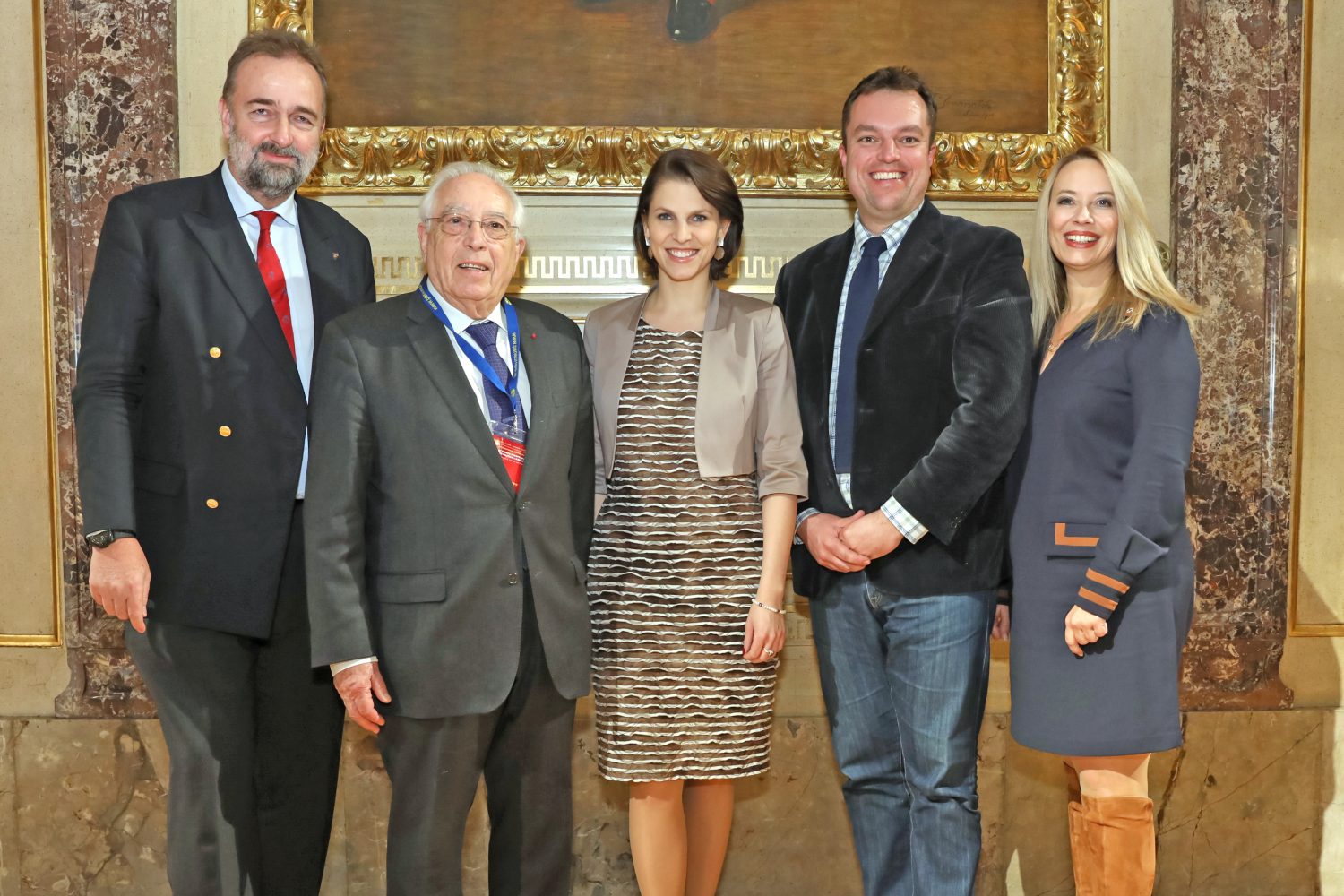
Speakers at the Paneuropa event on 16 February were (from left): Karl von Habsburg; Alain Terrenoire, President of the International Paneuropean Union; Karoline Edtstadler, State Secretary in the Ministry of the Interior; Laris Gaiser, President of the Paneuropa Movement Slovenia; Gabriela Stimpfl-Abele, Chairwoman of the Board of Trustees of the Paneuropa Movement Austria, hosted the event.
But it also clearly carries within it the message that Europe is a community of culture and destiny, and as such belongs together and must work together. It clearly carries the message that there can be no place for totalitarianism in Europe, that we clearly stand for freedom, that we stand against totalitarianism, that we stand for the rule of law and that we stand against political arbitrariness. The picnic, we must not forget, took place at a border that we long considered practically impenetrable, but which for centuries was no border at all because this area is Central Europe. The Iron Curtain had cut through Central Europe. It is all the more important that we mention the concept of Central Europe today because we need it for Europe. It is a grown concept, it is a European concept, and cooperation for this area has had importance in the past and has this same importance in the future.
Rule of law and freedom
I also believe that it is necessary to keep reminding people that Europe is a success story. If one looks at the roots of Europe, one will find a foundation that essentially rests on the pillars of the rule of law and freedom. Added to this are further elements, such as the importance of the family as the nucleus of society, which was protected by the state but not regulated. On this foundation rest cornerstones such as private property, personal liability for failure but also for success, and thus private entrepreneurship, which must rely on innovation to be successful. A combination of entrepreneurial spirit, innovative power, personal responsibility and the rule of law are the foundation for prosperity.
It is no coincidence that these principles could develop in a culture that was quite clearly shaped by Christianity. A look at the political and economic map shows that these cornerstones of the rule of law and freedom were one of the prerequisites for the rise of other countries as well. The USA has a cultural background that has its roots in Europe. And various countries in Asia also gradually adopted many elements of these cultural prerequisites after the Second World War. In other regions, however, the rule of law and legal certainty are lacking, and thus the protection of private property falls away completely, and those are then the regions of the world in which there are the most problems.
The emphasis on the law is so important because in Europe, in particular, calls for a primacy of politics are repeatedly heard. Politics must regulate everything. The more it does so, however, the deeper the conflict with the law becomes, because it is no longer rule-of-law principles that govern, but power relations. In the long term, this conflict works to the detriment of Europe. Politics simply cannot regulate everything.
The Austrian Nobel Prize winner in economics Friedrich August von Hayek coined the distinction between inclusive and exclusive states in his studies. The historical empires from Alexander the Great to the Habsburg Monarchy were examples of an inclusive state. They tend to be more tolerant, allow more freedom, because they do not build on exclusion. Exclusive states, on the other hand, build on clearly defined groups. The idea of the nation state is a classic example of this. here, the tribal culture, which did not yet know a state, is raised to the level of a state. The welfare state, a political concept to make citizens dependent on the state—and with their own money at that—is a consequence of this exclusive state. The biggest problem with the perception of the European Union is that it is seen through the eyes of the exclusive state, both in the parties and by many citizens. This concept is, however, doomed to failure. European integration can only work if we overcome the idea of the nation state and think in terms of an inclusive state or a supranational order of the idea of the Reich.
Relapse into the nation state is no solution
A dismantling of the EU to purely state cooperation, or even a relapse into a Europe of nation states, is not a sensible alternative given the current situation. I must say this in view of an increasing number of people who, with a shrug of the shoulders, think it would not be such a shame if the EU were to fall apart again. What these shruggers do not consider is what comes after. It is an illusion to believe that we could then live in nation states again as in the 1960s. The world has changed tremendously since then. Europe could then rather be compared with Germany at the time of Napoleon. Self-satisfied petty-statehood. Until Bismarck came and created a German Reich with blood and iron. But that was not really to the advantage of Germany and Europe either; the consequences are well known.
Since we are in Austria and in Vienna, I am thinking of a situation that existed back then with Austrian Holstein. At the time of the German Confederation, we were also represented right up in the north once, but only for a relatively short period, until it was seen that the Austrian concept was too successful. Bismarck then set troops in motion to chase the Austrians back to the south. The Germans brought the military police, the Austrians brought the military music. The Germans brought food rationing, the Austrians brought the ‘Kipferl’ pastries. That is how it is still remembered in the area today. I was allowed to take part in a music performance there on an island off Holstein. Dances were performed for us. A music expert I spoke to then asked if the dances seemed familiar to me. For, as he told me, these dances go back to a Styrian music group that was brought by the Austrians during the short period of the occupation of Holstein. The Styrians taught the people this music and these dances back then. So you see, there are historical parallels again and again.
In today’s world, however, it would not be a German Chancellor who would take on the role of Bismarck, but much more likely a Russian President by the name of Vladimir Putin. And apart from European vassal states, among which Germany might still represent a small power, not much would be left of Europe. One should be clear about this, even if one repeatedly and quite rightly criticises the current state of European politics. Turning back history is not possible.
What the European Parliament would need is, of course, a second chamber. It is logical that the European Union has an institution that represents the member states, similar to our Federal Council. Ideally, however, a second chamber acts independently of daily politics and is thus an instrument against ad hoc legislation.
Today we live in a European Union that naturally has its faults and its weaknesses. But for all these faults and weaknesses, it is exemplary in many aspects. It must, however, be improved again and again, such as with the reform of the Council and possibly a second chamber. To hold with Lampedusa, who says again and again in “Il Gattopardo”, “things must change so that they stay as they are.”
The sovereignty of the citizens
It must be clear to us that we need the united Europe to master challenges such as the security situation or the migration crisis. Europe must be given competence where this competence, such as in foreign and security policy, can develop sovereignty. At the same time, however, the sovereignty of the citizens, their freedom and responsibility to be able to develop again, must be strengthened. The paternalistic welfare state is not a concept for the future. If we concentrate on making the European Union an inclusive subsidiary state for all Europeans, then we can achieve that significance on the world political stage that Europe truly deserves.
The article also appeared on the page of Karl von Habsburg.
Featured images: Katharina Schiffl.



