Ukraine Belongs to Europe
A European perspective for Ukraine is in the interest of Europe and the European Union. A commentary by Karl von Habsburg.
Ukraine has a new president: Volodymyr Zelensky. The disappointment with his predecessor Petro Poroshenko was evidently so great that Ukrainians decided by an overwhelming majority to give a new man a chance. His greatest foreign policy challenge will likely be to restore Ukraine’s territorial integrity. A task at which his predecessor failed. However, this political issue depends decisively on the policies of Moscow, but also of other powers.
The Russian president reacted very quickly after the election results were announced by offering Russian citizenship to citizens in the Russian-occupied territories of eastern Ukraine. Shortly afterwards, he expanded the offer, offering Russian citizenship to all Ukrainians.
In his reaction, Volodymyr Zelensky for his part made an offer to Russian citizens to obtain Ukrainian citizenship. This could be interpreted as a sporting competition between systems, which brings with it some very interesting aspects: states no longer as territorial units, but citizens deciding, regardless of where they live, which state and thus which political system they want to belong to. Ukraine would probably have the better system to offer here.
Creating Facts Through Force
The catch in this specific case is rather that, so far, there are no signs whatsoever that Moscow might be interested in a fair competition between systems. The little green men in Crimea were certainly physically fit, but not because they wanted to engage in a fair contest; their goal was to create facts through force. And it is only from this perspective that Putin’s offer must be viewed. Moscow’s instrumentalisation of the Russian population in other countries speaks a very clear language.
At the beginning of February, the Presidium of the Paneuropa Movement Austria adopted a position paper on the 2019 European elections. One point in this paper includes the unmistakable demand for a clear European perspective for Ukraine (this also includes a clear stance towards all forces that threaten Ukraine’s independence through military aggression), which is the logical consequence of the slogan “Paneuropa is all of Europe” – namely, the opening of an EU accession perspective for Ukraine.
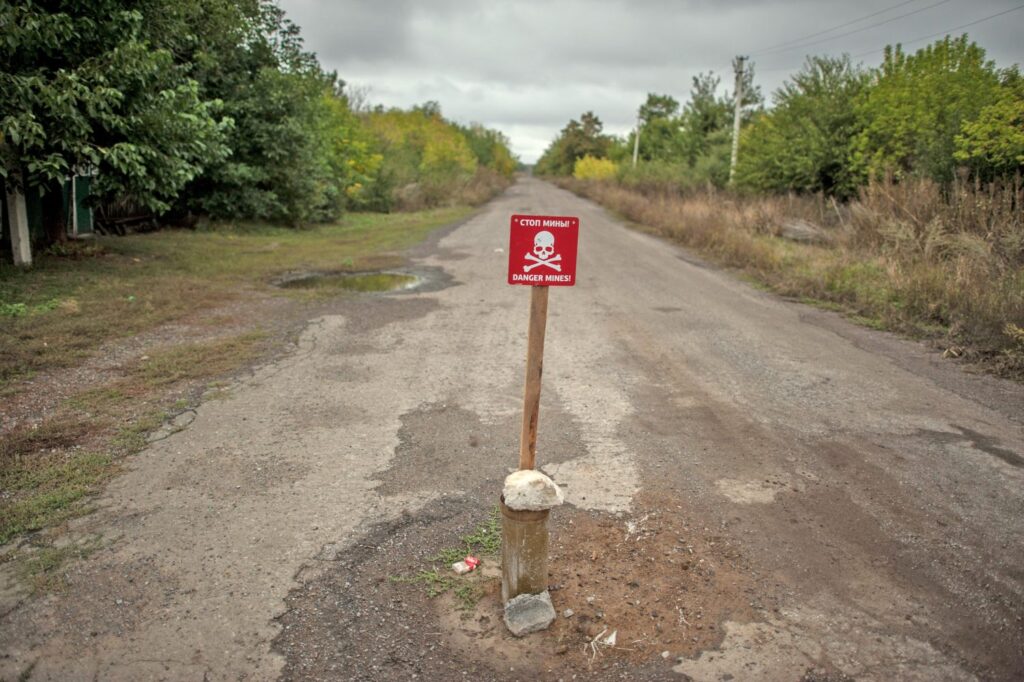
Already with their Revolution of Dignity in 2013/2014, which cost more than 100 people their lives, Ukrainians underlined their European positioning. The consequence of this commitment was a war of aggression by Moscow against Kyiv, as a result of which Crimea was first occupied and then annexed, and then part of eastern Ukraine – in a bloody war with significantly more than 10,000 dead – was also occupied.
EU Enlargement Was a Success
With the prospect of accession for the countries of the former Eastern Bloc after the end of the Iron Curtain, Europe – the European Union – opened up an option towards a market economy and the rule of law. Fifteen years ago, on 1 January 2004, a number of these countries were able to join the EU. At that time, Ukraine was far from this prospect of accession. All countries that joined the EU have benefited from this accession, even if there are still certain problems with the rule of law in individual countries today. One only has to think of the lax fight against corruption in Romania, governed by Socialists (Social Democrats).
Some political actors still see the territory of present-day Ukraine as a kind of “Intermediate Europe”. In the period between the two world wars of the last century, the concept of Intermediate Europe meant a buffer zone for this region between a strengthened Germany and Russia (then the USSR). The consequences of this concept are well known. To revive it today and to force Ukraine into a buffer zone with neutrality between a growing Europe and a newly strengthened Russia would be the worst thing one could do to Ukraine and Europe as a whole.
It is clearly and distinctly in the interest of a united Europe to offer the associated zone of freedom, security, and justice to Ukraine as well. The EU accession perspective for Ukraine is a logical consequence of European integration. Without Ukraine, Europe is not complete. Without Ukraine, this European zone of freedom, security, and justice is merely a torso.
Paneuropa Picnic Opened Enlargement Perspective
Thirty years ago, on 19 August 1989, the Paneuropa Picnic opened the chance for a truly united Europe. Fifteen years ago, on 1 May 2004, a very important step was taken in this unification with the accession of the former Eastern Bloc countries Slovenia, Hungary, the Czech Republic, Slovakia, Poland, Estonia, Latvia, and Lithuania. The EU accession perspective for Ukraine, as well as the six countries of Southeast Europe that do not yet belong to the EU – Albania, Bosnia-Herzegovina, Kosovo (a state still waiting for recognition by Ukraine, among others), Macedonia, Montenegro, and Serbia – is therefore only the logical consequence of genuine European unification.
This enlargement policy is currently not popular in many EU countries. But the fight against populism is probably one of the greatest challenges the European Union is currently struggling with. Who would want to give up this fight against populism?
Until the European elections on 26 May, I will, in my capacity as President of the Paneuropa Movement Austria, comment on individual points from the Paneuropa Movement’s position paper.
The article originally appeared on the website of Karl von Habsburg.
The featured photo shows a mine warning in the Russian-occupied territory in eastern Ukraine, c OSCE.



