What lessons do we draw from the ‘Corona’ crisis?
Corona has exposed political weaknesses and stirred up demands for increased surveillance. Caution is advised. By Rainhard Kloucek, Secretary-General of the Paneuropa Movement Austria.
No, there is no Bill Gates conspiracy claiming he unleashed Covid-19 upon the world to either implant microchips in everyone, or to bring people under control, or simply to profit from vaccines in whose research he has invested. Donations to pharmaceutical research are part of the sound business acumen of wealthy individuals who also own shares in pharmaceutical companies. There will always be diseases, and with them, we will always seek medicines.
No, there is also no conspiracy by Sebastian Kurz, Viktor Orban, Boris Johnson (and whoever else) who are faking a pandemic to establish a new dictatorship. There is probably no conspiracy from China either, claiming that the communist government there deliberately released the virus to seize world domination. Incidentally, such conspiracy theories can be mixed and supplemented at will. If all else fails, 5G is to blame for everything.
What certainly does exist, however, are clever people who will exploit the pandemic to their advantage with intuition, knowledge, and skill. Whether these are astute businesspeople investing in future companies, or shrewd politicians finding ways to improve their strategic positioning. These individuals would likely not be in their current positions if they lacked such talents. In China, the Communist Party rules. Communism is a totalitarian ideology aiming for world domination. It is therefore logical that China will use the pandemic to advance its ideological goals. The New Silk Road initiative should also be viewed from this perspective.
Totalitarian China as a Role Model
However, in the course of the Corona pandemic and its containment, we have witnessed several developments that give cause for concern and thus serve as an appeal to our critical conscience. From all we know, the Covid-19 virus first appeared in China. China reacted to the outbreak as totalitarian states react to such events. First, there is denial and cover-up. When the outbreak can no longer be denied, because in a globalised world the total isolation of a country is hardly possible, the typical reaction of totalitarian systems follows: shut down and close off. Of course, there is a risk that – since China is indeed a totalitarian system – we will never learn the full truth. However, this should not be an incentive to descend into conspiracy theories.
China’s Influence on the WHO
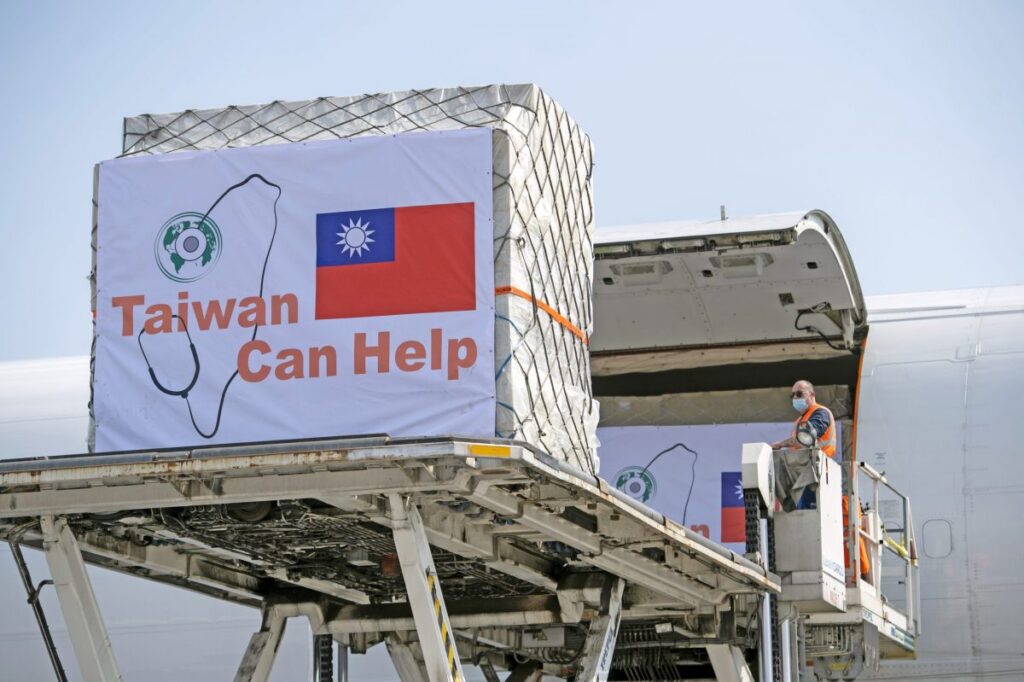
China has, of course, used its political power to influence organisations like the World Health Organisation (WHO). The WHO played along with China’s game for too long and certainly did not cover itself in glory. China ensured that Taiwan could not be a member of the WHO, although it would probably have been better if the WHO had listened to Taiwan and not China. Unfortunately, it is also a fact that EU states continue to support this Chinese policy.
When a dangerous epidemic emerges, the world usually looks to the great powers, and thus to the reaction of the USA. If we take a brief look back at the Ebola outbreak during President Obama’s tenure, we will notice a radical shift in US policy. During the Ebola outbreak a few years ago, the USA reacted immediately and took control of the situation. Specialists were quickly dispatched to Africa to implement all necessary measures to prevent the spread of the epidemic. Now, Ebola cannot be compared to Covid-19, but the US reaction under President Trump to the spread of Covid-19 is the opposite of the reaction to Ebola under President Obama.
The Weak US Response
Although the USA remains the world’s number one power, and President Trump claims this very position for his administration, his response to Corona was the opposite of a responsible statement from the leading world power: ‘this has nothing to do with us.’ The consequences of this reaction for the future of the world order cannot yet be clearly stated. The fact is that China acted with a clear and comprehensible strategy throughout the entire Corona crisis, while US policy was rather erratic and egoistic.
The reaction of the European countries was at least as egoistic. Already at the end of January/beginning of February, when the first isolated cases appeared in European countries, the EU Commission took the initiative to alert EU countries to the impending pandemic. The response from the nation-states was shockingly naive. ‘We have everything under control,’ was the answer from the capitals.
At that time, aid shipments were still being sent to China. Apparently, under the assumption that the totalitarian state would get everything under control.
The Egoism of Nation-States
Weeks later, when images from Lombardy, with reports of a collapse of the healthcare system, dominated the media, every EU country reacted according to the same pattern: every man for himself. Borders were closed. Indeed, they even tried to snatch necessary medical equipment from each other. Not since the outbreak of the Serbian wars of conquest after the collapse of Yugoslavia had the weakness of European national parochialism become so evident. At that time, however, the USA ultimately still demonstrated leadership.
China and Russia cleverly exploited Europe’s weakness (and the USA’s self-isolation). After EU member states had initially rejected the Commission’s initiatives and had even sent shipments of protective equipment to China, the situation in some EU countries gradually became critical. The EU’s crisis mechanism had not been activated. Essential protective equipment became scarce, and joint procurement only slowly gained momentum. Russia, from which there is only sparse information about the course of the pandemic, staged a spectacular aid delivery to Italy. Russian military trucks bearing the inscription ‘With Love from Russia to Italy’ drove through half the country. The images dominated European media for days.
Moscow Staged an Aid Delivery
Reports about the futility of Moscow’s action were then less widely disseminated. It quickly became clear that Russian aid was not real assistance, but merely a staged event. The aid supplies delivered were largely unsuitable for combating the pandemic. Moscow had sent a military NBC defence unit. The unit was designed for deployment on a battlefield where nuclear, biological, or chemical weapons were used. It was not equipped for containing the Covid-19 pandemic. But the images achieved their propaganda purpose.
China acted with similar cunning. After infection numbers in the pandemic’s country of origin declined, China sent protective equipment to Europe. This included Austria, with some of the equipment destined for South Tyrol. Chancellor Sebastian Kurz effusively thanked Beijing for its generosity on Twitter. The piquant detail of the delivery was that an inspection revealed the protective masks did not meet quality criteria, meaning they were not actually protective equipment at all.
Reports of gratitude to China circulated widely in all media; reports about the futility of the delivery were sparse.
At least as piquant is Europe’s subservience to China regarding previous deliveries to China. In contrast to deliveries from China, which were widely reported in the media with government information, deliveries to China were not really part of European governments’ public relations efforts. China had then requested that the operation not be widely publicised, so that China would not lose face. This example alone demonstrates China’s strategic approach and reveals the parochial mentality of European nation-states.
One-Sided Reporting
However, the fight against the pandemic also showed the extent of possible restrictions, and how differently measures were not only implemented but also commented upon. The approach in Hungary is well-known, with emergency legislation enabling the Prime Minister to govern (as far as pandemic control is concerned) by decree. There was talk of parliamentary exclusion, but hardly any reports that there were indeed sessions of the Hungarian parliament. In fact, there was no reporting in German-language media about Spain. There, the Prime Minister (a socialist) used the pandemic for centralisation and to govern without parliament. The head of government’s claims to omnipotence even led to a confrontation with the King, who refused to sign decrees. The outcry, however, failed to materialise.
The Political Game of Fear
Compared to other countries, Austria reacted rather moderately. Although government members allowed themselves to announce exit restrictions that were not even stipulated in the laws or ordinances, measures like those in Spain, where citizens were de facto not allowed to leave their homes, or in France, where only one family member was permitted to leave the apartment – limited to one hour – for shopping, did not occur. And for that, an exit permit had to be filled out, which was probably deliberately reminiscent of the exit permits during the German occupation in the Second World War. French President Macron often used the term ‘war’. A term that logically generates fear. This instigation of fear was also part of the Austrian federal government’s strategy.
Appeals to Base Instincts
A predominant majority of European citizens disciplined themselves to adhere to the guidelines, because it was clear that, firstly, they served to protect health from a hitherto unknown disease, and secondly, they were temporary. However, the entire course of the locked-down public life also revealed some effects that are concerning for democracy. Many a politician played on the base instincts of the ‘Blockwart’ mentality and Stasi-style snitching. Some citizens enthusiastically brought out this dark side of their personality and denounced others.
The Question of the Credit Card
Many businesses tried to get their customers to pay electronically only. So, if it’s that easy to abolish cash, then we shouldn’t be surprised if such plans continue to be considered. And finally, there were also discussions about apps, installed on smartphones, that were supposed to identify contacts with possible infected individuals.
Even if experts argue that the app developed by the Red Cross is not suitable for surveillance and merely warns the user if they have had contact with an infected person, the discussions surrounding it sometimes took concerning turns. While some politicians spoke of a mandatory installation of this app for all citizens (preferably across the entire EU), others only wanted voluntary use, albeit with restrictions for people who did not want to install the app. For non-installers, for example, freedom of travel could be restricted or access to certain places limited.
However, with such ideas, one is very close to entering the social credit system of totalitarian China. The installation of the app would enable state-mandated privileges. But totalitarian China should not be a role model for a democracy that can, of course, demand personal responsibility from its citizens.
Crisis Capacities Dismantled
What also became evident is the fact that European politics had completely lost sight of the precautionary principle. During the Cold War, all free countries had built up capacities for a crisis, mostly within the military.
These capacities have been completely dismantled over the past 30 years. In response, voices are now emerging that seek to combat the consequences of the pandemic with planned economy concepts.
For Europe, it will now be crucial not to fall into this socialist trap. Strategic stockpiling works better in a free market economy than in a socialist planned economy. The healthcare system too.
c Featured image: EU 2020



