Why is Moscow Opposed to a Common European Project?
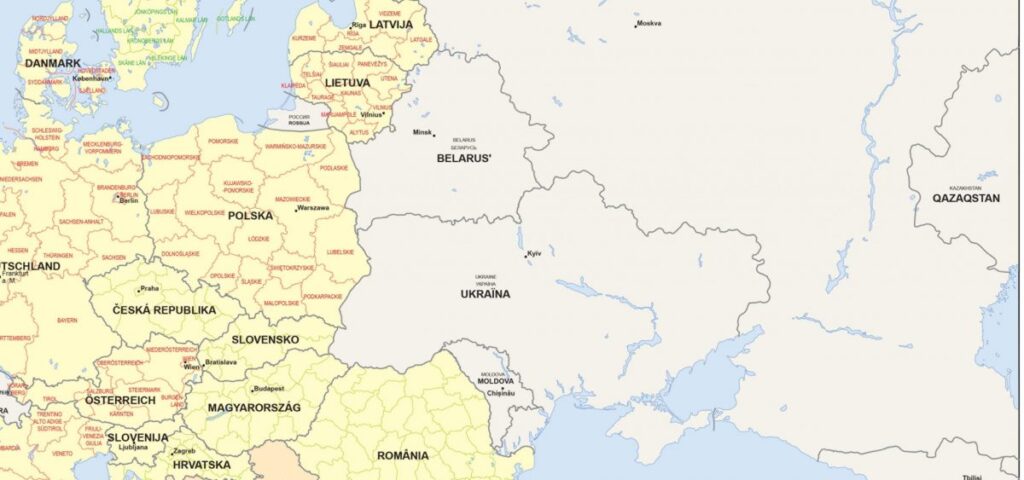
The presidential elections in Belarus must also be viewed through the lens of Russia’s geopolitical interests. An analysis by Wasyl Korotkyi.
Belarusian President Alexander Lukashenko is running for his sixth term in the presidential election on 9 August, but now from a significantly weakened position. His popularity ratings have declined due to the COVID-19 pandemic. However, his conflict with the Kremlin since last year has had a particular impact, following Lukashenko’s rejection of the deeper integration of the two countries imposed by the Russian president.
After the failure of the attempt to de facto unite the two countries, Putin was evidently left with no choice but to use an option to amend the Russian constitution, thereby “resetting to zero” his term as president. The previous plan envisaged the full implementation of the Treaty on the Union State of Russia and Belarus, which would have given Putin a legitimate reason to be re-elected as head of state for the already unified Union State.
Lukashenko resisted this “Anschluss” of Belarus to Russia and faced economic and political retaliatory pressure from Moscow. Meanwhile, the Belarusian president began to move slowly and in small steps towards Europe, while simultaneously restoring relations with the United States. It is clear that this gradual pro-European course, as well as Minsk’s lack of support for Russian aggression against Ukraine and non-recognition of the annexation of Crimea, could only irritate the Kremlin. Moscow desires a significantly more compliant “partner” at the helm of neighbouring Belarus, whose developmental vector should be Eurasian rather than Euro-Atlantic.
The detention in Belarus of mercenaries from the so-called “Wagner PMC”, regarded as a hybrid special unit of the Russian army, only highlighted the high tension in relations between Minsk and Moscow. According to Lukashenko, who has increasingly criticised the Russian leadership recently, the detained mercenaries—many of whom fought in the Donbas against the Ukrainian government—were sent specifically to Belarus to destabilise the situation before and after the elections; this is a “dangerous and strong signal”.
The Kremlin naturally denies sending fighters to Belarus to destabilise the country. But it is obvious that Moscow is interested in the scenario unfolding in Belarus: maximum internal tension, street clashes, and the greatest possible persecution and suppression of demonstrators by the government, which will lead to a cooling of relations between Belarus and the West. In this case, Lukashenko remains isolated as “Europe’s last dictator”, and Russia will be the only vector of development.
A similar scenario was intended to take place in Ukraine during the presidency of Viktor Yanukovych. Then, the country faced a choice: a Eurasian vector with Moscow as its centre, or Euro-Atlantic integration.
Contrary to the expectations of most Ukrainians, Yanukovych refused to sign the Association Agreement with the EU in November 2013 under pressure from Moscow. A month later, Russia announced loans worth several billion dollars and discounts on natural gas to Ukraine. This was a form of payment to Yanukovych for the rejection of European integration.
And Moscow had a particular interest in the Ukrainian government using the greatest possible force against the demonstrators. According to reports, representatives of the Russian special forces were involved by the pro-Russian leadership of Ukraine in the planning and implementation of measures for the bloody suppression of mass protests. The Kremlin’s interest was as follows: after such a brutal reaction, representatives of the Ukrainian government would be isolated and unwelcome in the West, and the only vector for the country’s development would be the path into the “brotherly” arms of Moscow, with the subsequent loss of sovereignty.
Nevertheless, the Ukrainians succeeded in toppling the corrupt and pro-Russian president during the Revolution of Dignity. Moscow, however, responded with armed aggression and the occupation of parts of the territory, which continues to this day.
Following the creation of separatist formations in eastern Ukraine, the so-called “DPR” and “LPR”, Russia is attempting to formally integrate these territories with pro-Russian authorities into the Ukrainian political field, thereby further blocking the existing Euro-Atlantic vector of Ukrainian development.
Russia’s chief negotiator in peace talks with Ukraine is currently the deputy head of the presidential administration, Dmitry Kozak. This high-ranking Russian official is using his plan for resolving the Transnistria conflict as a template. It was Dmitry Kozak who was previously responsible for the “integration” into Moldova of the “Pridnestrovian Moldavian Republic” (a term used in Russian and Ukrainian for the breakaway Transnistria, note), another of the Kremlin’s separatist projects.
The so-called “Kozak Plan”, developed in the 2000s, envisaged the federalisation of Moldova and the granting of autonomy to Transnistria, whereby the pro-Russian authorities in the region would de facto be maintained. Alongside Transnistria, another pro-Russian region, Gagauzia, was to become fully autonomous. Simultaneously, these regions could block any legislative initiatives in Chișinău, and thus further European integration. According to the “Kozak Plan”, Moldova was to commit itself to maintaining neutrality and demobilising its army, as well as granting Russia the right to station Russian troops in Transnistria for 20 years.
As is well known, Russia—which strangely transformed itself from a party to the conflict in Transnistria into a mediator—still has a task force of about 1,300 Russian troops stationed on the territory of Transnistria. Furthermore, almost 20,000 tonnes of ammunition are located in Russian military depots in the village of Cobasna, which could be used in particular for military operations and provocations by the Kremlin’s secret services.
Meanwhile, this task force, which threatens not only the territorial integrity of Moldova but potentially also the adjacent region of Ukraine, is illegally present on Moldovan territory: at the OSCE summits in 1999 and 2001, Russia committed to the full withdrawal of these troops. And it is precisely this issue of the withdrawal of troops from Transnistria that Russia has turned into an instrument of negotiation and pressure on Moldova to “federalise” the country according to Moscow’s plan.
Moldova is in the Kremlin’s zone of special attention, which considers this direction extremely important for the realisation of its geopolitical and geo-economic projects. These include the creation and expansion of a zone of military-political and economic influence in the Black Sea region adjacent to Ukraine and Romania, preventing the strengthening of EU influence, and posing a threat to NATO’s southern flank.
To further block the European integration of the Republic of Moldova, Russia has naturally not abandoned its plans to integrate Transnistria into the Republic of Moldova. A new opportunity for this could open up following the results of the presidential elections in Moldova, announced for 1 November. Furthermore, the country is increasingly falling into a government crisis, and early parliamentary elections should therefore not be ruled out.
With the elections approaching, Moscow has stepped up its support for pro-Russian forces in the country, including in favour of the incumbent president, the leader of the pro-Russian Socialist Party, Igor Dodon. With the start of the active phase of the political struggle for the presidency in early September, Russia’s active use of manipulative political technologies in the interest of the forces it supports is also to be expected.
Whether Moldova can break free from Moscow’s current strong embrace depends primarily on the ability of pro-European political forces in the country to unite their ranks and efforts. Ukraine still achieved success, although the “divorce” from Moscow was bloody and the conflict still rages. Belarus also seems increasingly aware that the “Eurasian Union” led by Moscow is not the one that leads to freedom and prosperity.
But Russia will not simply let go of its “brotherly” embrace. Why is Moscow so opposed to the creation of a common European project on the continent?
Wasyl Korotkyi is an Ukrinform correspondent in Austria
© Featured image EU2016 (detail)



