70 Years of the Schuman Declaration
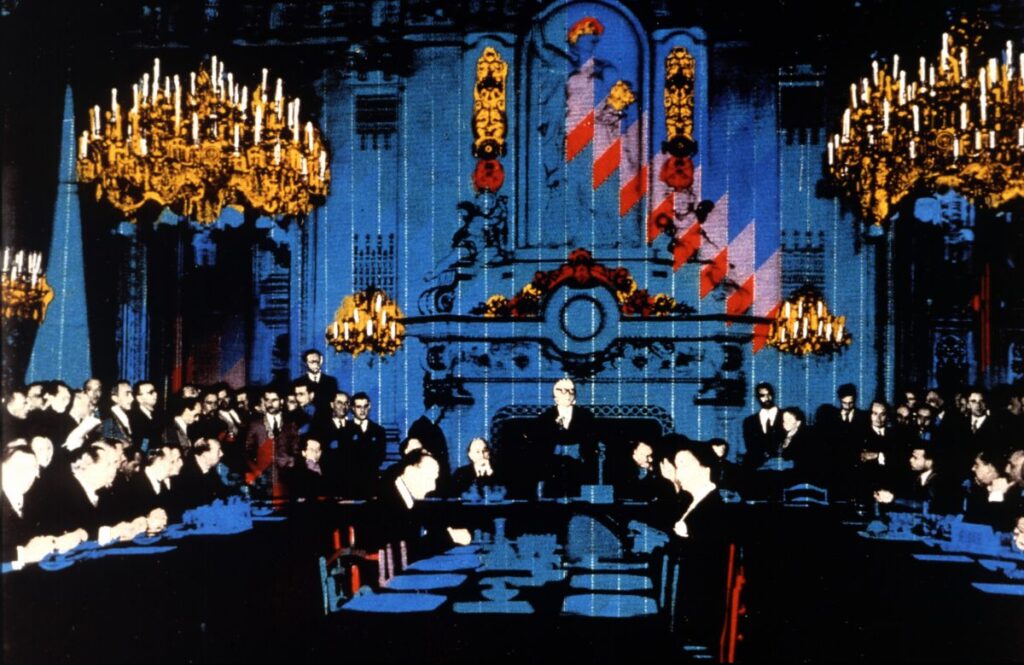
With the Schuman Declaration of 9 May 1950, the foundation stone for today’s European Union was laid. By Carlos Uriarte Sánchez.
In the interwar period, Richard Coudenhove-Kalergi wrote his book ‘Paneuropa’, in which he already proposed the creation of the so-called United States of Europe. In 1926, the first Pan-European Congress took place in Vienna. Efforts towards European unification were interrupted by the Second World War. However, the Pan-European Union continued to represent the principles of its founder and then his successor at the head of Paneuropa, Otto von Habsburg, in the fight against National Socialism and Communism. This also includes the creation of a united Europe based on shared values.
On 9 May 1950, the French Foreign Minister Robert Schuman, who hailed from Lorraine, published his historic declaration, which is considered the birth certificate of the European Union. Schuman himself stated: ‘My political philosophy is realism without ideology.’ Therefore, he was also keen to involve others in this noble task. In Germany, this was the former Mayor of Cologne, Konrad Adenauer, who had been persecuted by the Nazis and was often referred to as ‘the Old Man’ at that time. In Italy, it was Alcide de Gasperi, who had already begun his political career in the Imperial Council in Vienna. Schuman was aware that he himself would no longer achieve the ultimate goal. All three men were known for looking to the future with their policies.
After the Second World War, the old dream of a united and reconciled Europe became urgent. Thus, necessity became a virtue. As early as 1946, the three politicians, all Christian Democrats, began to plan the foundations for a peaceful Europe. The Declaration sought not to repeat the mistakes of the Treaty of Versailles and called on France and Germany to overcome their historical antagonisms and lead the construction of a united Europe. But how? Through ‘concrete achievements… which first create a de facto solidarity.’ In this sense, he proposed ‘placing the entire Franco-German coal and steel production under a common High Authority.’
This was intended to be the first step in an ambitious and long-term process aimed at federation. This cooperation was to lead to the creation of an organisation with a customs and economic community, open to other European countries. In 1951, this led to the founding of the European Coal and Steel Community in Paris. Initially, the focus was on economics, but the project had a deeper background: it was intended to achieve peace and harmony through cooperation between European countries.
The Schuman Declaration is more relevant today than ever, when one considers statements such as the following: ‘World peace cannot be safeguarded without the making of creative efforts proportionate to the dangers which threaten it. The contribution which an organised and living Europe can bring to civilisation is indispensable to the maintenance of peaceful relations.’
The text of the Schuman Declaration formulated the foundations for the policies later adopted by the Union. Namely, a policy aimed at cooperation with other parts of the world, for example, when it speaks of ‘the development of the African continent’ becoming an important task. When there is talk of modernising production and improving quality, this reminds us of the research, development, and innovation programmes in the EU budget.
The provision of coal and steel under equal conditions is reminiscent of European competition policy, or the prohibition of monopolies and state aid. The establishment of a common export policy, like the current trade policy, or the creation of funds to support the rationalisation of production, are reminiscent of the funds for overcoming crises. The abolition of customs duties and differing transport tariffs served as the basis for the creation of the Customs Union and was thus a prerequisite for the single market. Further parallels could be drawn here. It was a far-sighted approach to create the basis for the current EU through the pooling of coal and steel production.
Today, the threats facing Europe in a globalised world are not only a matter of peace but also a health issue caused by Covid-19, as well as unprecedented economic and social challenges. These dangers can undoubtedly lead to a destabilisation of global security.
In such a situation, it is more necessary than ever for the European Union to respond to the challenges ahead in the coming years in a united and coordinated manner. Europe has changed and is no longer the Europe of the Treaties of Rome of 1957 with six member states. Today, the European Union consists of 27 member states, with other countries wishing to join.
The current crisis has shown that the European Union, despite its complex and slow decision-making process, has taken decisions to provide a coordinated response to the crisis (for example, in the procurement of protective equipment, or the repatriation of EU citizens, etc.), as well as economic policy decisions aimed at mitigating the economic and social consequences and for reconstruction. It has also shown solidarity by creating special funds to support other regions in the fight against Covid-19, such as for the Southeast European region (Western Balkans).
It is a fact that the European project, the foundation stone of which was laid on 9 May 1950, is not only more necessary than ever, but also that, if it did not already exist, it would have to be invented.
Carlos Uriarte Sánchez is a member of the European Society Coudenhove-Kalergi, Secretary General of the Pan-European Union Spain, Professor of Constitutional Law at King Juan Carlos University in Madrid.
On Europe Day 2020, the Pan-European Movement Austria called for improving the Union.
The article originally appeared in English on the portal thediplomatinspain.
c Featured image: European Community 1992



