What is Paneuropa?

Founded in 1922, the Paneuropean Union is the oldest European unification movement.

The Paneuropean concept follows a geopolitical approach. At the core of the concept is a European foreign policy, a European security policy, and thirdly, a free internal market. As early as 1922, this was supplemented by the idea of a common currency and a European Federal Court—what we know today as the European Court of Justice.

The freedom of citizens, individual responsibility, and a state that limits itself to setting the framework within the sense of the rule of law form a further basis of the Paneuropean concept for European unification.

The Paneuropean Compass of Freedom is founded on European sovereignty, responsibility, the rule of law, and European identity.

Following the principle that “Paneuropa is all of Europe,” we emphasize the right of every European country to participate in European unification.
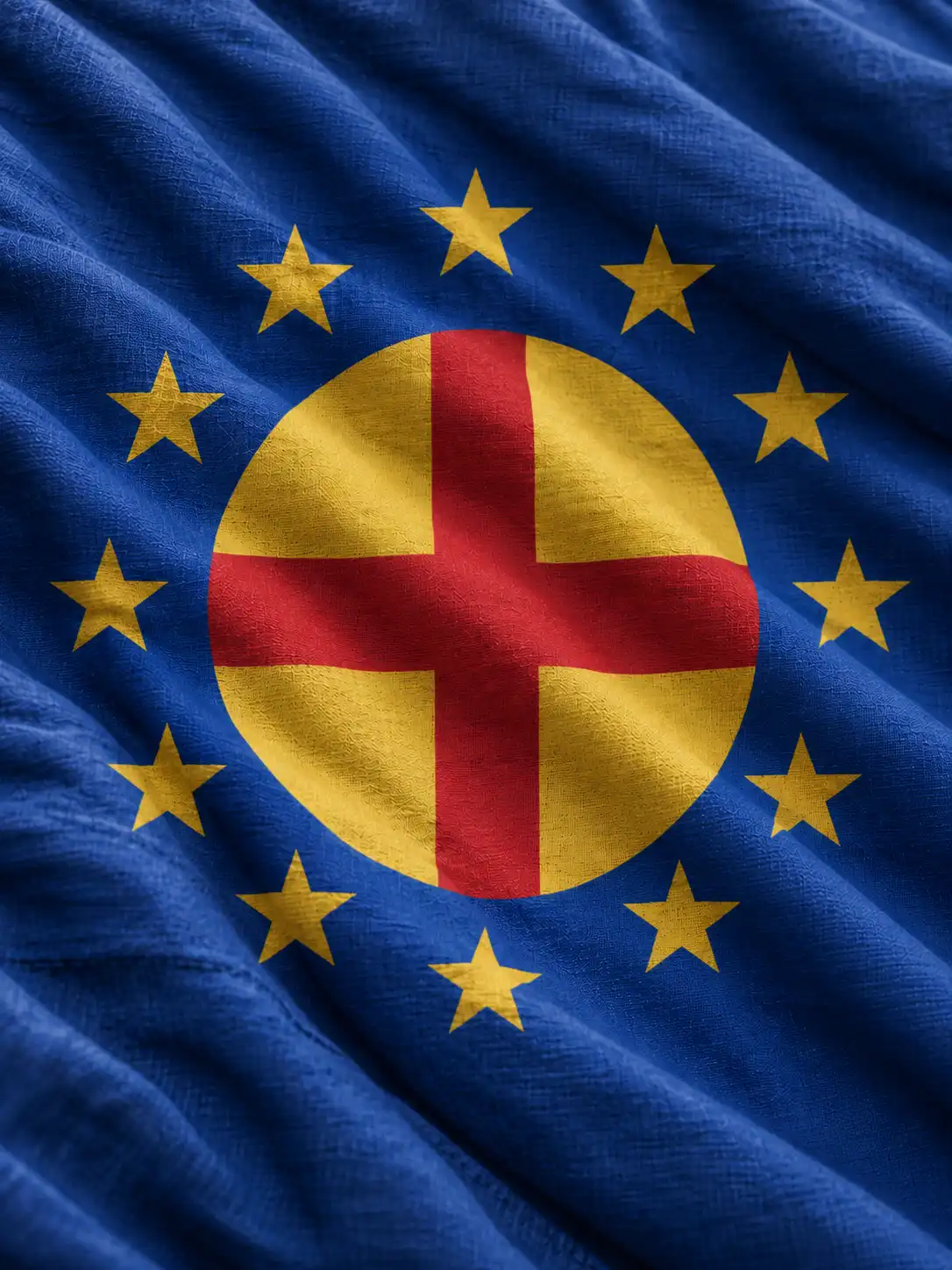
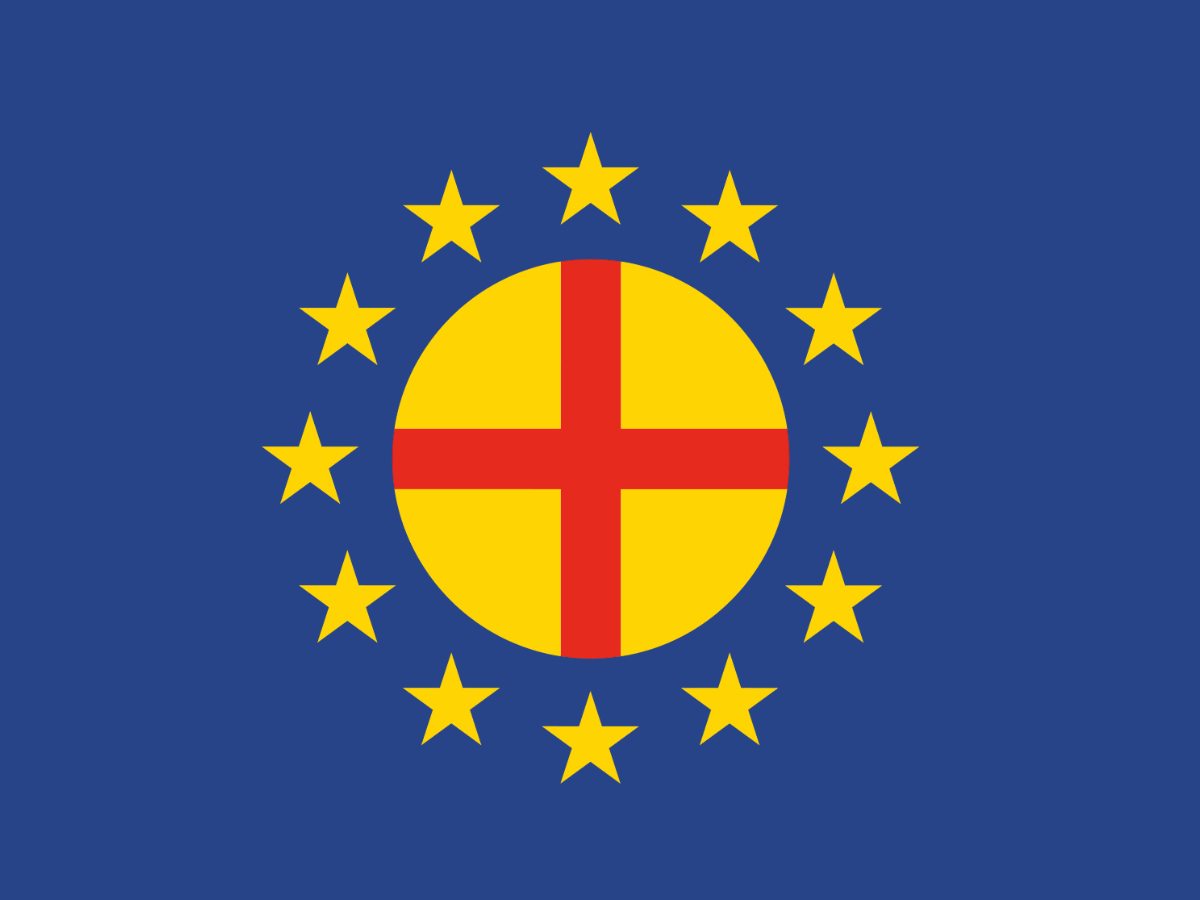
Paneuropa Flagge

An Idea That Unites Europe

Paneuropa stands for the conviction that the great questions of our time—peace, prosperity, security—can only be solved together. Since 1922, the movement has brought together people of diverse backgrounds and convictions who believe in a strong, capable Europe.

Today, Paneuropa is more active than ever: as a platform for dialogue, political education, personal commitment, for EU enlargement, and for a European foreign and security policy—for Europe as an independent actor in world politics. We are independent of party or ideology.

1922

Year founded

25+

Countries

1926

First Paneuropa Congress

„In necessariis unitas, in dubiis libertas, in omnibus caritas.“
(Unity in necessary things, freedom in doubtful things, charity in all things)

Paneuropa’s Beginnings

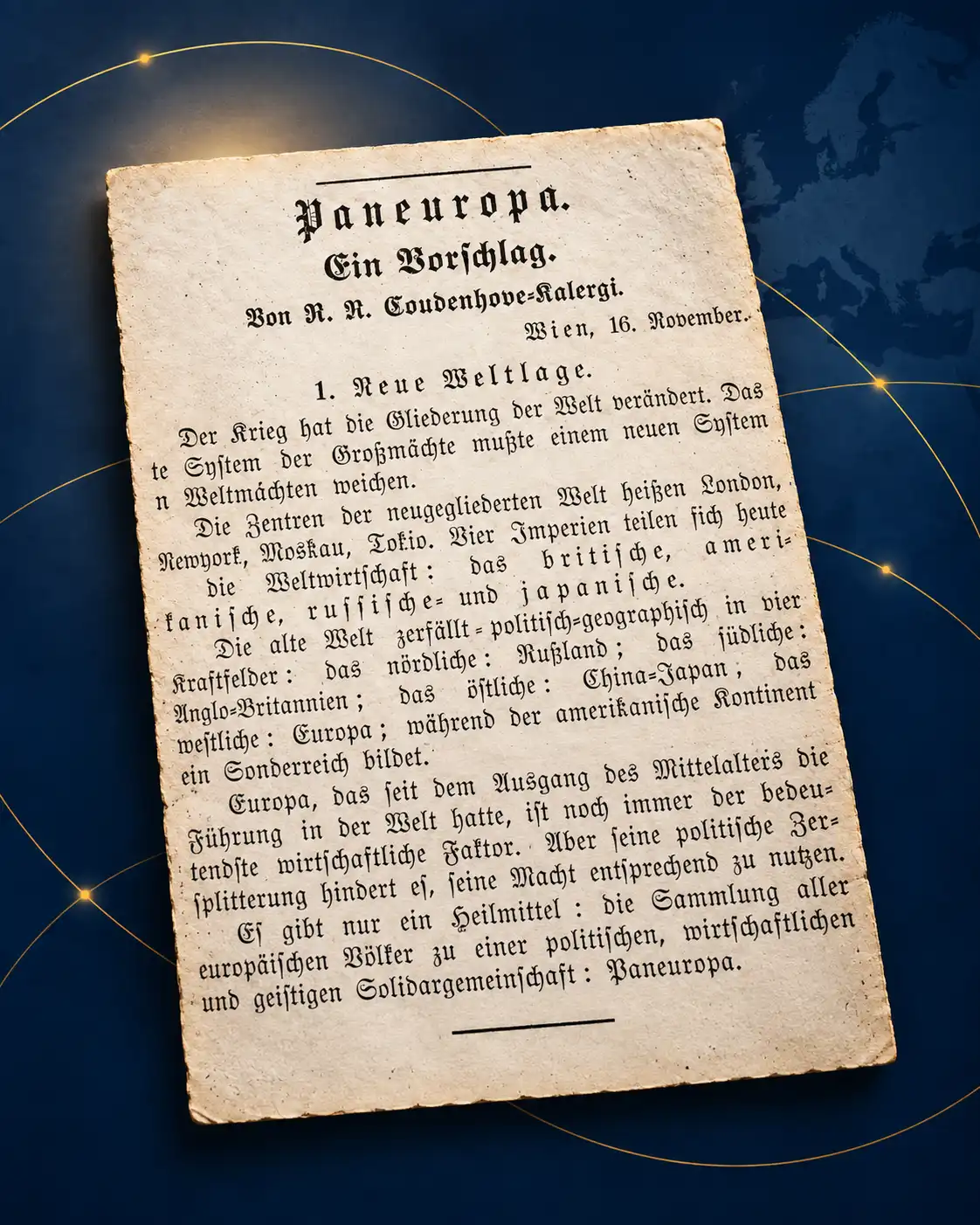
In 1922, Richard Coudenhove-Kalergi provided the decisive impetus for the founding of the first major European unification movement with his article “Paneuropa. A Proposal.” His vision: a politically and economically united Europe that secures peace, protects freedom, and acts self-confidently in the world.

The Paneuropean movement emerged from Coudenhove-Kalergi’s idea. To this day, it advocates across party lines for European cooperation, the rule of law, individual responsibility, and the further unification of our continent—driven by the conviction that Europe must shape its future together.

Europe is still far from a completed internal market, a truly common foreign and security policy, and the closing of geographical gaps. Thus, much remains to be done for Paneuropa.

Paneuropa Today

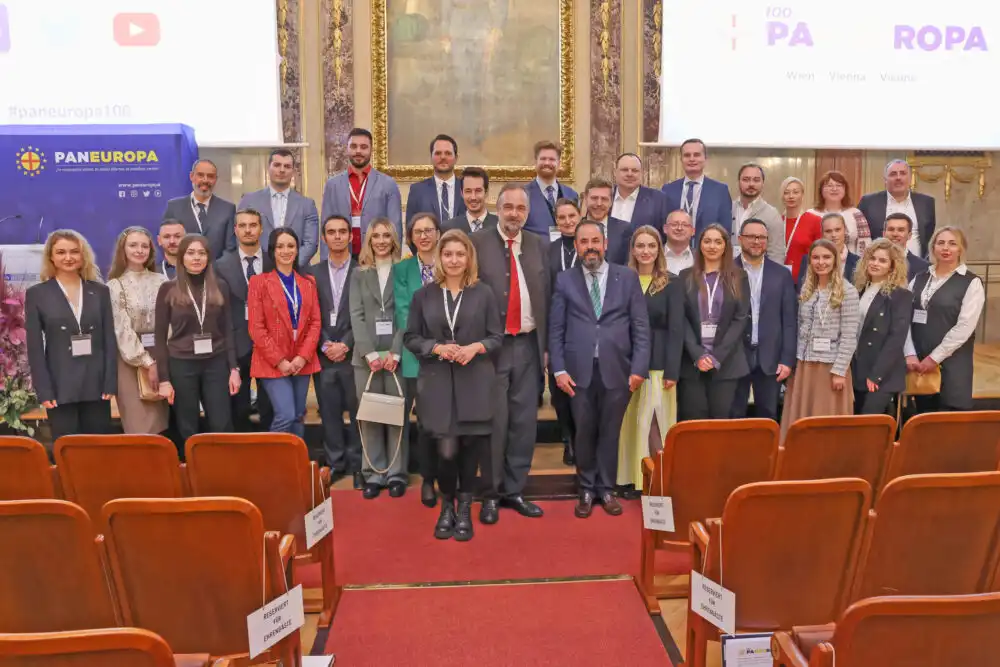
As a truly European organization, Paneuropa is active today in almost all European countries. With its numerous national groups, a dedicated youth organization, and partnerships with other civil society organizations across Europe, the Paneuropean Movement Austria is a vibrant platform for exchange, political education, and collective action. It brings together people of different generations and backgrounds, creates space for European debates, and is committed to carrying forward the idea of a united, free, and capable Europe.

Gruppenbild Paneuropa

THE FOUR PRINCIPLES

Christian-motivated thought and action is the only alternative to the inhumane ideologies of Marxism, consumer-materialism, Islamic fundamentalism, nationalism, and other worldly promises of salvation. It is rooted in the recognition that there is an absolutely valid order of values that extends beyond all times and forms and is anchored in the transcendent. Whoever acts contrary to it not only damages the community but also becomes a plaything of uncontrolled and uncontrollable forces. Therefore, we wish to see politics shaped in harmony with these values and to help shape it ourselves.

Human rights, equality before the law, tolerance, and social cohesion have their philosophical-ideological roots in Christianity. We profess these roots. For the soul of this continent is Christianity. Whoever removes it from political action turns Europe into a soulless body, a fragile construction exposed to all influences and currents of the zeitgeist.

Those who worship the new just because it is new, without asking whether it is also true and good, are progressive. Those who, in addition, want to change the old by force without caring about what is destroyed in the process are revolutionary. Those who stubbornly cling to the old without asking whether it has proven itself are reactionary. We reject all three.

Rather, we want to preserve what is proven and eternally valid and allow the necessary new to develop step by step. Thus, we want to collect and preserve the timeless across all ages and, building upon that, renew the temporal. For that alone truly means progress in all areas of life, including—and especially—in politics.

Our goal is a Europe united according to the principle of subsidiarity—a federal Europe that can act as a geopolitically capable entity.

For us, Europe is not just a geographical term encompassing the territory between the Atlantic and the Urals, but a spiritual unity, linked by common theological-philosophical roots and a centuries-long shared destiny. Only united can Europe exist in peace and freedom as an equal partner to other great powers.

A community of peoples in brotherly cooperation could master the problems of the present and future instead of merely managing a permanent crisis. Paneuropa is all of Europe. Therefore, the Paneuropean movement works tirelessly for the integration of all European states into the EU.

At the center of good politics is the human being with their innate freedom and inalienable dignity. The goal of politics must be to enable and promote the development of the individual in freedom and self-responsibility. The state and society must grant the citizen maturity and autonomy in decision-making. Inseparably linked to this is the realization of human and civil rights and the right of peoples to self-determination. This requires a constitutional order and the principle of a market economy.

Freedom is an essential element of European identity. To quote Richard Coudenhove-Kalergi: “The European ideal is freedom—European history a single slow struggle for personal, spiritual, national, and social freedom. Europe will endure as long as it continues this struggle; as soon as it abandons this ideal and becomes unfaithful to its mission, it loses its soul, its meaning, its existence. Then it has played out its historical role.”

The Paneuropean movement therefore opposes all forms of collectivism and totalitarianism that attempt to standardize personal decision-making and creativity and replace them with bureaucratic planning and utilization. We are thus naturally non-partisan and, at the same time, in automatic opposition to all forms of totalitarianism.

To protect freedom, the creation of a strong, undivided Europe is necessary. For without European sovereignty, politics cannot sufficiently guarantee the protection of freedom.

How Paneuropa is Structured

01

Presidium

Political governing body of the Paneuropa Movement Austria.

02

Federal Directorate

Extended board comprising the members of the Presidium and further staff.

03

Board of Trustees

Additional advisory body of the Paneuropa Movement Austria.

04

State and Regional Teams

Represent the Paneuropa Movement in the Austrian federal states and regions.

05

Paneuropa Youth

Part of the Austrian Paneuropa Movement and the voice of the younger generation.

06

General Assembly

The highest body of the association under association law. It meets once a year; the bodies are elected every three years.

Paneuropa Karte

Paneuropa International

The Paneuropean movement is active in 29 European countries. Its umbrella organization is the Paneuropean Union. We work together both bilaterally and through the umbrella organization. What unites us is our passion for a strong and united Europe.

Europa Flaggen

Upcoming Events

Current events of the Paneuropean Movement Austria offer a platform for exchange, networking, and new insights on European topics.

Become a Member

Contribute your ideas, experience, and conviction for a united Europe. Become part of an independent and non-partisan movement.