Macedonia – Referendum Invalid. What Now?
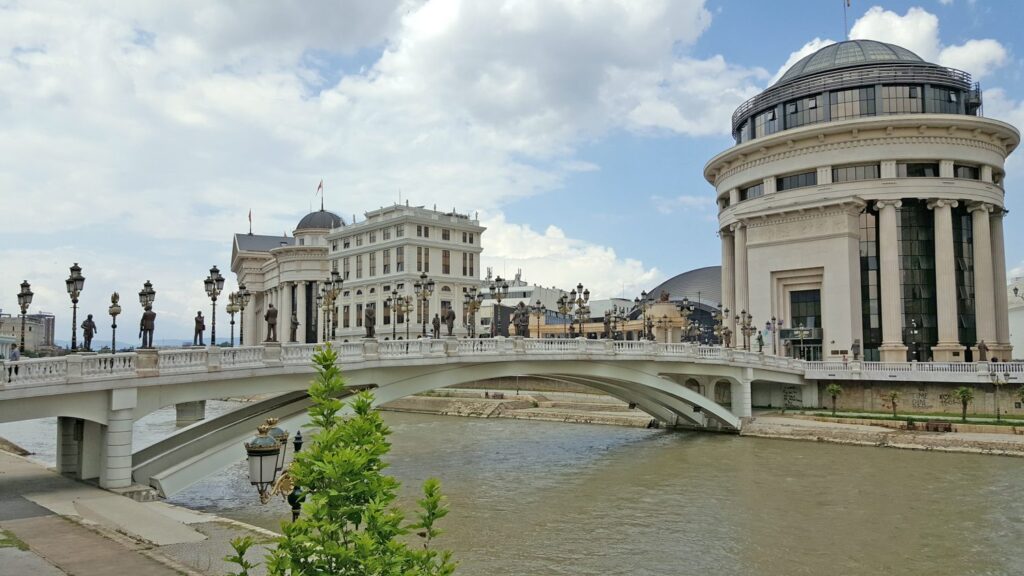
The name compromise between Macedonia and Greece secured 91 per cent ‘Yes’ votes. However, only 37 per cent turned out. The referendum is therefore invalid. This means Parliament must decide. Macedonia faces new elections. A commentary by Stefan Haböck, International Officer of the Paneuropa Movement Austria.
Prime Minister Zaev is not to be envied for the current situation. Virtually all EU member states, the USA, and NATO support the agreement negotiated with Greece. Top politicians frequented Skopje. Pro-name deal demonstrations with (allegedly) up to 150,000 people took place. Ultimately, even 91 per cent said ‘Yes’. The problem? Only just under 37 per cent of eligible voters participated in the ballot. This renders the referendum invalid.
Yes or Boycott – That Was the Alternative
While the government campaigned massively for a ‘Yes’ vote, the opposition VMRO was against it. Specifically, against the compromise negotiated between the governments per se. President Ivanov called for a boycott of the referendum, stating that “national identity is non-negotiable”. Protests took place in many towns and villages. The Albanian population in the country was probably largely in favour of the name change. For them, however, the country’s name means less than it does, particularly for the VMRO. This party emerged from the IMRO liberation organisation, which fought against Ottoman rule.
The negotiated agreement stipulates that the official name of the country shall be changed to “Republic of North Macedonia”; in return, Greece will support Macedonia’s accession to all international organisations of which Greece is also a member. A point in the agreement is the stipulation that the Macedonian language is assigned to the “South Slavic linguistic area” and not to Greece’s “Hellenic cultural sphere” (Article 7).
A sticking point is certainly the clause regarding the use of symbols on official buildings and sites that could refer to Hellenic tradition (Article 8).
EU Means Overcoming Borders
The Paneuropa Movement, which has criticised Greece’s blockade and supported Macedonia in this matter, largely welcomed the name compromise. For pragmatic reasons, it would be necessary for the two states to finally bury this tiresome conflict. Politics often needs to be pragmatic if the outcome brings peace.
There are, despite frequent false claims, no territorial claims by Macedonia on the Greek region of the same name. This argument was often put forward by the Greeks. Macedonia’s sole concern was that its current territory be called Macedonia, its population Macedonians, and its language Macedonian.
Pragmatism Cannot Replace Emotion
We have acknowledged the efforts of Greek Prime Minister Alexis Tsipras to peacefully resolve the conflict. Nationalist and radical parties, in particular, exerted massive pressure on him. However, Paneuropa Austria has great understanding for the deep-seated frustration among many Macedonians.
After the collapse of Yugoslavia, Macedonia gained its freedom. Naturally, many difficulties accompanied the small and young republic. This is typical for the many states that were exposed to real existing socialism for decades.
From the outset, Greece – itself a NATO member since 1952 and an EU member since 1981 – blocked its small neighbour’s ambitions to join the EU and NATO. In 2003 – at the famous Thessaloniki Summit – the EU states promised the country the following: “The EU reaffirms its unequivocal support for the European orientation of the Western Balkan countries.”
Fifteen years later, at the 2018 summit, French President Macron and Dutch Prime Minister Rutte blocked a date for the start of negotiations. It was postponed again for another year. In 2019, it will now be examined whether a date for the start of negotiations can be set. Another year’s wait for the commencement of negotiations, which will themselves take at least 10–15 years anyway.
The frustration of the Macedonian population is understandable. Twenty-seven years of blockade by its neighbour. Fifteen years of repeatedly postponed promises from EU states. Then, in the summer, another postponement. It is of no help if those politicians who, five years ago, suggested a postponement of accession negotiations now travel to Skopje.
What Happens Next?
The referendum was not binding but advisory. The Macedonian Parliament must now amend the constitution with a two-thirds majority. The outcome of such a vote is still uncertain. Eleven votes are still needed for a majority (80 out of 120 votes; the government currently has 69). NATO Secretary General Stoltenberg emphasised before the referendum that Macedonia would only be admitted if the compromise passed. So, the parliamentary vote must be awaited here. The EU states and the EU Commission, which highlight the clear 91 per cent ‘Yes’ vote, will also have to await this vote.
A secret ballot was briefly considered to allow opposition MPs to vote for the name change. This agreement now seems to be off the table – new elections are reportedly to be held in Macedonia on 25th November.
Interesting detail: The President will be re-elected in spring 2019. President Ivanov’s second term will then end. This will also be a moment of setting the course for which party – the Social Democrats or VMRO – will provide the next president. Whether this will have an impact is questionable, however, as the name change is expected to be concluded beforehand.
The fact is: Macedonia is a pro-European country. Approval ratings for the EU are high, albeit tarnished by the incidents mentioned above. The population almost unreservedly supports NATO membership. Attempts by states to block this aspiration have been unsuccessful. Macedonia, with its rich history, will likely become a member of the EU. The question is when, and how much frustration over the sluggish progress will have accumulated among the population by then. EU states would be well advised not to carelessly give in to future blocking attempts by individual member states. As can be seen, it leads to nothing but bitterness among those who were promised something.
Macedonians need a binding commitment that negotiations will begin swiftly and that the European country, once all reform agreements have been implemented, will become a member of the European Union. This should happen before the new elections. The parties and voters must be able to rely on the pro-EU course.
Then, hopefully, nationalist skirmishes, which are currently still verbal, will also cease in this region. As Paneuropa, we appeal to the reason of all involved parties.



