Overcoming borders, not shifting them
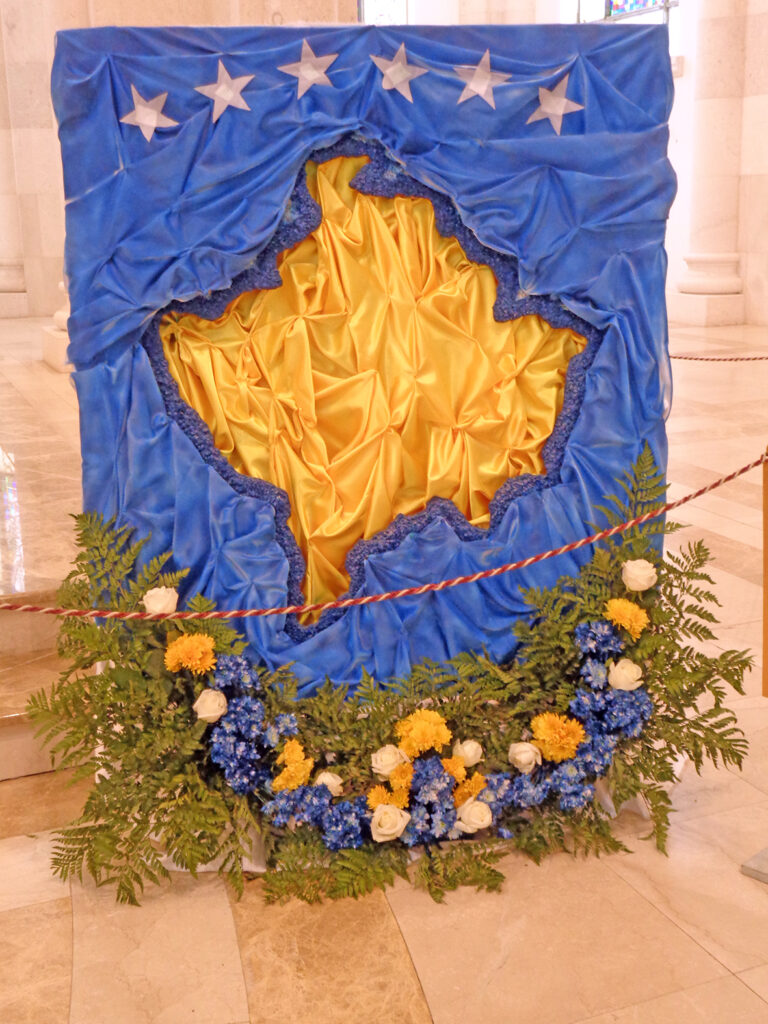
During an appearance in Alpbach, the Kosovar and Serbian presidents appeared to agree on a possible land swap between the two countries. But the matter is not quite that simple. A commentary by Karl von Habsburg.
One of the goals of Kosovo’s foreign policy is recognition by as many states as possible (currently 117) and membership of the UN. Both goals are closely linked to the stance of Serbia, which still views Kosovo as a Serbian province. Should Serbia recognise Kosovo, states such as Spain would also abandon their policy of obstruction. Membership of the UN is a hopeless prospect as long as Moscow blocks every attempt in the interest of its allies in Belgrade.
Prishtina will therefore look for ways to make the recognition of Kosovo more palatable to Belgrade. The unity shown in Alpbach between Aleksandar Vučić (President of Serbia) and Hashim Thaçi (President of Kosovo) regarding a land swap between the two countries could be such an attempt. Kosovo would cede part of its territory in the region around Mitrovica, where the majority of the population is Serbian, to Serbia; in return, it would receive the Preševo Valley from Serbia, which is mainly inhabited by Albanians. The Serbian president could feel like a victor because he has brought Serbs ‘home to the Reich’ and got rid of Albanians. The President of Kosovo would go down in history because he achieved the recognition of Kosovo by Serbia.
However, several aspects are neglected in this calculation. The idea of the ethnically pure state is just as illusory in South-Eastern Europe as it is in Central Europe. This realisation should have been common knowledge since the end of the First World War at the latest. Revanchists and nationalists of all shades dreamed of border corrections back then, but they did not make matters any better. Overcoming borders, not shifting them, was already a motto of the Paneuropa Union at that time. In a united Europe, the borders of nation-states should lose their significance as symbols of isolation and antagonism. In the specific case of Kosovo, there is another decisive agreement: the Ahtisaari Plan, which was the basis for Kosovo’s independence. The country’s constitution is predetermined by this UN plan. Land swaps or even unification with another state are therefore excluded. This is also the reason why speculations about a possible land swap have always been rejected by European politicians. In Kosovo itself, this was also the general raison d’état.
Serbia is now distancing itself from the unity shown in Alpbach. Various foreign policy activities by Serbia also contradict the assumption that a land swap could facilitate the recognition of Kosovo by Serbia. Much suggests a deceptive manoeuvre. Belgrade is, in fact, trying to persuade states that have already recognised Kosovo to withdraw this recognition. Specifically, Pakistan and Togo should be mentioned here, where Serbia is attempting to induce the countries to retract their recognition of Kosovo. As a reward, these countries are promised visa-free travel to Serbia. One must really let this approach sink in. Numerous migrants come to Europe from Pakistan. Serbia likes to see itself in the role of the saviour of the Christian West against the onslaught of Muslims. Should Pakistan agree to withdraw its recognition of Kosovo, Pakistanis could arrive in Belgrade by plane, only to end up somewhere in the EU, probably in the countries with the most attractive social systems.
The European Union, incidentally, holds a very important key to the recognition of Kosovo by Serbia: EU membership. This can be used to build pressure. The EU should no longer afford such weak policy as that shown towards Greece, where Athens was allowed to massively block Macedonia for over 25 years. But at least there is progress regarding visa-free travel for Kosovars.
The article originally appeared on the website of Karl von Habsburg.



