At the Heart of the Continent!
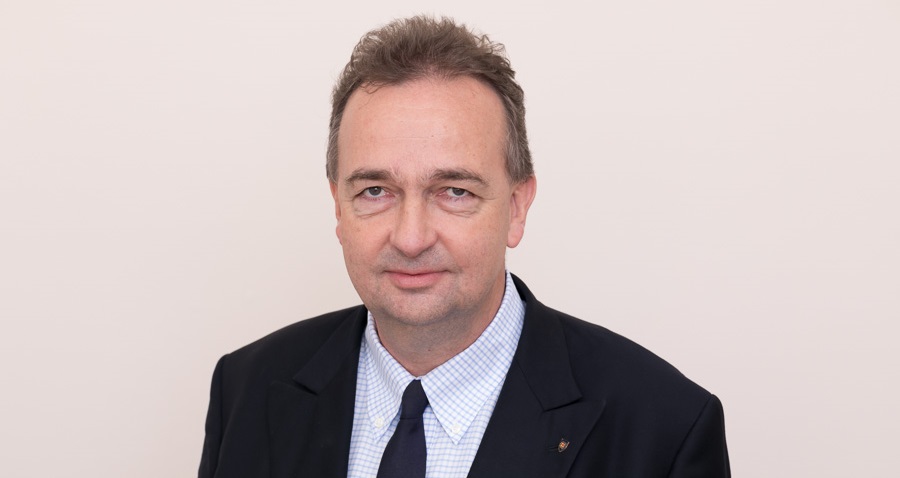
Alongside domestic reforms, a stronger and more visible engagement in European issues is vital for Austria. A commentary by our President, Karl von Habsburg.
The Austrians have made their choice. The clear winner of the election is Sebastian Kurz, a man who campaigned on the promise of change and reform. What needs to be done domestically has been written about often enough: we need tax reform leading to massive relief, deregulation, and a drastic pushback against bureaucracy. Austria needs a liberating blow to give its many talents the space they need to flourish once again. We need less state paternalism and more freedom and responsibility. It will do the country good, and the people too.
But beyond these domestic issues, it is time for Austria to show more initiative in European policy once again. Assisting in the closure of the Balkan route was important, but it was merely a reaction. We need active leadership. Since the inception of the Schengen Area a quarter of a century ago, the joint protection of external borders has been intended.
Much has been said about it, yet the necessary steps have still not been taken because the member states do not want them. They have been content to pass the responsibility onto the countries at the periphery. Here, Austria could finally venture a move and make European border protection the theme of its Council Presidency in the second half of 2018. Open borders within the Schengen Area are a fundamental condition for the functioning of the four fundamental freedoms, which are essentially the core of the European constitution.
Austria also has a historical obligation in Central Europe towards those countries that wish to join the European Union but currently find their path blocked.
On one hand, there are the countries of Southeast Europe, such as some states of the former Yugoslavia and Albania. In EU jargon, they are called the Western Balkan countries. In 2003, in Thessaloniki, they were promised the prospect of EU accession. Since then, the EU – meaning, of course, the member states, who are the decisive players in the concert of EU institutions – has indulged in a position of waiting and blocking.
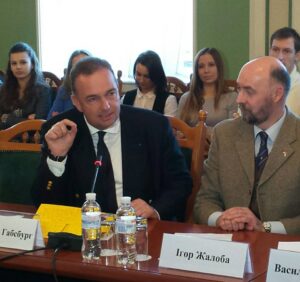
Karl von Habsburg delivering his speech at the founding of the Paneuropa Union Ukraine in Kyiv. Beside him, his Ukrainian counterpart, Prof. Ihor Zhaloba.
Greece blocks negotiations with Macedonia, everyone blocks visa-free travel for the citizens of Kosovo, EU representations in these countries sometimes play their own games, and ultimately, countries like Russia and Turkey exploit the vacuum left by the EU for their own interests. Austria enjoys a very high reputation in all these countries. A little more engagement would do our reputation a world of good.
On the other hand, there is Ukraine. It is stuck in the so-called Neighbourhood Policy, which definitively excludes EU accession. Yet the Revolution of Dignity was a clear European statement from this country, which was invaded by Russia and robbed of part of its territory for that very reason. The historical links between the western part of Ukraine and Austria are as undeniable as the Austrian contribution to the emergence of an independent Ukraine 100 years ago. A stronger commitment from Austrian foreign policy towards a clear EU perspective for Ukraine would be a clear signal, making Austria’s will to shape Central Europe recognisable once again.

{%CAPTION%}
Karl von Habsburg is President of the Paneuropa Movement Austria and Vice-President of the Paneuropean Union. This commentary also appears on his website.



