The Malicious Right-Wing Shift
Right-wing shift was one of the buzzwords that dominated all news reports about the recent election results. However, the left-right paradigm no longer applies. A commentary by our President, Karl von Habsburg.
some people think
reft and light
cannot be confuzed
what an errer
These words by the Austrian poet and wordsmith Ernst Jandl may well come to mind when one considers the reporting on the recent elections in Europe, but also in America. Donald Trump is labelled a right-winger, yet with his “America First” stance, he advocates a protectionism that Austrian and French socialists – in coalition with trade unions – champion, for example, in the so-called Posted Workers Directive. In Germany, the AfD’s entry into the Bundestag is described as a right-wing shift, even though the party harbours the largest fan base of Vladimir Putin, a former officer of the Soviet secret service KGB, who wishes to restore Russia to its Soviet-era greatness, and for whom the collapse of the USSR ranks among the catastrophes of world history.
Similarly, in Austria, there is talk of a right-wing shift because the FPÖ and ÖVP gained ground in the recent general election. The enforcement of rule-of-law standards in the so-called migration crisis can certainly be described as ‘right-wing’ if one equates the term ‘right’ with ‘correct’ and ‘sensible’. For many years, the FPÖ has been actively poaching voters from segments that once voted SPÖ, and has even referred to itself as a workers’ party. A similar observation can be made about the Front National in France, to which deputies have also defected from the Socialists. Until now, socialism could be described as left-wing with impunity.
What is Left, What is Right?
So, it seems that the assignment of what constitutes left and right is no longer quite so straightforward. Unless, of course, one limits the definition to simply labelling certain parties as right-wing and others as left-wing.
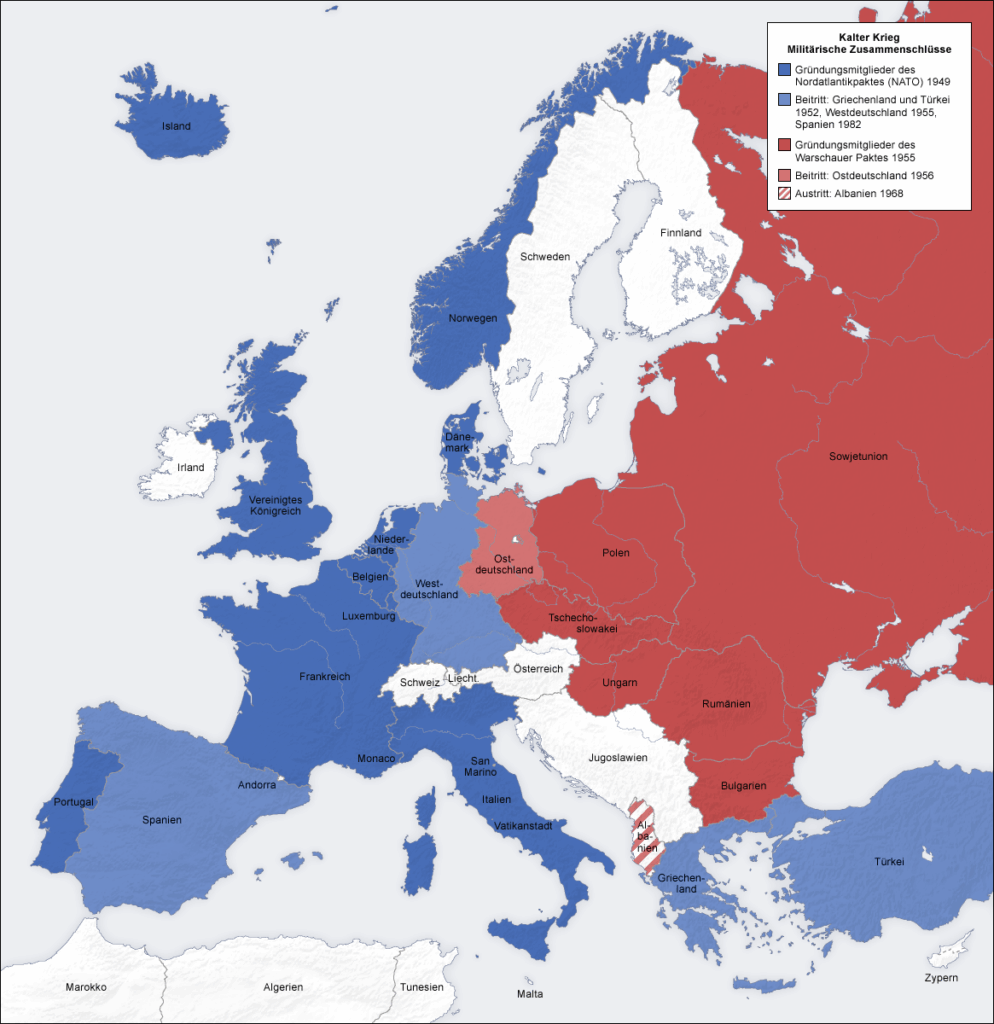
It was simpler during the Cold War. The left comprised communists, anarchists, and socialists. The ’68 generation also identified as left-wing (many of them as extreme). The right included nationalists, certain authoritarian regimes, military governments, the apartheid regime in South Africa, and, of course, the remaining old Nazis and the emerging neo-Nazis. In the so-called free West, centrist parties governed, occasionally with the added label of left or right. Even then, one could still rely on relatively simple distinctions. The left advocated for the socialisation of the means of production; the right permitted private ownership of the means of production. The left favoured higher taxes and more redistribution; the right championed lower taxes and greater freedom and individual responsibility.
However, even these criteria are no longer suitable for characterising so-called right-wing and left-wing parties today. So-called right-wingers and left-wingers now demonstrate – albeit not together – against capitalism, globalisation, and free trade agreements. What unites them are paternalism and statism; some desire it at a national level, others at a European or international level.
Here, however, lies the true watershed of political directions. On one side are the proponents of an expansive paternalistic welfare state, which regulates and redistributes as many areas of life as possible at the state level. For them, the primacy of politics holds sway. On the other side stand the advocates of personal freedom and responsibility, the autonomy of the family, religious freedom, private property, free economy, etc. For them, the primacy of law and freedom is paramount.

© Katharina Schiffl
Karl von Habsburg is President of the Paneuropa Movement Austria and Vice-President of the Paneuropean Union. This commentary also appears on his website.



